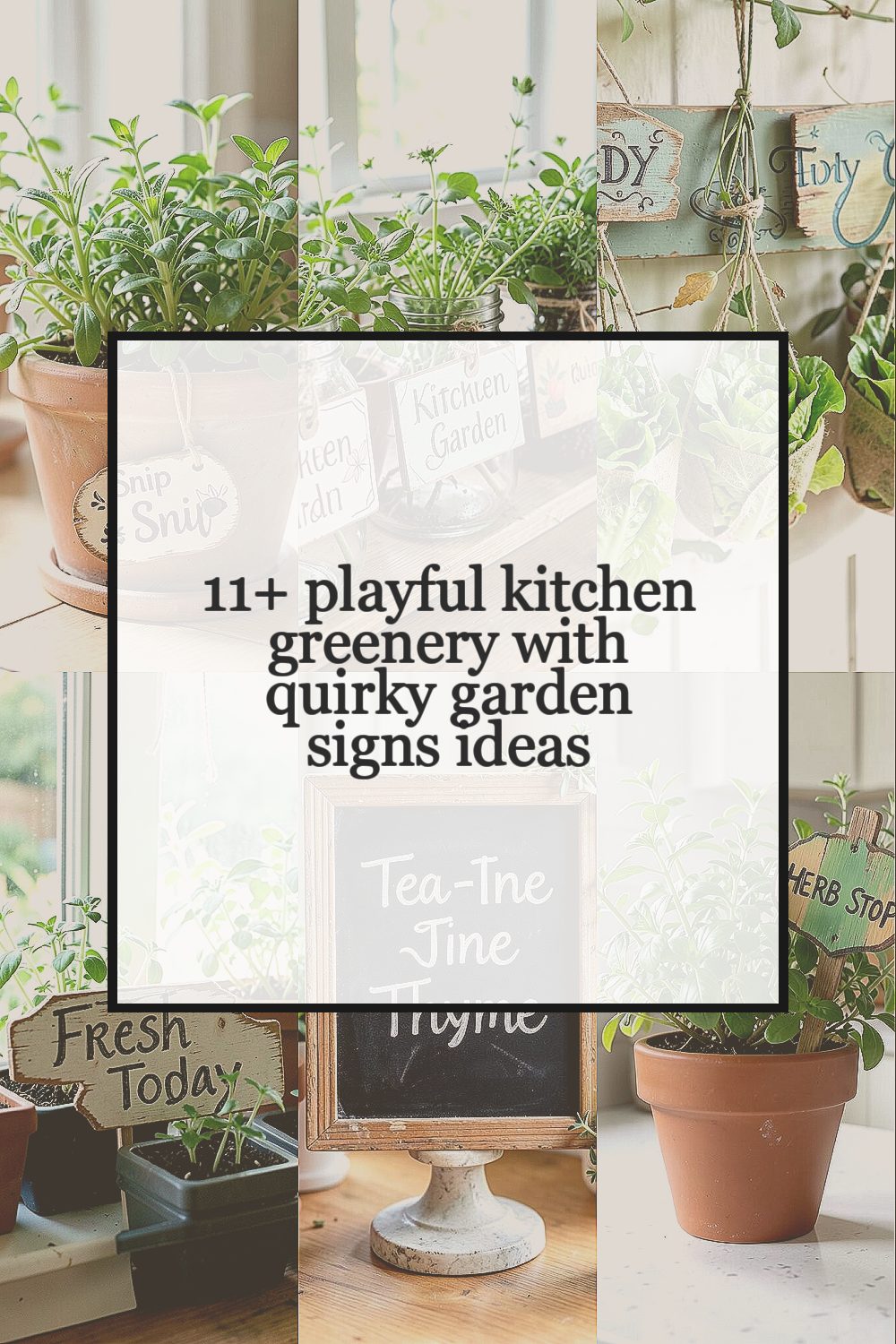
Green plants brighten the room, but quirky garden signs add the fun. You can make your kitchen feel like a tiny playful garden in just a weekend.
1. Herb Planter With “Snip Snip” Sign Charm

Imagine a small herb planter near the window, with basil and chives reaching toward the light. Add a little wooden sign that reads “Snip Snip” so every harvest feels like a game.
This setup makes everyday cooking feel cheerful and encourages you to use fresh herbs more often. It also keeps your herbs organized, so you don’t end up with wilted bundles in the back of the fridge. For a practical tip, place the planter where it gets strong morning light and rotate the pot weekly to keep growth even.
2. Mason Jar “Kitchen Garden” Row With Name Tags

Set three to five mason jars in a tray and give each jar a different label. Use tiny garden-style name tags like “Parsley Park” or “Oregano Office” to keep things whimsical.
The clear glass helps you see water levels if you’re growing from cuttings, which is great for beginners. Labeling also prevents mix-ups, so you can grab the right jar while cooking. For uniqueness, try tying a thin ribbon around each neck and switching the sign seasonally. To manage costs, start with jars you already have, then add inexpensive label cards and non-toxic markers.
If you want a trend-friendly look, choose matching trays and a limited color palette, like sage green and cream. This makes the whole display feel like intentional kitchen decor instead of temporary craft. Personalize by writing the label in your own handwriting and adding a tiny leaf doodle next to each herb name.
3. Hanging Lettuce Pockets With “Tidy Garden” Messages

Consider a vertical lettuce or microgreens pocket system mounted near a sunny wall. Then hang a small sign beneath it that says “Tidy Garden, Happy Salad.”
This is a space-saving idea that works well for apartments or small kitchens. Because the greenery grows upward, you can keep the counter clear and still enjoy fresh leaves. For practical tips, check moisture daily and make sure the light source is bright enough for the plants you choose.
The quirky sign makes it feel like a living wall feature, not just a utility shelf. It can also help you remember simple care routines, like misting or checking drainage. To personalize, swap the message to match your goal, such as “Snack Garden” during busy weeks.
If you’re thinking about cost, you can start with one pocket bag and add more later. Look for pocket systems with sturdy backing so the sign and hooks don’t weigh down the wall.
4. Window Sill “Fresh Today” Sign for Seedling Trays

Place a seedling tray on the window and write “Fresh Today” on a small sign. Add a second line for the date, like “Sown on Tuesday,” to keep the project feeling exciting.
This idea supports healthy growth because seedlings love consistent light and a gentle routine. When you see the sign each day, you’re more likely to water carefully and avoid overdoing it. For practical suggestions, use a small watering can with a narrow spout and check the soil moisture with your finger before adding water.
5. “Tea-Time Thyme” Chalkboard Sign With a Plant Stand

Grow thyme in a compact stand and hang a chalkboard sign nearby. Write “Tea-Time Thyme” and change the words when you make herb blends for drinks.
Thyme can be used for cooking and simple drinks, and it’s fun to connect the plant to what you’re making. A chalkboard is also easy to update, so you can keep your kitchen signs fresh instead of stuck with one message. For uniqueness, sketch tiny icons like a teacup or small sprig under the title. If you want to keep costs down, repurpose a small scrap of chalkboard or use chalkboard contact paper on a lightweight frame.
To make it practical, add a tiny tray underneath for drips and label your plant pot so care reminders are obvious. Pair the look with matching pots in terracotta or matte ceramic for a tidy style. Personalize by writing a “today’s use” line like “Italian pasta night” or “Morning tea upgrade.”
6. Painted “Herb Stop” Sign for a Countertop Grab-and-Go Pot

Put one favorite herb in a stylish pot on the counter and add a sign that says “Herb Stop.” When you cook, it becomes your quick grab station instead of a hunt through cabinets.
This is great for practical habits because having one visible plant reminds you to garnish while food is still hot. It also reduces waste since you can clip just what you need. For best results, choose a pot with good drainage and keep the leaves dry to prevent common issues.
Make it unique by customizing the sign with your kitchen colors and adding a tiny arrow pointing to the pot. If you want a trend in modern decor, choose a minimalist sign design and neutral pot tones. For cost considerations, you can paint the sign on scrap wood and reuse it for years.
7. Repurposed Spice Jars With “Grown From Scraps” Sign
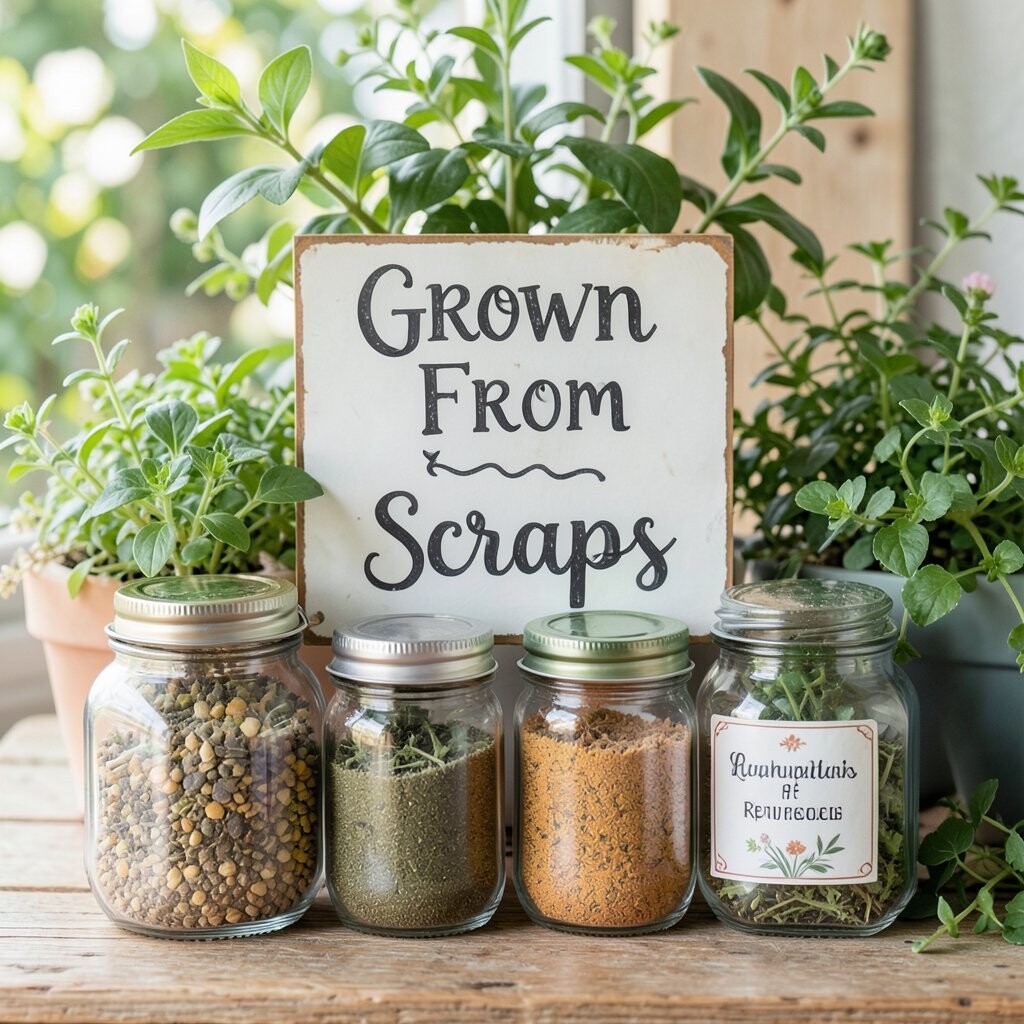
Save glass spice jars and plant small herbs or roots in them, then add a sign that says “Grown From Scraps.” It’s a cute way to turn kitchen leftovers into greenery.
This idea supports sustainability and makes you feel proud when you see something new from what you would normally throw away. Plus, the jars are easy to arrange on shelves, so your kitchen stays neat. For practical tips, ensure the jar has a way to drain or that you place a liner tray to catch extra water.
To keep everything safe, use clean soil or clean rooting water and avoid using jars that held harsh chemicals. Personalize the sign with your own story, like “Carrots to greens” or “Celery to leaves.” If you’re watching costs, this is one of the lowest-cost options because you’re reusing items you already have.
For a current look, mix jar heights and add small matching labels so the whole display looks curated. When the plants grow, you’ll naturally adjust the arrangement to fit the new shape.
8. Chalk “Plant Rules” Sign With a Basil Bloom Corner
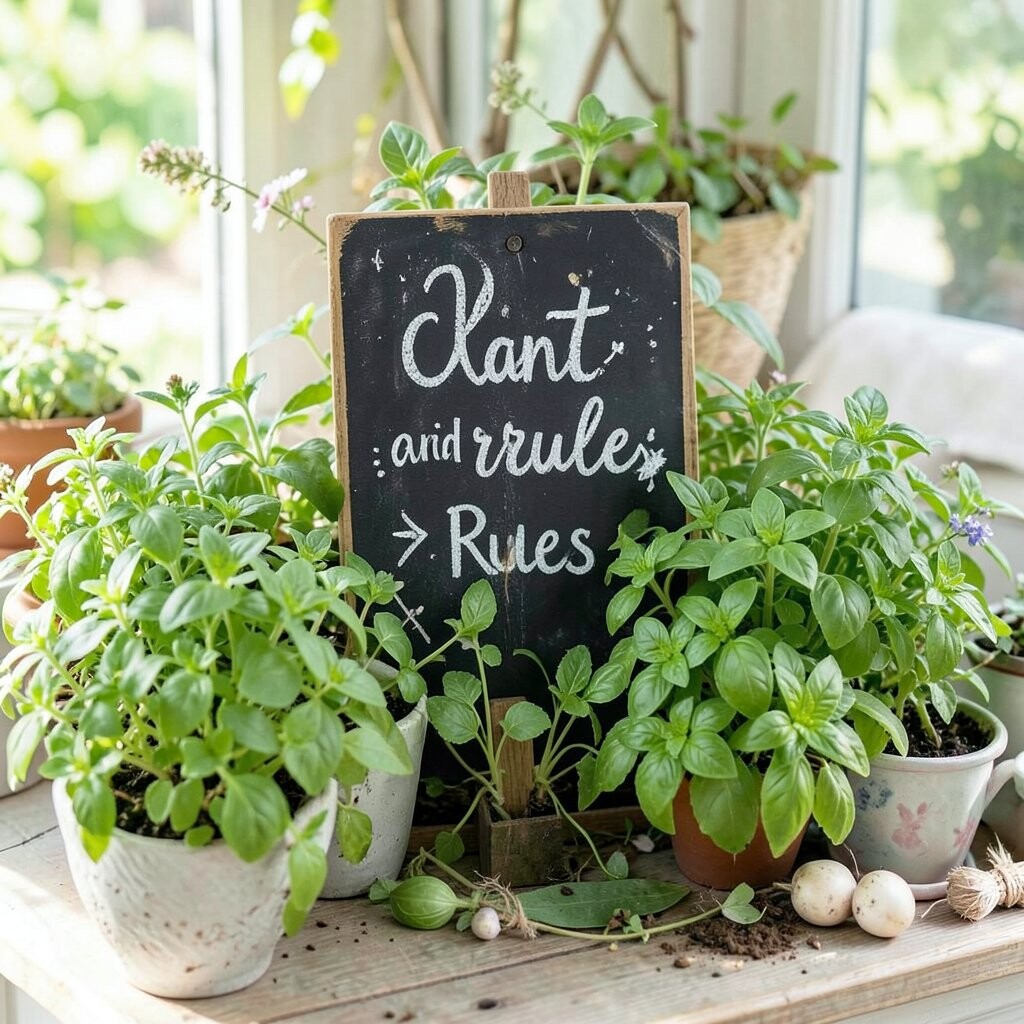
Create a tiny basil corner and hang a sign with “Plant Rules” on it. Add playful lines like “Water gently” and “Sun is the boss,” written in chalk.
This kind of sign acts like a care guide, which helps keep basil thriving instead of fading. It also turns your greenery into a friendly character in the kitchen, not just something you’re responsible for. For practical suggestions, keep basil away from cold drafts and harvest leaves often to encourage new growth.
9. Tiered Shelf With “Garden Mail” Sign and Herb Swaps

Use a small tiered shelf to hold different herbs, then place a sign in front that says “Garden Mail.” It works like a little display area for your weekly herb swap or harvest.
The benefit is visual rhythm: you’ll see your plants at different heights, which makes the kitchen feel lively. It also makes it easier to rotate plants if one side gets more light than the other. For practical tips, water the bottom plants first and let excess drain, so you don’t create puddles on the top shelf.
To make it unique, treat the sign like a mail station by adding cards that say “New batch!” or “Fresh clipping day.” Personalize by writing your favorite recipes on the back of the cards, so your kitchen becomes a mini recipe garden. Cost-wise, tiered shelves can be found cheaply at discount stores, and you can start with just one tier.
For current trends, pair natural greens with warm wood tones and simple black accents. This look is popular because it feels both cozy and tidy.
10. “Compost Club” Sign With Smart Counter Compost-Friendly Herbs

Keep a small compost container in the kitchen and grow herbs nearby, then add a sign that says “Compost Club.” Choose herbs like cilantro or mint that you like to harvest, since you’ll always have something to cut and add to your system.
This combination helps you feel connected to the whole cycle, from plant to kitchen to compost. It also teaches you what scraps are worth saving, which can reduce food waste. For practical suggestions, place the herbs where they can get light, but keep the compost container sealed and away from direct sunlight to reduce odors.
Make it quirky by adding little icons on the sign, like a carrot and leaf, and writing a friendly rule like “Rinse scraps first.” For personalization, set a weekly “club meeting” day and write the date on the sign. If you’re thinking about cost, you can build the herb corner with basic pots and use a simple printed sign you can swap later.
11. “Herb Library” Sign With Labels and a Booklike Planter

Pick a planter shaped like a book or a standing shelf tray, then add a sign called “Herb Library.” Place basil, parsley, and mint inside like they’re stored for future recipes.
This is a fun way to teach yourself what each herb tastes like, especially if you like experimenting. The labels make the display practical, and the book theme makes it feel creative. For practical tips, use waterproof labels so moisture doesn’t smear the text, and keep plants with similar water needs grouped together.
To personalize, write short “chapters” on the sign, like “Chapter 1: Pasta,” “Chapter 2: Soup,” and “Chapter 3: Garnish.” Cost considerations are easy because you can use a normal planter and just add a book-style label or sign. For current trends, mixing organization with playful design has been popular, so this fits right in with modern kitchen styling.
12. “Snack Attack” Sign Over a Microgreens Bowl Station

Grow microgreens in a shallow bowl or tray and hang a sign above it that says “Snack Attack.” When the tiny greens pop up, you’ll want to grab a pinch and top your meals instantly.
Microgreens are fast-growing, so you can see results quickly and keep the kitchen looking fresh. That speed is a real benefit when you want greenery without a long wait. For practical suggestions, keep the tray evenly moist and rinse gently if needed, then place the station where it gets consistent light.