1) Create a “light ladder” with plants on different heights
) Create a “light ladder” with plants on different heights
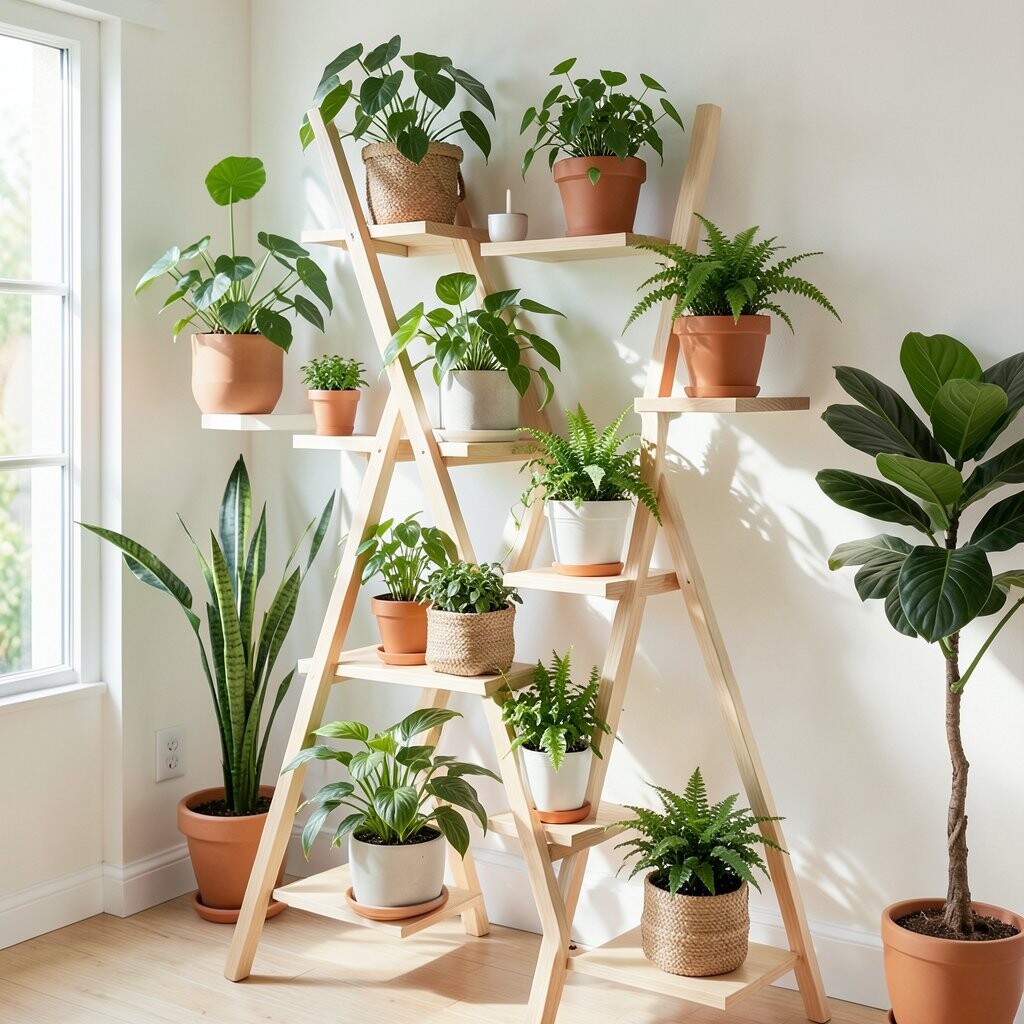
Set a few plants at different levels so your eyes move upward naturally. Try a small floor plant, a medium plant on a stand, and a taller one near a window.
This layered look feels bright even on cloudy days. Plants also soften hard edges like legs of chairs and table corners. Use a mix of leaf shapes—something with wide leaves next to something with narrow, arching stems. If your room has a lot of natural light, aim for sun lovers; if it is dim, choose shade-friendly varieties. To personalize, match pots to your wall color so the greenery looks even more “designed.” For cost, start with one taller plant and two budget-friendly fillers, then upgrade over time.
2) Hang plants in macramé or modern planters
) Hang plants in macramé or modern planters
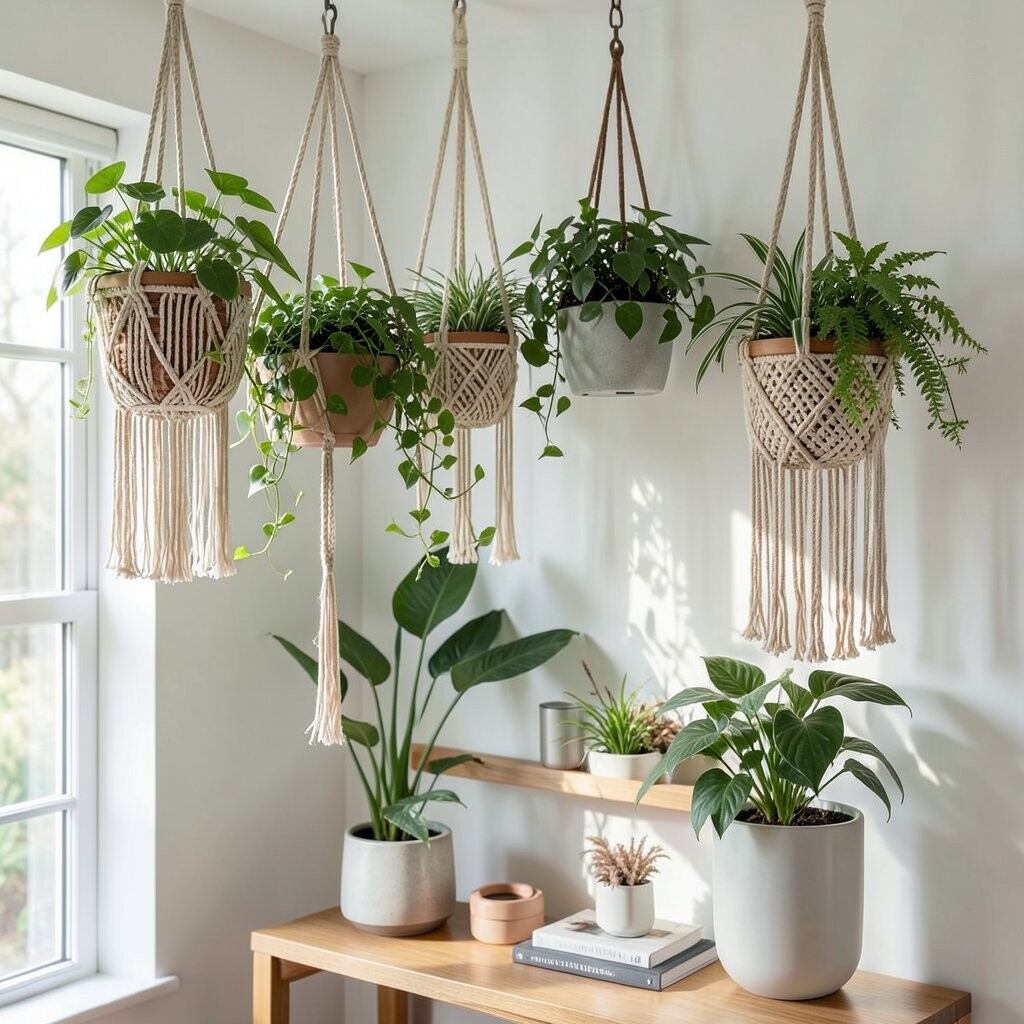
Hanging plants pull greenery into the room without taking up floor space. Picture trailing vines spilling from above like living curtains.
This adds movement and makes your décor feel airy. Hanging plants also help create privacy in shared spaces, like an open kitchen area. Pick a spot near bright, indirect light and rotate the pot so leaves grow evenly. If you worry about watering, use a drip tray or cachepot to catch extra water. Personalize the look by choosing a hanging color that matches your cushions or curtains. For budget, repurpose sturdy hooks and buy affordable starter plants with trailing habits.
Right now, ceiling-mounted and wall-grid plant styles are trending because they look tidy and intentional. Consider one statement hanger plus smaller companions for an easy “designed” feel.
3) Style a plant corner with a matching plant “set”
) Style a plant corner with a matching plant “set”
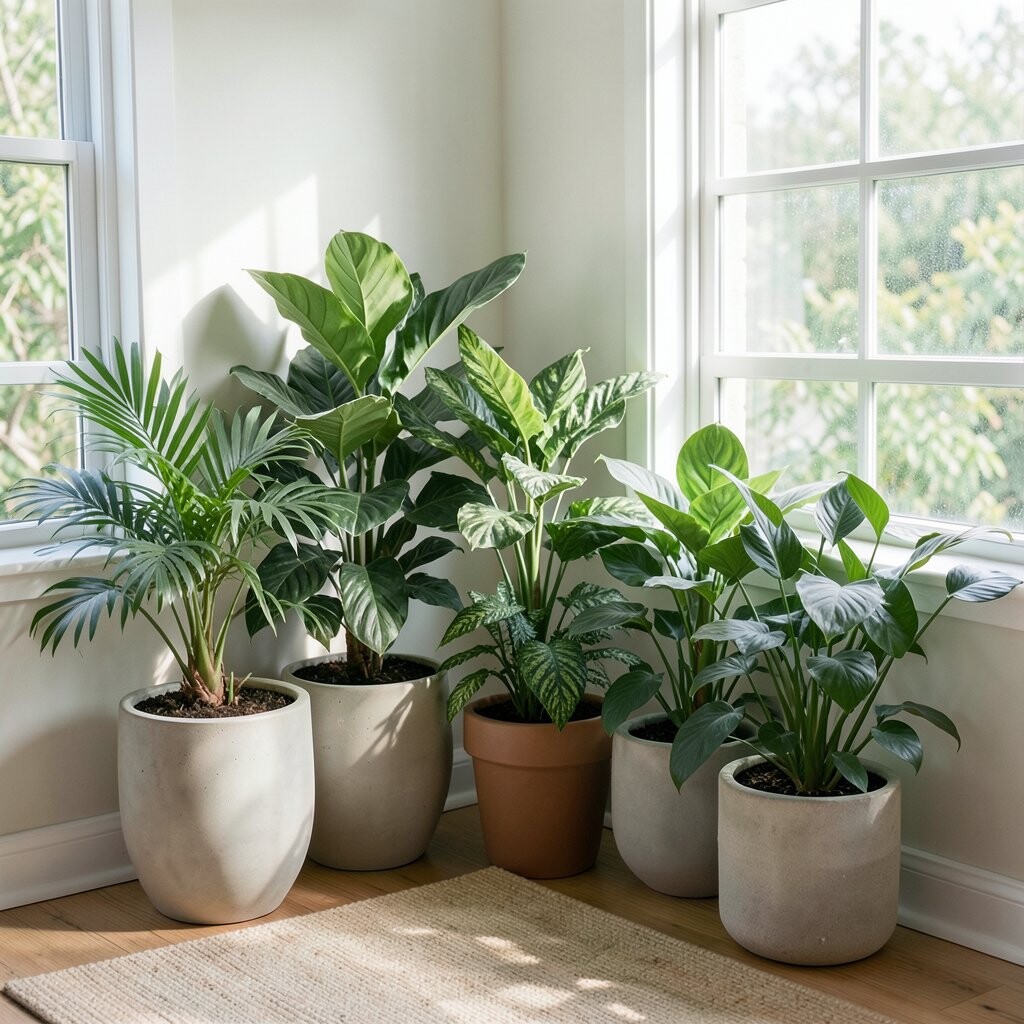
Pick one pot style and repeat it across a cluster of plants. Think matching ceramic bowls, matching fabric sleeves, or even the same glaze in different sizes.
When pots match, the space looks calm, not cluttered. Plants bring freshness, and a neat grouping helps you enjoy them without constant rearranging. Place a plant that grows upward in the back and a trailing one in front. For personalization, add a small decorative rock tray or a mini plant label set on the shelf.
To keep costs reasonable, use one more expensive pot for the focal plant and use budget pots for the rest. Choose low-maintenance plants if you have a busy schedule, like hardy pothos, ZZ-style options, or easy succulents.
Current trends lean toward curated corners instead of random placement, so your “plant set” will fit right in. Even a simple nook can feel like a boutique display.
4) Use a window ledge “green border”
) Use a window ledge “green border”
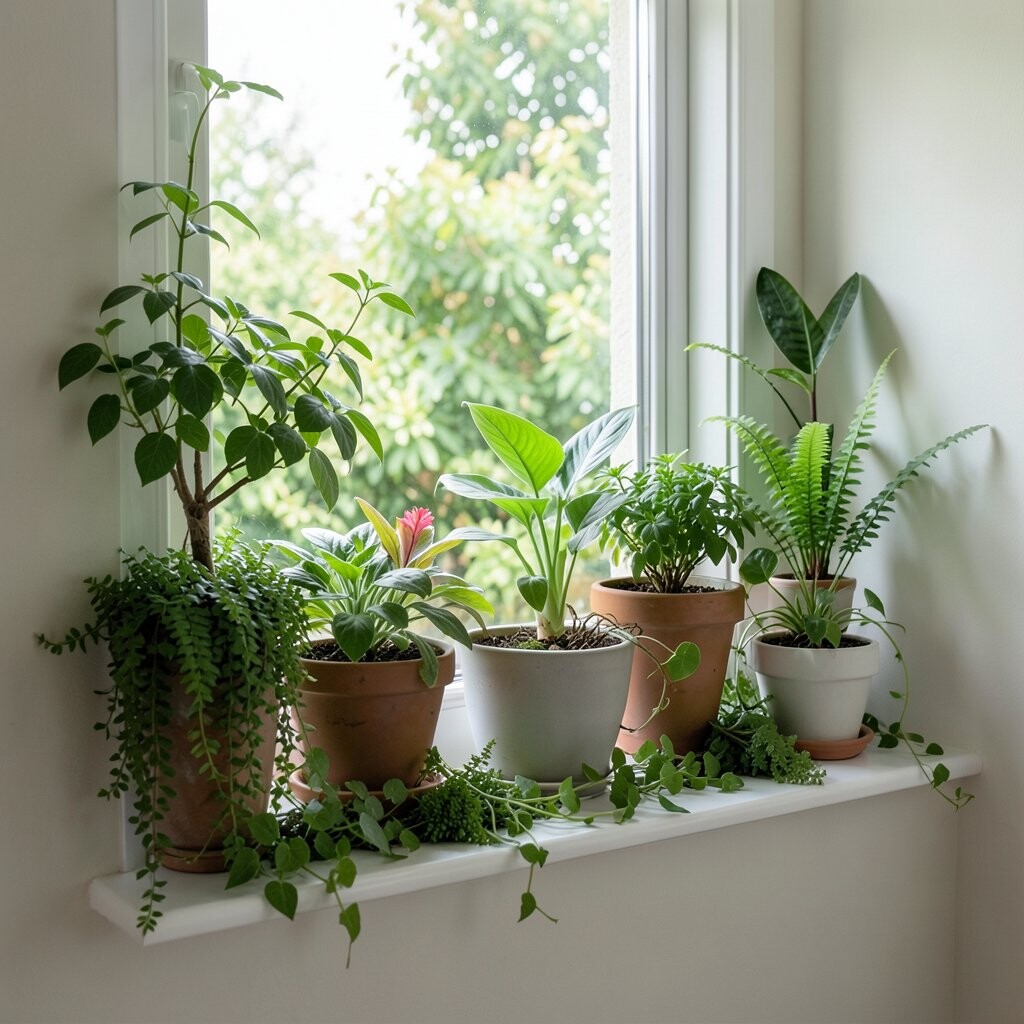
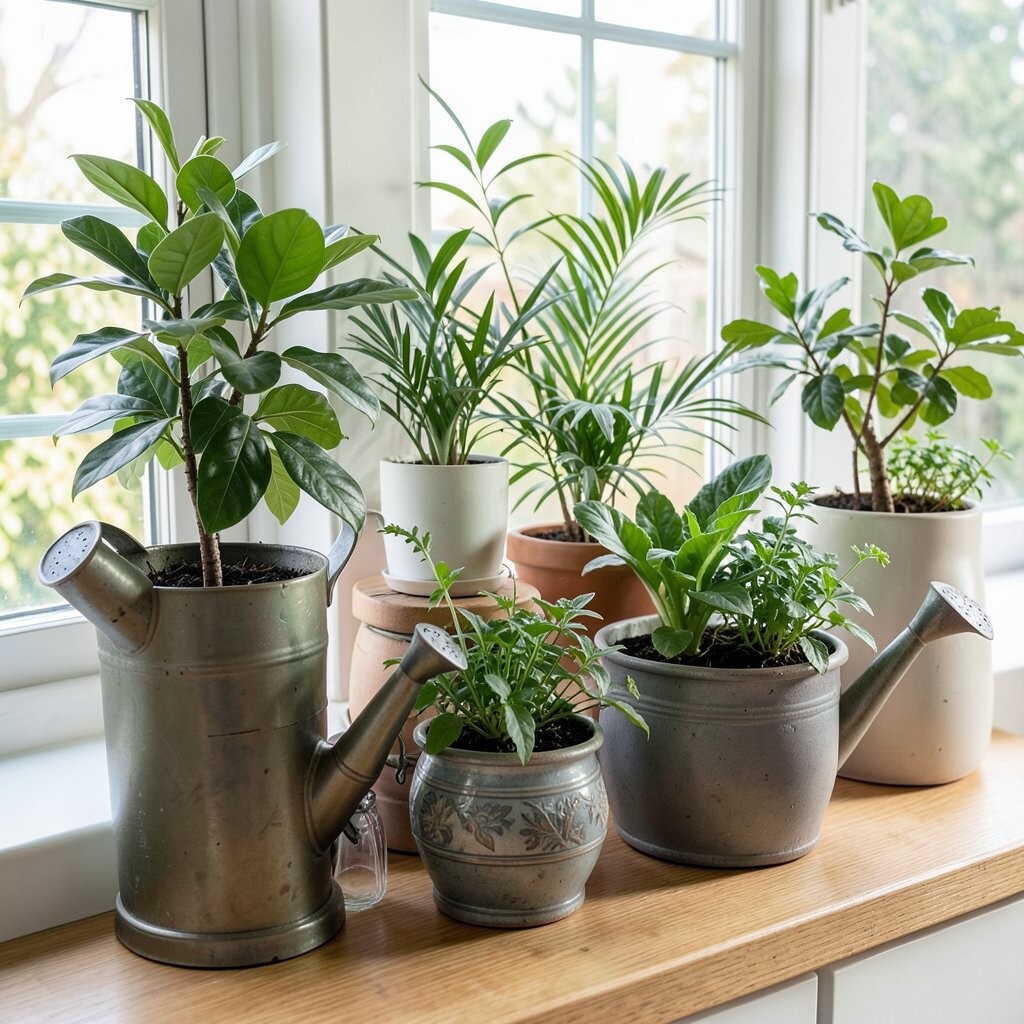
A row of plants along a window ledge can look like a living frame. Imagine small pots lined up like colorful beads, with leaves reaching toward the light.
This makes your room brighter because leaves act like soft color near the light source. It also helps you spot plant needs early since everything is right where you can see it. Space pots enough so leaves have airflow and don’t rub each other. Rotate pots weekly for even growth and to avoid one-sided leaning. Personalize by using different pot heights, like tiny rosettes paired with a taller, leafy plant.
5) Turn shelves into mini plant galleries
) Turn shelves into mini plant galleries
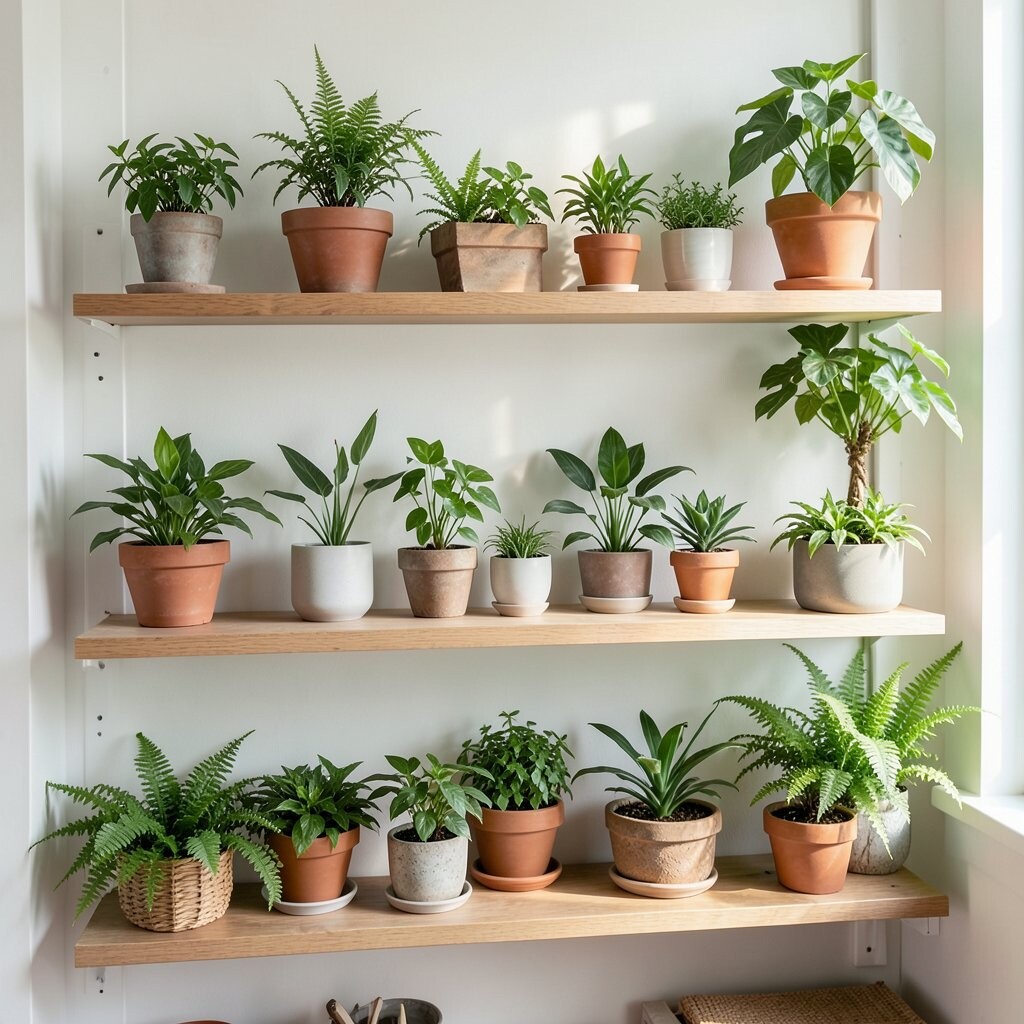
Place plants on floating shelves alongside books, art, and small décor. The result is a gallery vibe where greenery feels like part of the collection.
Plants add calm color and can make a shelf look less “empty.” They also improve the everyday mood of a room because you see them often. Choose plants that tolerate shelf conditions, like snake plant, pothos, or hardy cuttings that can handle indoor life. Keep a consistent watering rhythm so shelves don’t become a surprise mess.
Personalize with a theme: coastal pots, neutral stone textures, or a black-and-white palette. For cost, start with cuttings from a friend or swap group, then pot them in affordable planters. This year’s décor trend favors styled shelves with a mix of natural textures, so plants fit perfectly.
6) Choose statement planters with bold shapes
) Choose statement planters with bold shapes
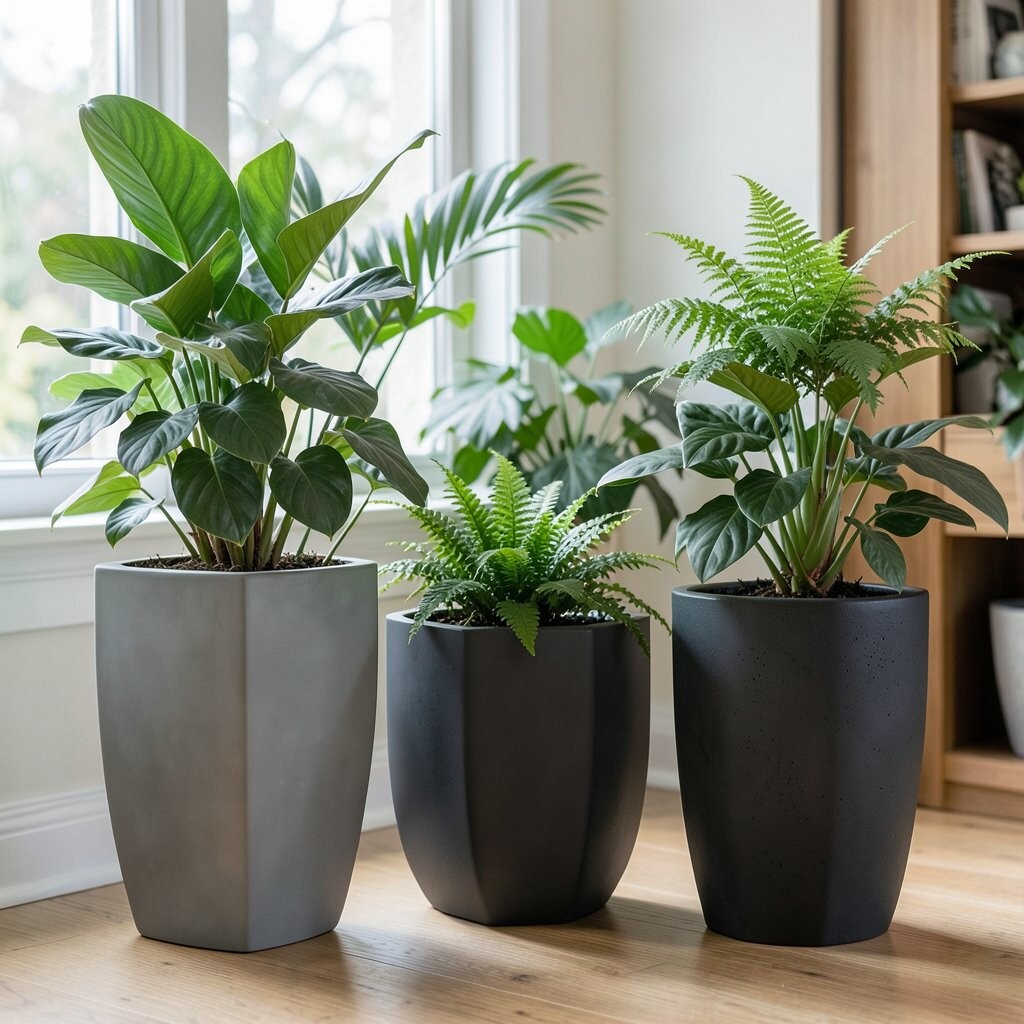
If you want the décor to pop, start with the planter. A tall, sculptural pot can look like art, even before the plant grows in fully.
This kind of styling makes a room feel intentional. Plants soften bold décor pieces and add a friendly, organic touch. Try a geometric planter near a plain wall so the plant becomes the main focal point. Pair a dramatic pot with a simple, easy plant so the look stays balanced.
For personalization, match the pot color to your existing artwork or rug tones. If you want a trend feel, look for matte finishes, textured ceramic, and oversized silhouettes. For cost, you can buy one statement pot and keep the plant itself small; you’ll still get strong visual impact.
7) Add plants to your dining area as a centerpiece
) Add plants to your dining area as a centerpiece
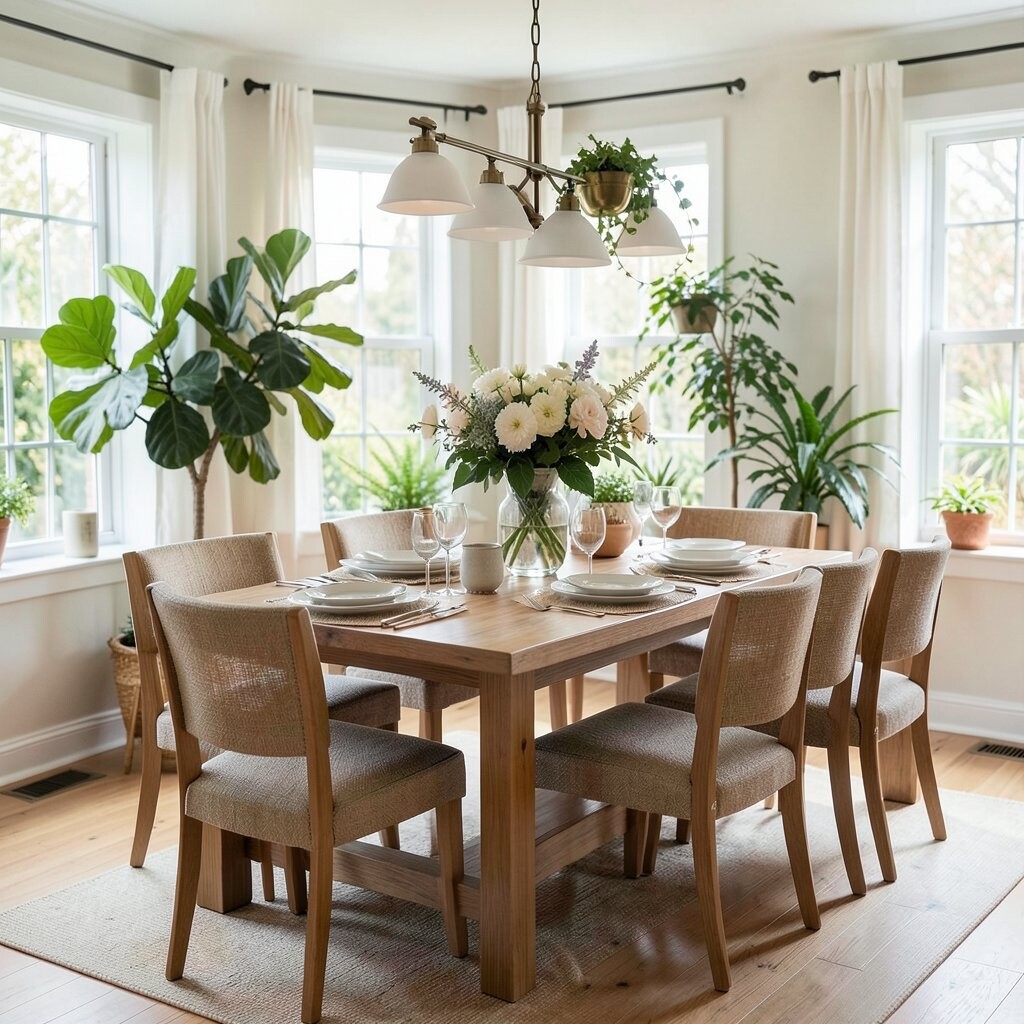
A plant centerpiece is a fresh alternative to flowers that fade fast. Imagine a small planter in the middle of the table with a trailing plant that drapes softly toward the plates.
This helps the dining space feel cozy and lived-in. Plants also make the room feel warmer and can even encourage slower, more relaxed meals. Choose a plant that is safe and stable, like a compact herb, a small leafy plant, or a low-growing succulent display.
For tips, keep the plant trimmed so it does not block sightlines. Use a tray underneath to protect your table and simplify cleaning. Personalize by using seasonal accents, like a few extra stones, a small wooden tray, or a subtle candle nearby.
8) Mix herbs with décor in kitchen corners
) Mix herbs with décor in kitchen corners
Your kitchen can be both pretty and useful with herbs as décor. Picture little pots of basil, mint, or rosemary sitting by the window like edible jewelry.
This adds a bright scent and gives you quick ingredients when you cook. Herbs also bring a lush green look that feels fresh year-round. Start with plants that match your light: basil and rosemary often prefer brighter spots, while mint may do well with consistent moisture.
9) Build a “terrarium table” for small spaces
) Build a “terrarium table” for small spaces
Terrariums are perfect when you want greenery without the extra mess. Think glass containers with layered rocks, soil, and plants that create a tiny forest scene.
This style is visually satisfying because you can see all the details. It also helps you water less often depending on the setup. Choose plants that work well in enclosed or semi-enclosed containers, like small ferns, fittonia-style foliage, or miniature tropical plants.
To personalize, use decorative stones, a small figurine, or even a subtle color theme in the substrate. For cost, terrariums can be as affordable as a glass jar plus simple soil, though special glass kits cost more. A current trend is “mini world” décor, and terrariums look trendy but still calm and cozy.
10) Use a plant stand to frame your entryway
) Use a plant stand to frame your entryway
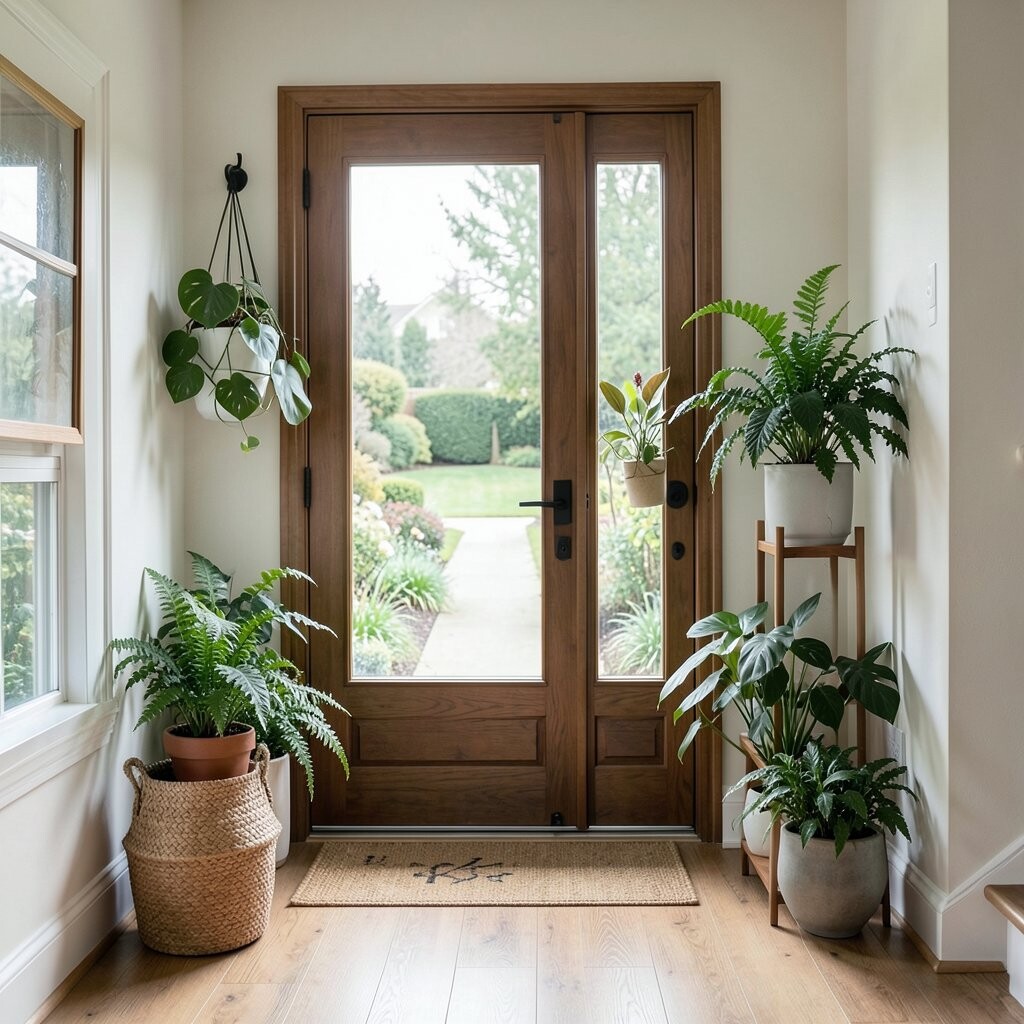
Your entryway is the first impression, so it deserves a warm welcome. A plant stand with a medium plant can make the space feel inviting the moment you walk in.
Plants soften entryway clutter and create a natural “breathing space.” They also help guests feel settled because greenery looks friendly and calm. Place the stand near a light source, but not in harsh, direct sun if the plant is sensitive.
For personalization, pick a stand height that matches your door area so the plant feels balanced, not cramped. You can also add a second small plant on a lower shelf for extra richness. Consider cost by checking secondhand stores for stands and buying a single healthy plant to start.
In décor trends, entryway styling is all about “small but impactful” moments, and plant stands deliver that effect fast. Even a narrow hallway can feel warmer with the right placement.
11) Create a bathroom jungle with moisture-loving plants
) Create a bathroom jungle with moisture-loving plants
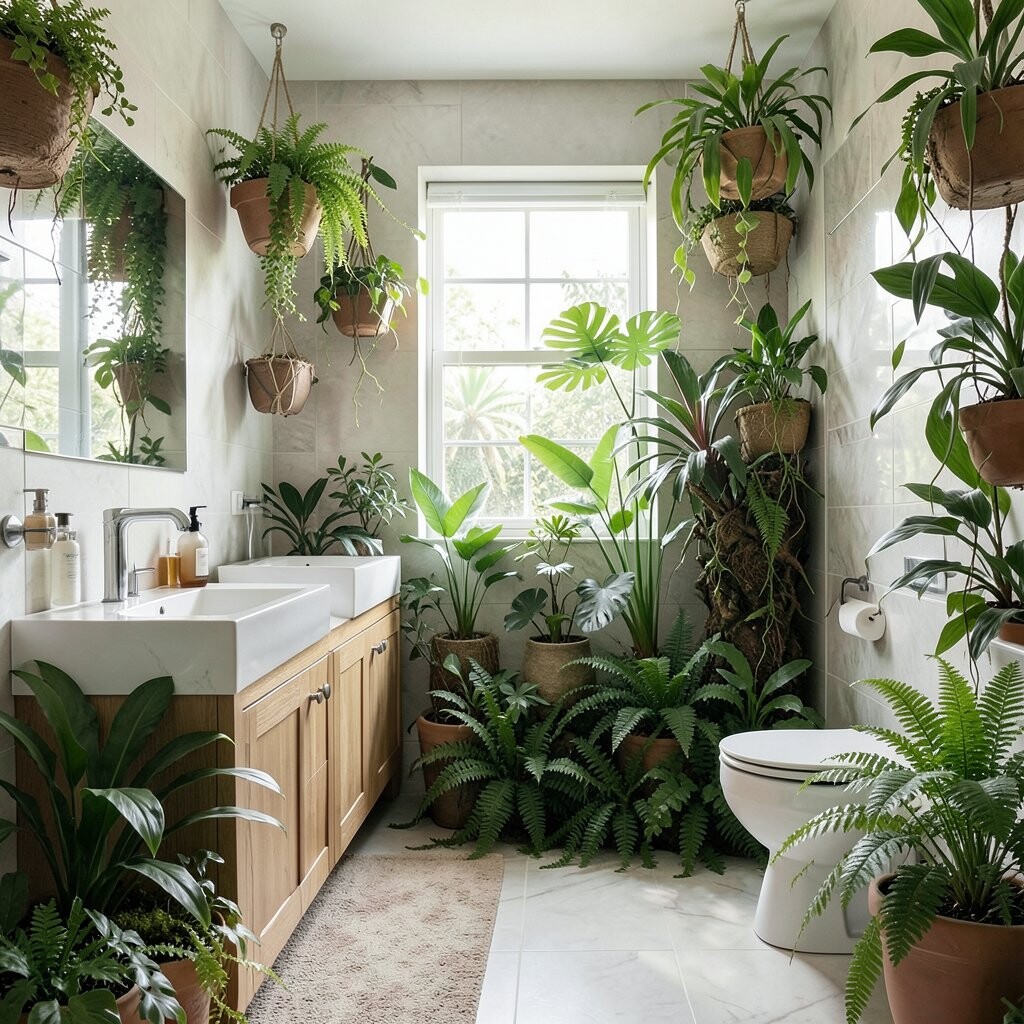
A bathroom is often the perfect home for plants that love humidity. Picture soft, glossy leaves near the sink or a fern-like plant next to the bathtub.
This can make your daily routine feel spa-like and more enjoyable. Plants also help the space look less sterile and more relaxing. Look for moisture-friendly options such as ferns, calatheas, or plants that tolerate higher humidity and indirect light.
For tips, keep a towel nearby and wipe drips so your floors stay safe. Make sure you have good drainage, since bathrooms can hold water longer than other rooms. Personalize with a matching soap dish and pot color so the entire counter area looks coordinated.
12) Style one plant with a decorative support (and let it climb)
) Style one plant with a decorative support (and let it climb)
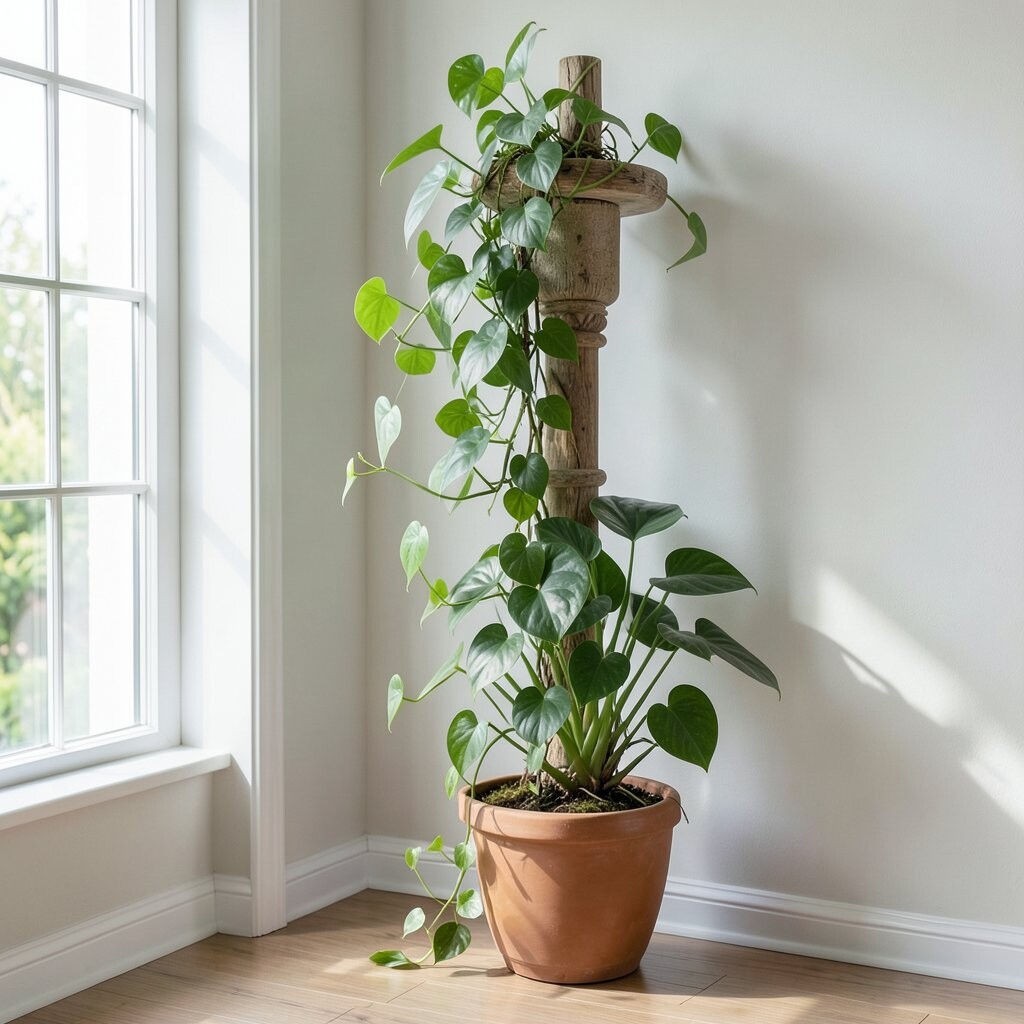
Some plants naturally want to climb, and a support makes them look even more decorative. Imagine a trellis behind a pot so the stems grow upward with intention.
This gives vertical interest and can make plain walls feel alive. It also helps trail plants stay neat rather than spreading everywhere. Choose a climbing plant type, then secure it gently as it grows so it does not strain. Keep the support stable and place it near the brightest window you have for faster, healthier growth.
Personalize by choosing a support style that matches your décor—wooden trellis, metal grid, or even a simple moss pole. For cost, you can start with a budget trellis and upgrade later if you love the look. A current trend is “living wall touches,” and even one climbing plant can mimic that effect in a simple way.
When you adjust the vines, use soft ties and check them regularly so they do not cut into stems.
13) Pair plants with decorative watering and care stations
) Pair plants with decorative watering and care stations
A plant décor idea that people forget is making care easier to do. Set up a small station with a watering can, misting bottle, gloves, and a tray for repotting.
This keeps your plants looking good because you care for them consistently. It also reduces stress, since you are not hunting for supplies when your soil feels dry. Add a small plant-care tray in the corner where you already place your plants so everything feels tidy and connected.
Personalize your station with labels, a cute timer, or a small notebook for notes. For cost, look for thrifted trays, repurpose containers, and buy only what you truly need at first. Current trends favor practical beauty, and a care station turns plant maintenance into part of the décor story.
As you refine your system, you will notice plants thrive because you are responding faster to their needs.