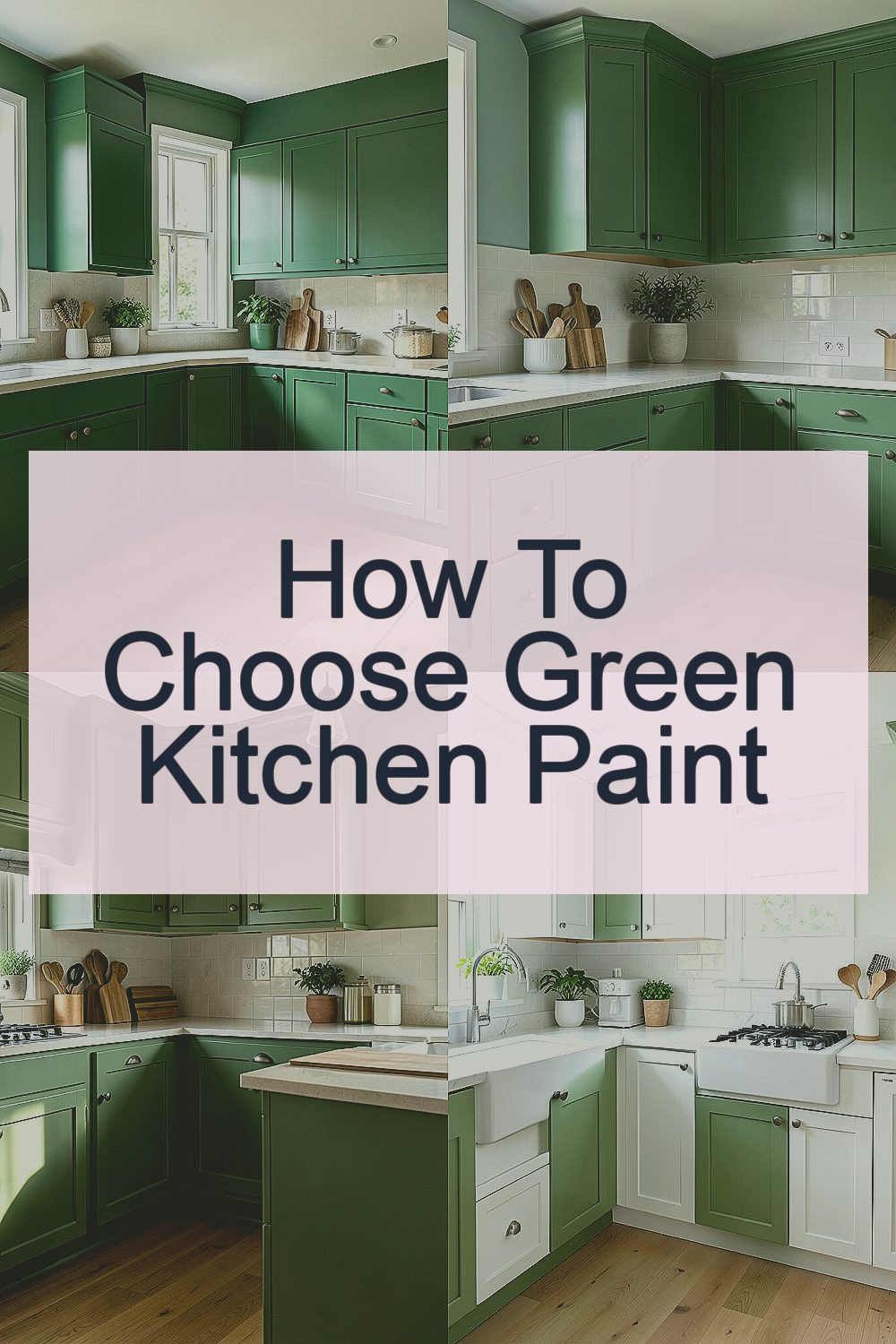
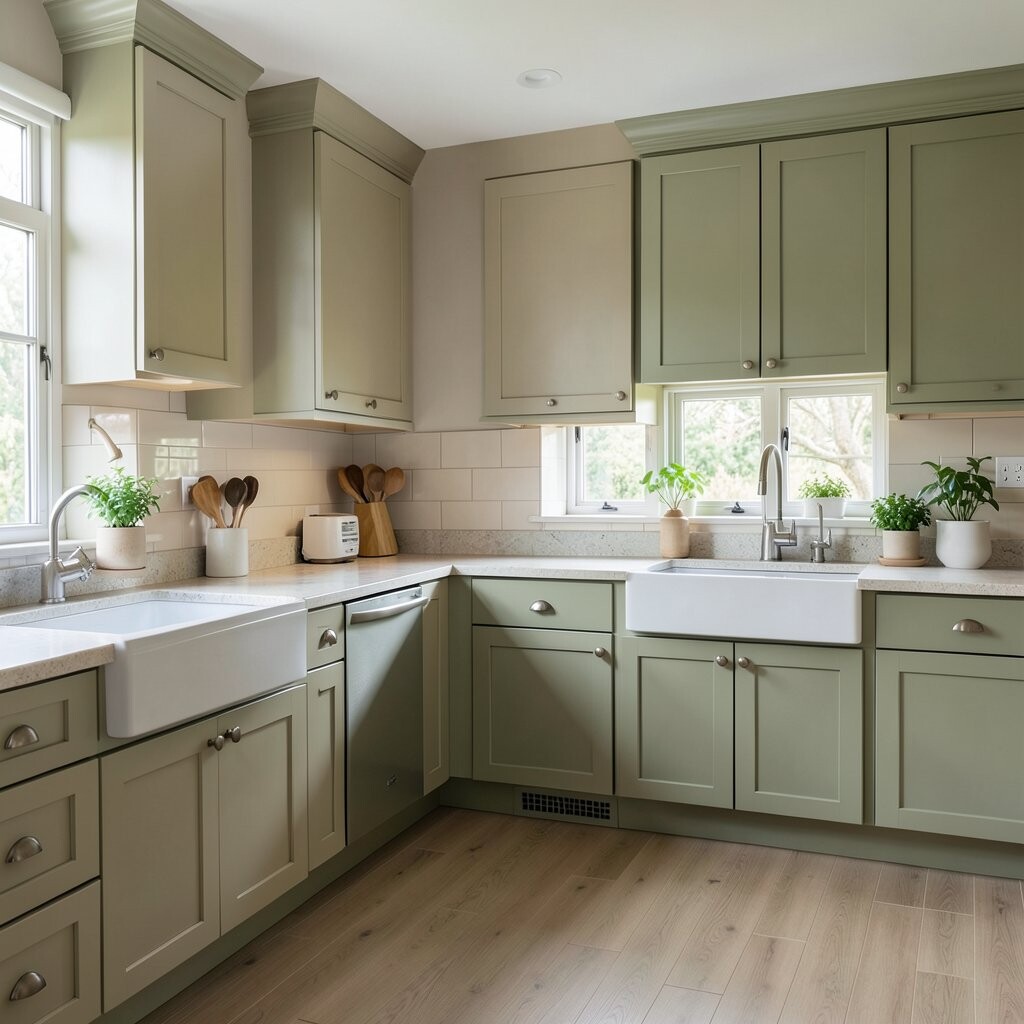
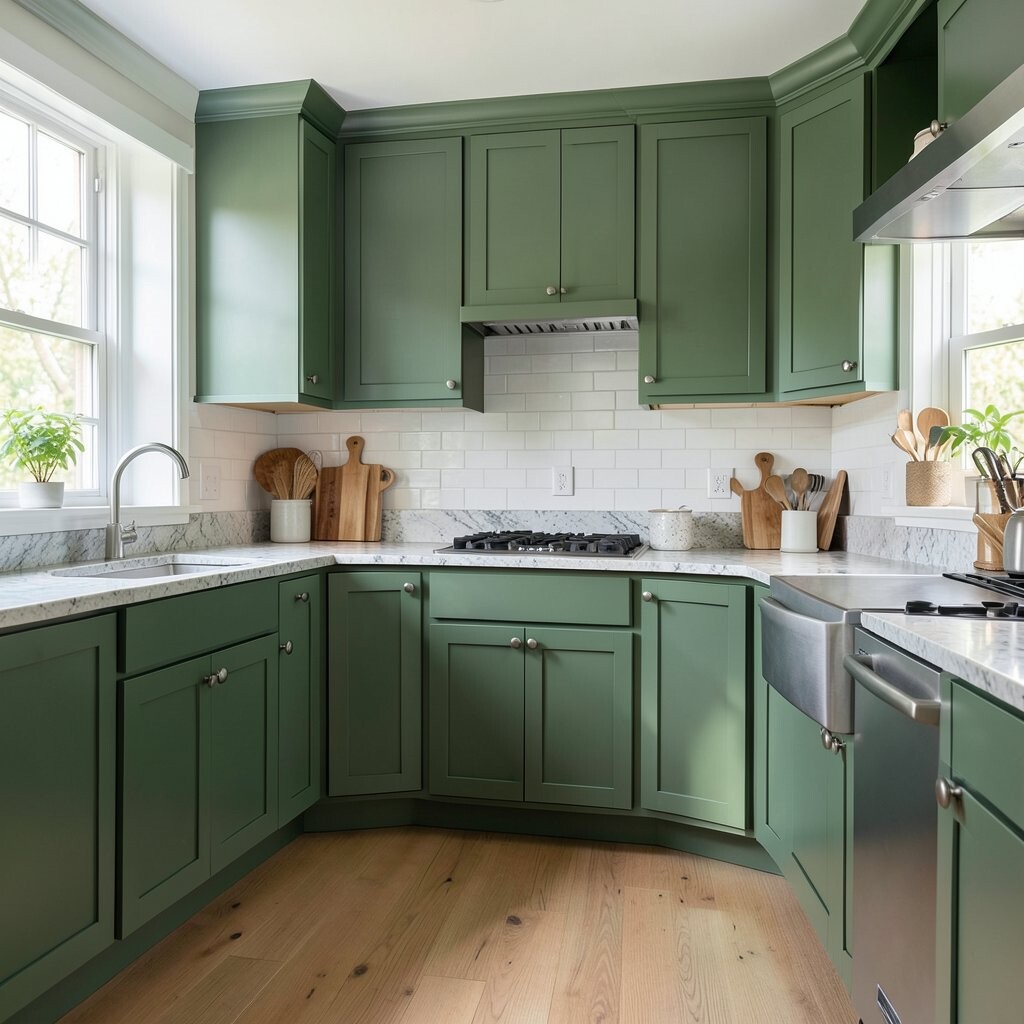
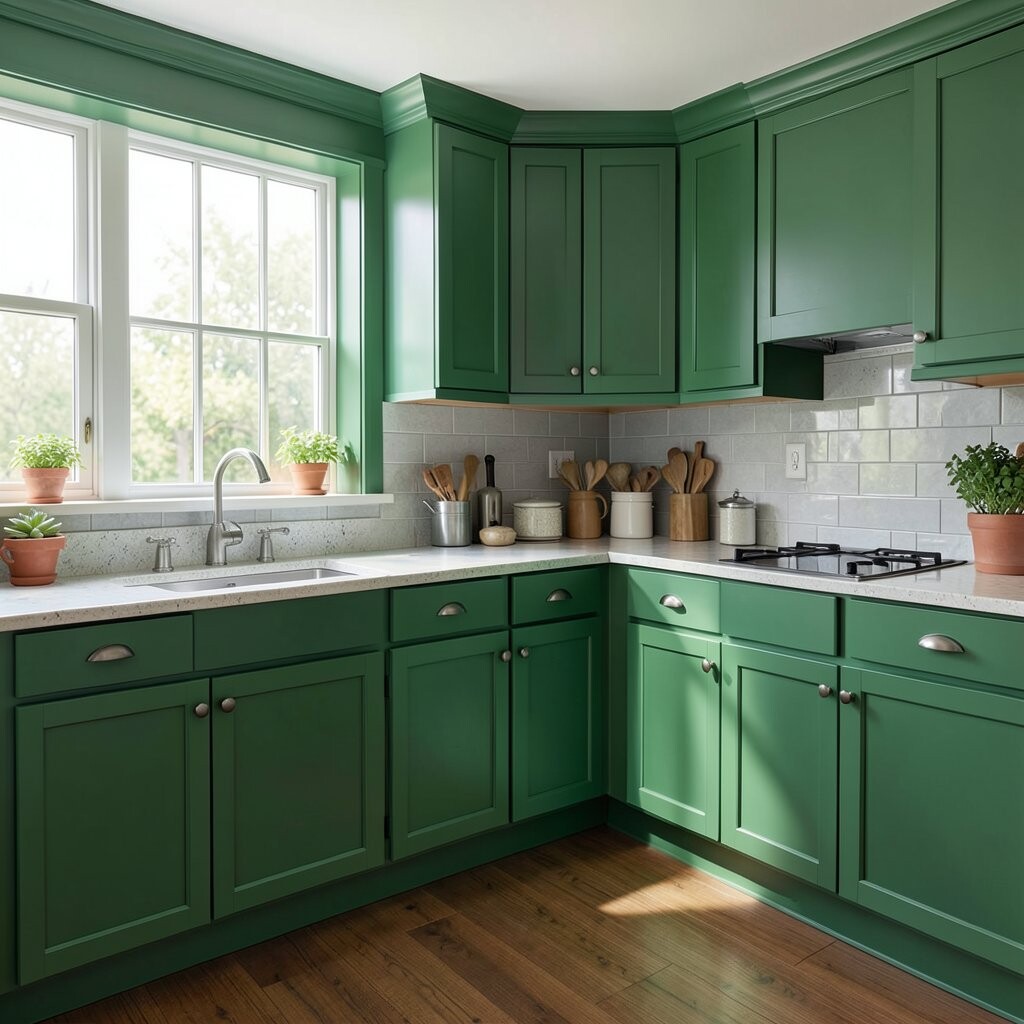
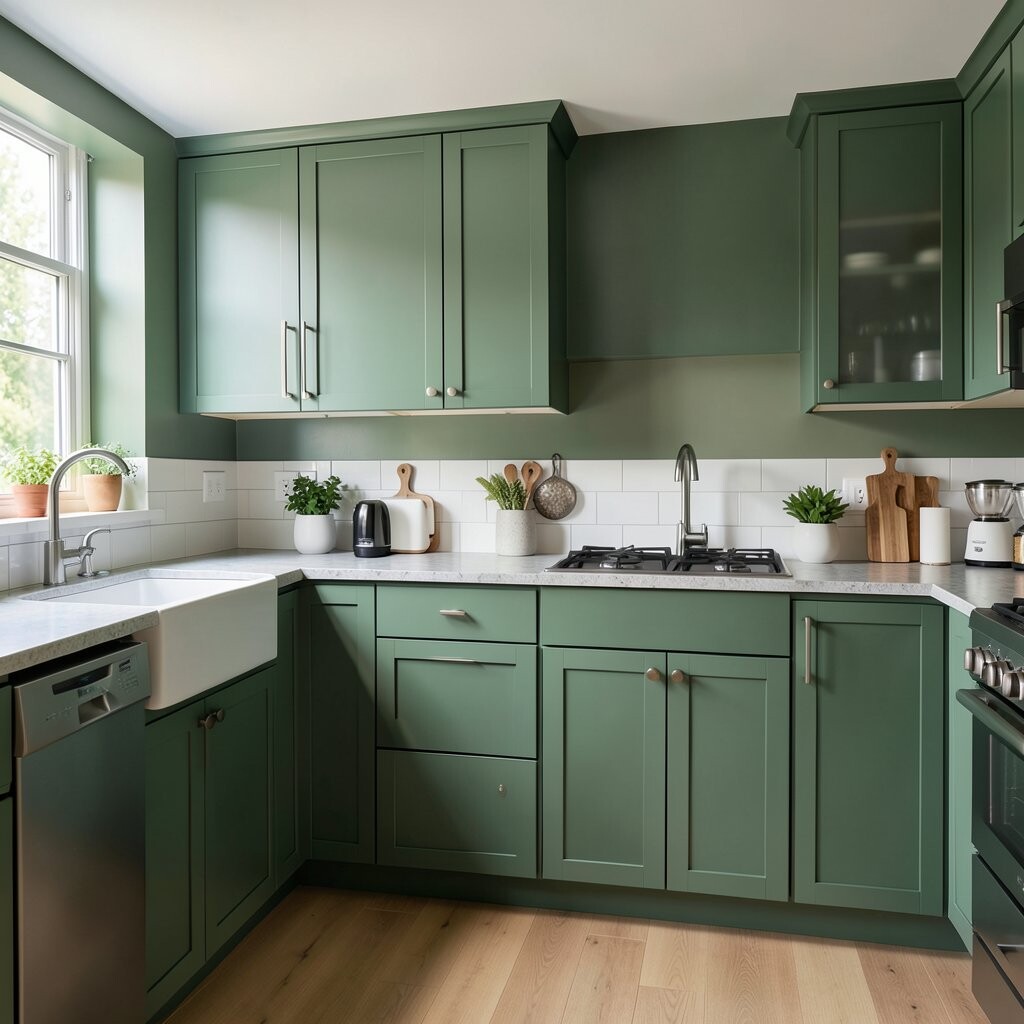
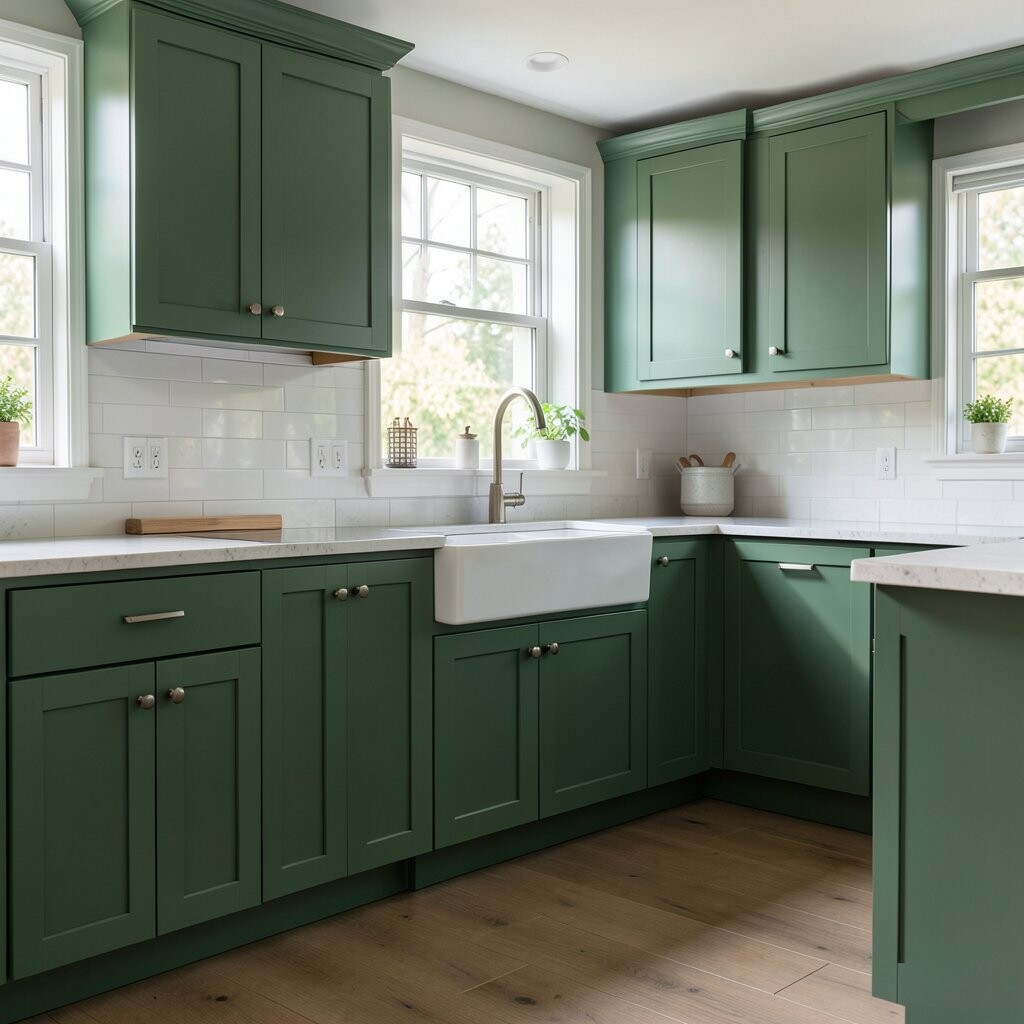
Look at the green you already have on cabinets, walls, tile, or decor. A soft sage kitchen calls for a very different paint than a deep forest one.
Hold paint samples next to your cabinets and see how they behave in morning light and evening light. This simple step helps you avoid a color that fights the green instead of helping it. It also saves money, since a smart first pick can keep you from repainting too soon.
2. Pick a paint color that matches your style
Pick a paint color that matches your style
Your kitchen should feel like you, not like a picture from a store catalog. Warm cream, cool gray, clean white, or even a soft blush can all work with green.
If you like a fresh and airy look, lighter shades are a safe bet. If you want more drama, deeper paint can make the green feel rich and special. Add small personal touches like wood bowls or brass handles to make the whole space feel finished.
Trendy homes often use muted tones that feel calm and natural, and that style works well in green kitchens too.
3. Watch how light changes the color
Watch how light changes the color
Kitchen light can change a paint color a lot. A pale color may look bright in the sun and dull at night.
Test paint near windows, lamps, and under cabinets. This helps you see the real color instead of guessing from a tiny card. Good light-friendly paint can make a small kitchen feel open and cheerful.
Some colors also help bounce light around the room, which is great for darker kitchens or homes with fewer windows.
Paying attention to light can keep you from buying a shade that looks lovely in the store but strange at home.
4. Use white for a crisp, clean feel
Use white for a crisp, clean feel
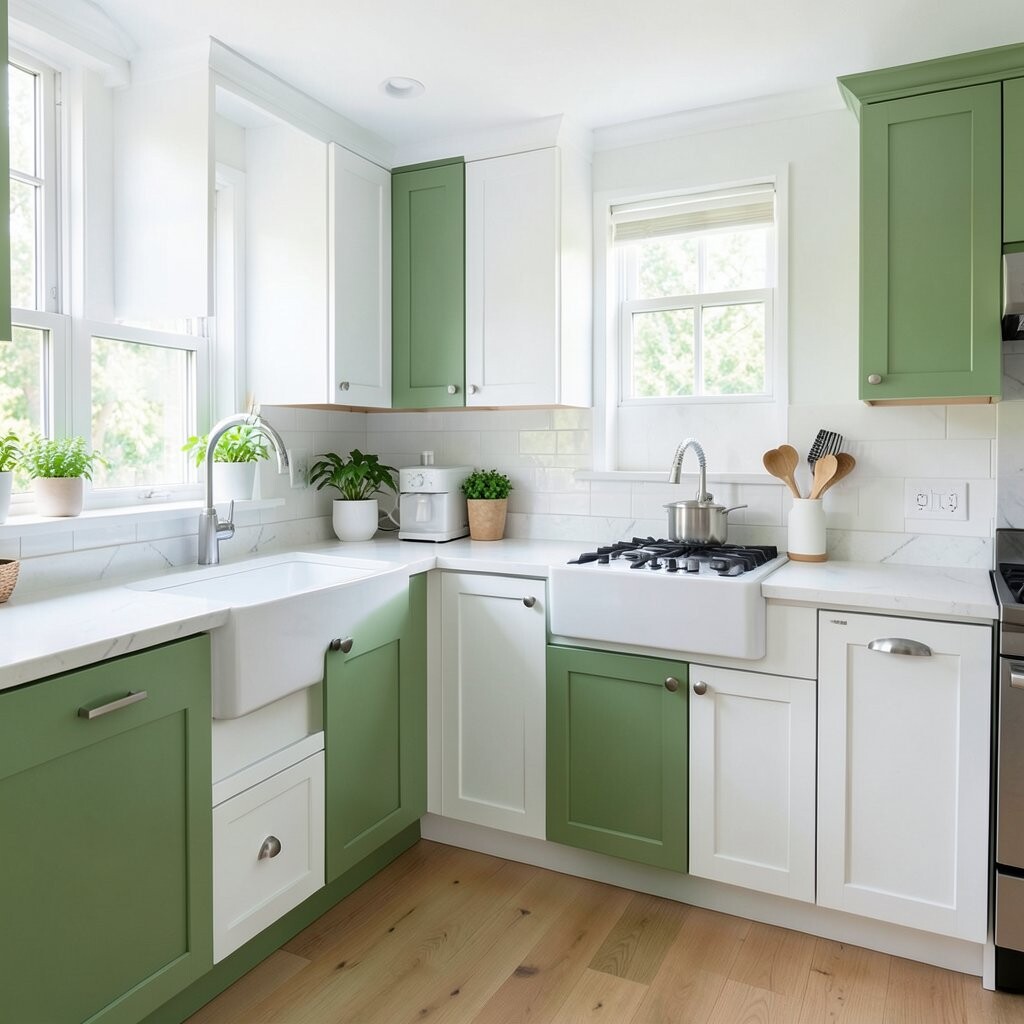
White paint is a classic match for green kitchens. It gives the room a fresh look and makes green cabinets or accents stand out.
Soft white feels warmer than bright white, so it can make the space feel cozy. This choice works well if you want a clean style without making the kitchen look cold. White paint also pairs nicely with many budget decor items, so it is easy to refresh the room little by little.
5. Try warm cream for a softer mood
Try warm cream for a softer mood
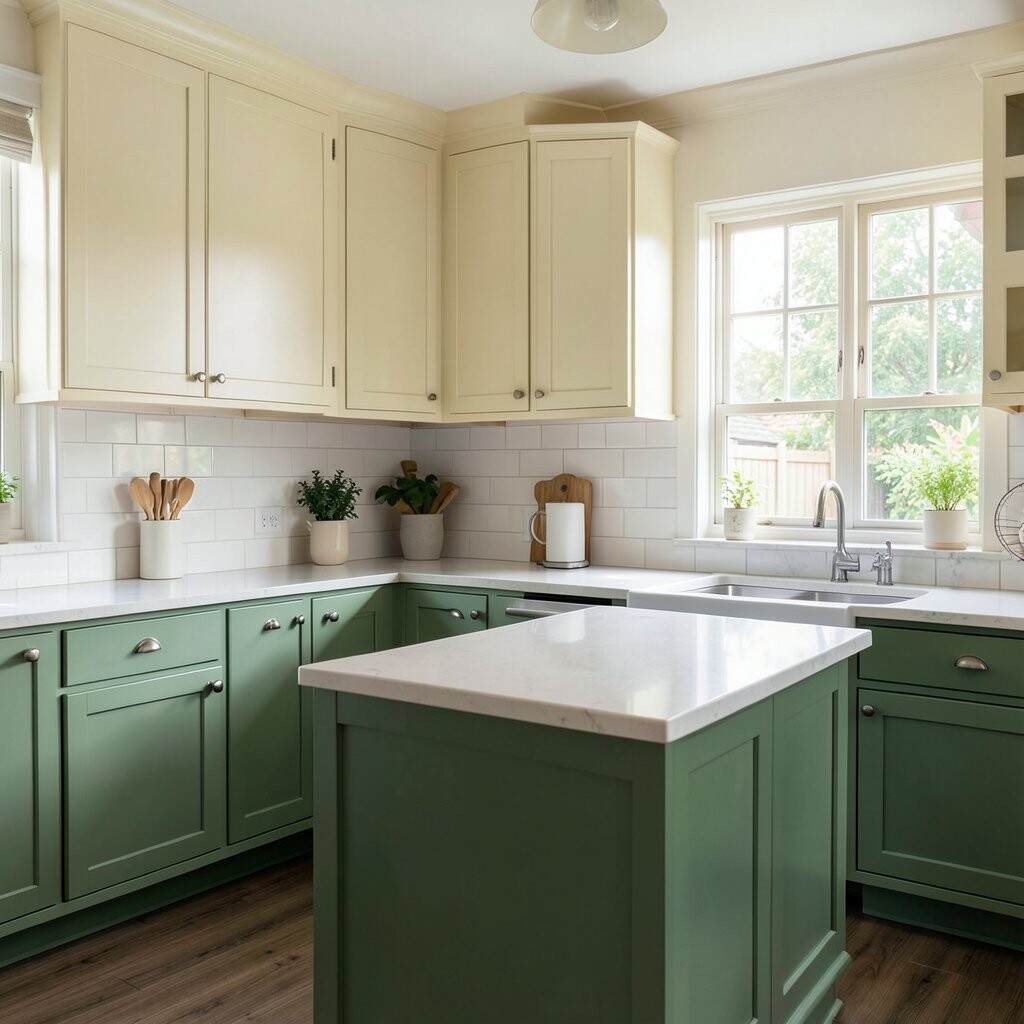
Cream paint adds a gentle glow to a green kitchen. It can make the room feel homey and smooth instead of sharp.
This is a smart choice for people who like a cozy, lived-in style. Cream works well with wood tables, woven baskets, and warm metal finishes. It is also a nice pick if you want a calmer look without paying for new cabinets.
Soft cream has become popular in many homes because it feels timeless and easy to live with.
6. Choose gray for a modern touch
Choose gray for a modern touch
Gray paint can make green feel sleek and up to date. Light gray keeps things airy, while deeper gray adds more depth.
Try gray if your kitchen has stainless steel appliances or simple lines. It gives the room a neat look without stealing attention from the green. For a lower-cost refresh, gray walls can make older cabinets look more polished with very little change.
You can also add black knobs or open shelves to bring in a cool, modern feel.
Gray works best when it has the right undertone, so test it next to the green before you buy a full can.
7. Go bold with deep navy
Go bold with deep navy
Navy paint and green can make a kitchen feel rich and stylish. The mix can look very polished when used with care.
This choice is great if you want a room that feels full of character. Navy adds contrast, which helps green cabinets pop in a beautiful way. It can also hide small marks better than very light paint, which is a nice bonus for busy kitchens.
Add brass or gold accents for a look that feels warm and current.
If you want drama without a huge remodel, navy can give you that strong effect for a reasonable paint budget.
8. Use beige for a relaxed natural look
Use beige for a relaxed natural look
Beige paint brings a soft earth tone to green kitchens. It feels calm, simple, and easy on the eyes.
This is a good pick for people who love nature-inspired spaces. Beige works with plants, wood counters, and handmade pieces. It is also a safe option if you want to keep the room inviting without spending much on extra decor.
Look for beige with a slight warmth so the kitchen does not feel flat.
That little warmth can help the whole room feel more welcoming and more personal.
9. Think about the undertones
Think about the undertones
Every paint color has a hidden tone inside it. Some are warm, some are cool, and some can make green look fresh or muddy.
For example, a yellow-based white may warm up sage cabinets, while a blue-based white may sharpen them. Matching undertones makes the room feel smooth and planned. It can also stop you from wasting money on a color that looked right online but not in your kitchen.
10. Match the finish to the job
Match the finish to the job
Paint finish matters almost as much as color. A flat finish hides flaws, while a satin finish is easier to wipe clean.
For kitchens, satin or semi-gloss often works well because splashes happen. This gives you both beauty and simple cleanup. A smarter finish choice can also help your paint last longer, which saves cash over time.
Shiny finishes can make bold colors feel brighter, so test a small spot before coating the whole room.
That tiny sample can show you how your chosen paint will act in real life.
11. Test sample boards, not just wall spots
Test sample boards, not just wall spots
Small paint chips can fool the eye. A better choice is to paint large sample boards and move them around the kitchen.
This lets you see the color beside cabinets, floors, counters, and curtains. You will spot clashes faster and feel more sure about your pick. It is also cheaper than repainting the whole room after a bad guess.
Try looking at the boards in daylight and after dark to get a true feel for the paint.
12. Let your countertops guide you
Let your countertops guide you
Countertops take up a lot of visual space, so they matter a lot. Marble, butcher block, quartz, and laminate all change how paint looks next to green.
If your counters have warm veins or wood tones, choose paint with a soft warm base. Cooler counters often work best with crisp whites or muted gray. This matching can make your kitchen feel richer without needing costly changes.
A well-chosen paint color can make old counters look more intentional and stylish.
13. Use paint to balance dark green cabinets
Use paint to balance dark green cabinets
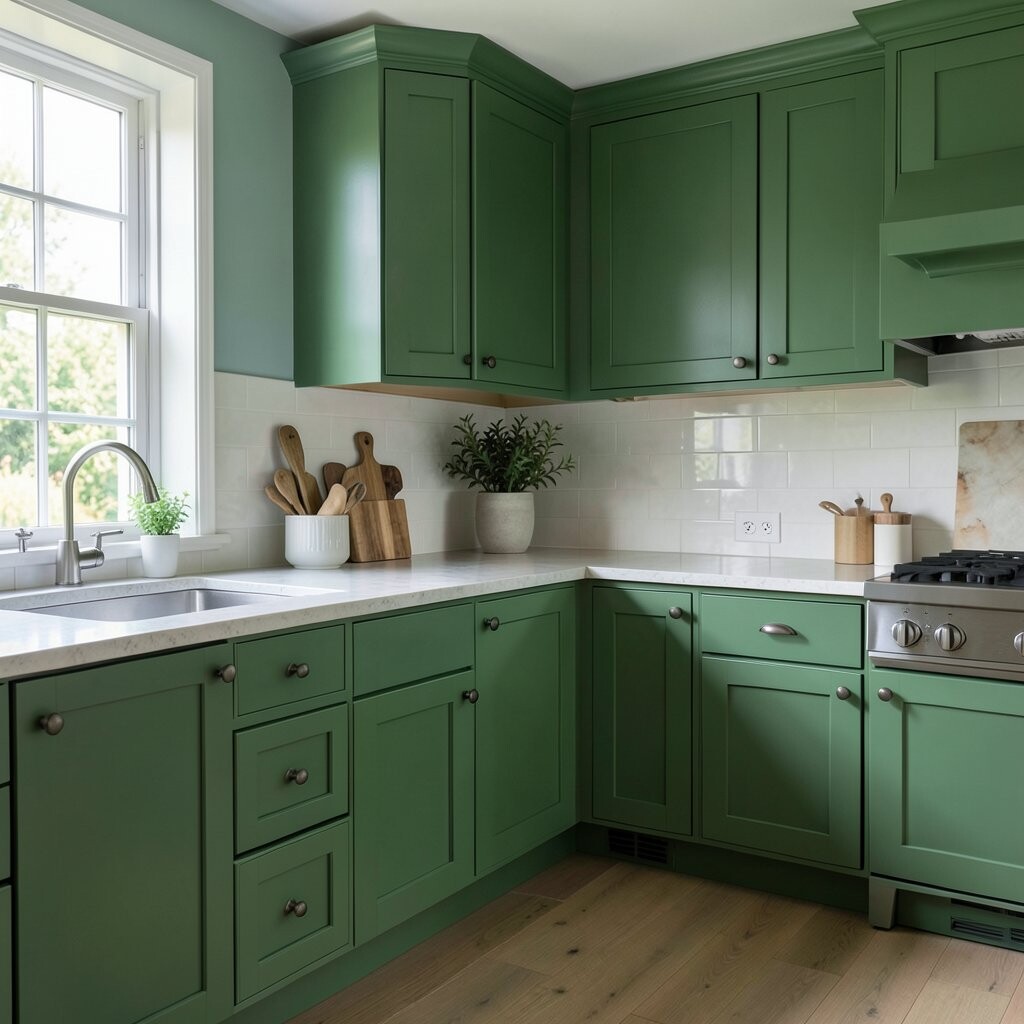
Dark green cabinets can feel elegant, but they also need balance. A lighter wall color can keep the room from feeling too heavy.
Soft white, pale cream, or light gray can open things up. These colors add air and help the green stay the star. If your kitchen is small, this kind of balance can make it feel much larger without moving a single wall.
Try adding a few bright dishes or light curtains to finish the look.
That mix keeps the room from feeling closed in and helps the paint work harder for you.
14. Bring in earthy tones for warmth
Bring in earthy tones for warmth
Earthy paint colors can make a green kitchen feel grounded and natural. Think clay, sand, oatmeal, or soft taupe.
These shades work well with houseplants, wicker, and wood shelves. They also give the room a calm mood that many people love right now. Earth tones can be a good budget choice too, since they pair well with simple, low-cost decor.
If you want a space that feels cozy and handmade, this path is worth trying.
15. Keep the room from feeling too busy
Keep the room from feeling too busy
Green can already make a strong statement, so the paint should not fight it. Pick one main color and let it lead.
Too many loud colors in one kitchen can feel messy fast. A calm wall color helps the green look neat and thoughtful. This also makes it easier to shop for accents, since you will have a clear color plan and fewer impulse buys.
16. Think about the size of the kitchen
Think about the size of the kitchen
Small kitchens often benefit from lighter paint. Bigger kitchens can handle deeper shades and still feel open.
If space is tight, a pale wall color can make the room seem wider and brighter. If you have a roomy kitchen, a richer paint can add charm and make it feel snug in a good way. Choosing for the room size helps you get the best look without extra remodeling costs.
Try to make the walls support the green instead of closing in around it.
That balance can make even a tiny kitchen feel fresh and friendly.
17. Add personality with an accent wall
Add personality with an accent wall
An accent wall can give your green kitchen a fresh focal point. It lets you bring in color without painting every surface the same way.
Choose a wall behind open shelves, a dining nook, or a breakfast area. A soft pattern, muted color, or deep tone can add charm and uniqueness. Accent walls are also cost-friendly because they use less paint and less time.
This is a good option if you want to try something new without going all in.
18. Use paint to tie in metal finishes
Use paint to tie in metal finishes
Metal finishes can change the feeling of a green kitchen fast. Brass feels warm, chrome feels cool, and black feels bold.
Paint should work with those finishes, not against them. Warm paint colors often suit brass, while cooler colors fit silver or chrome. This small match can make the room look more polished and planned, even on a modest budget.
Look at your faucet, light fixtures, and cabinet pulls before you choose a color.
19. Think about how often you cook
Think about how often you cook
A kitchen that gets a lot of use needs paint that can handle life. Wipeable paint makes it easier to clean splashes and marks.
If you cook often, avoid super delicate finishes that stain fast. A durable paint keeps the room looking good longer, which is a big help for busy homes. It may cost a little more at first, but that can save money later.
Fresh-looking paint in a hardworking kitchen can make the whole room feel cared for.
That sense of order can make cooking feel nicer, too.
20. Try soft color contrast
Try soft color contrast
Green does not need a perfect match to look good. In fact, a gentle contrast often makes it shine even more.
Pairing green with soft peach, muted tan, or pale stone can add depth without feeling loud. This kind of contrast makes the room look more layered and stylish. It also gives you more freedom when choosing decor, since many soft shades can work together.
Current kitchen trends often lean toward easy, natural contrasts rather than bright, harsh ones.
21. Trust your own eye first
Trust your own eye first
Rules help, but your own taste matters most. If a color makes you smile every time you walk in, that is a strong sign.
Think about how you want the kitchen to feel in daily life. Calm, sunny, bold, or cozy can all be good goals for a green space. Choosing with your own style in mind makes the paint feel personal and worth the cost.
Bring home samples, place them in the room, and give yourself time to look. Your kitchen should feel like a place you want to stay in, not just a room that looks good in a photo.