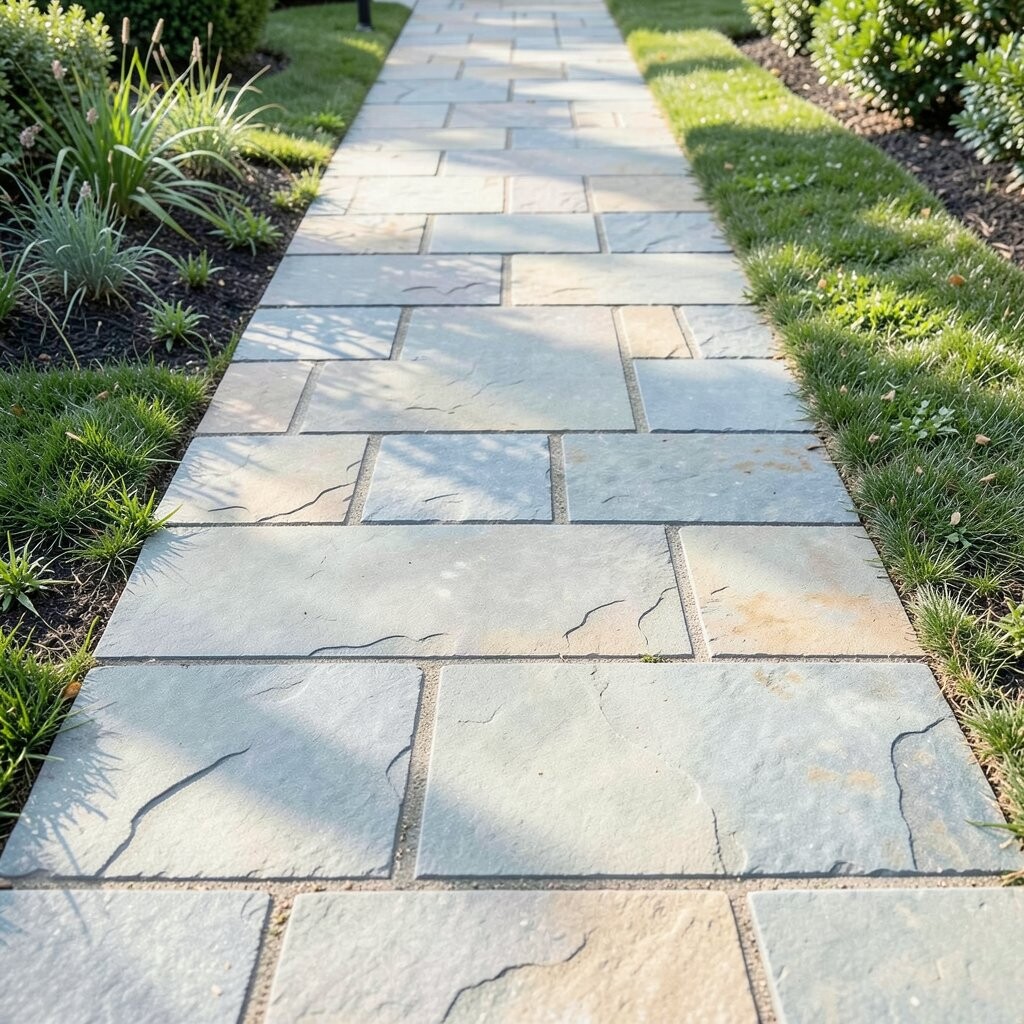
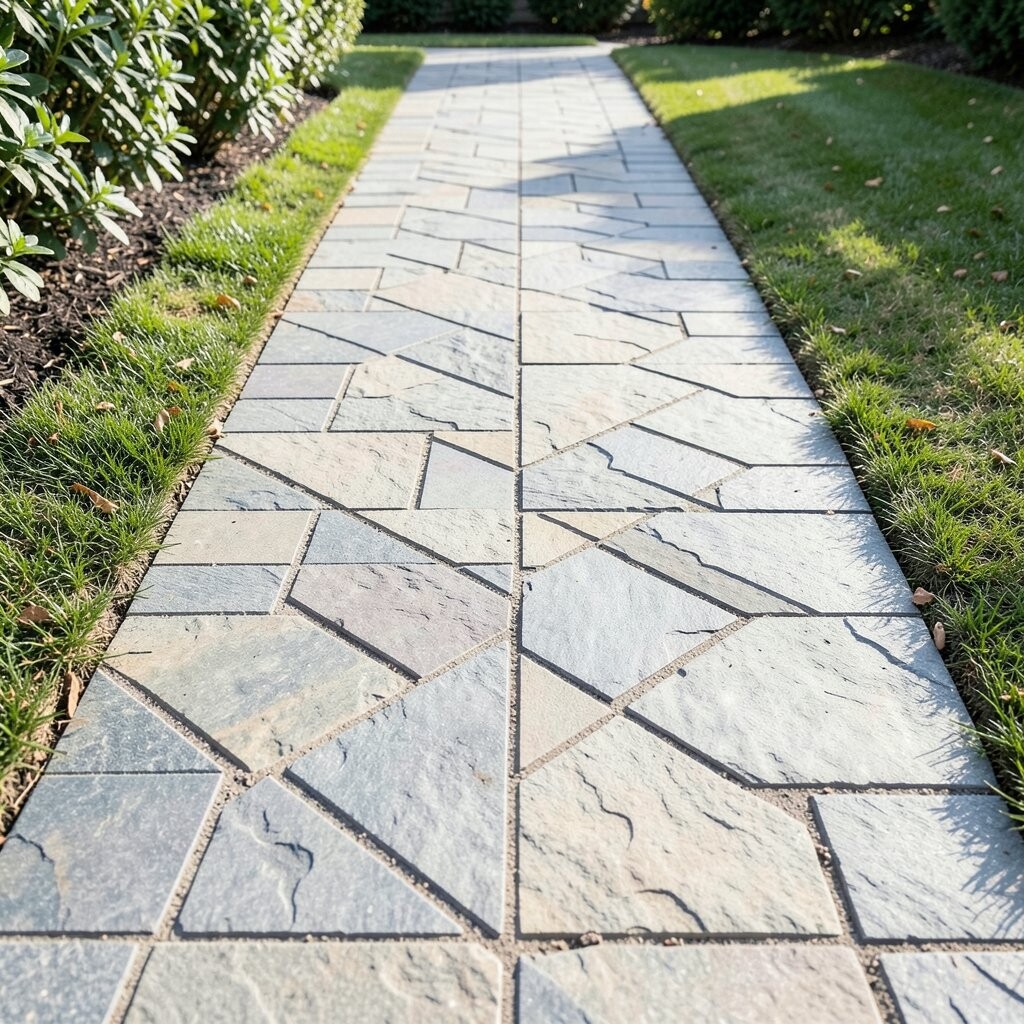
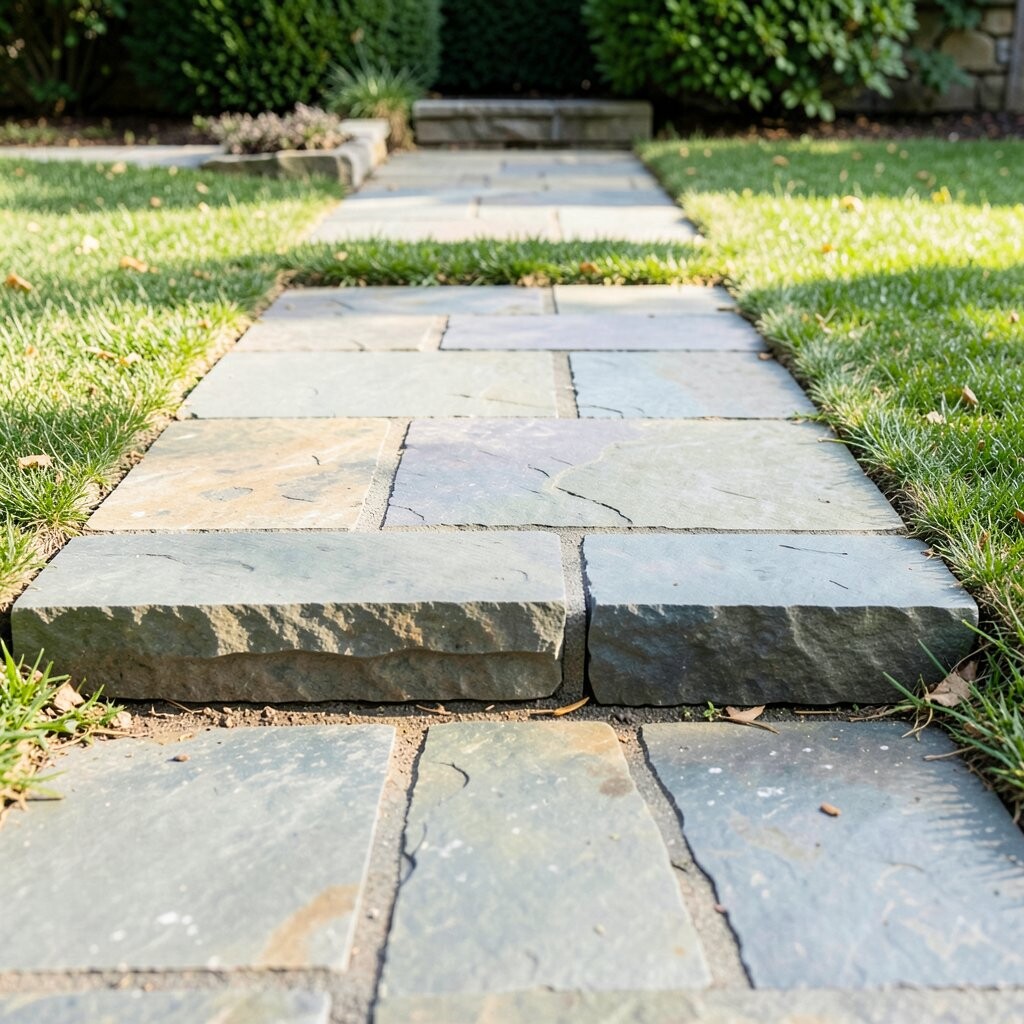
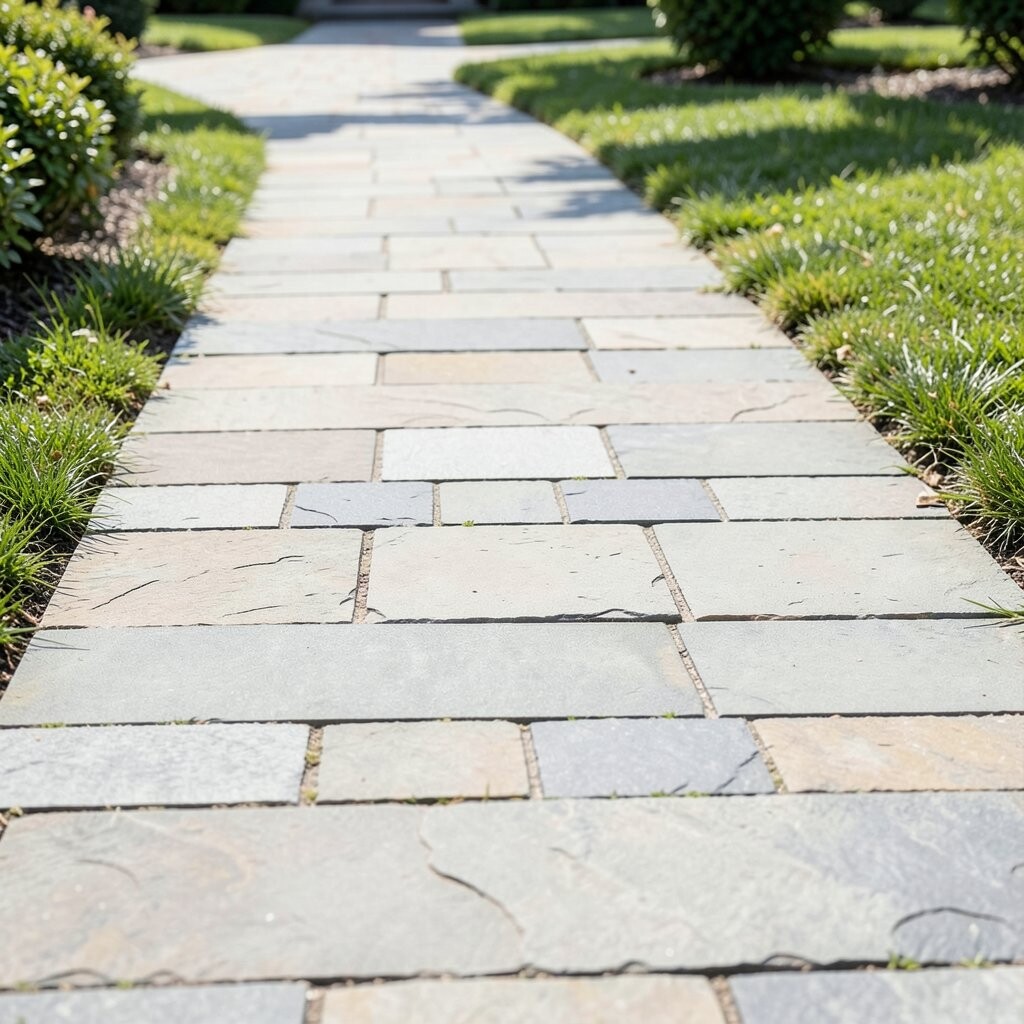
Flagstone has a natural look that feels warm and timeless. The wide, flat pieces create a soft, easy path that fits many yard styles.
This style works well because it looks elegant without feeling fussy. It also gives good footing, which is helpful for kids, guests, and garden carts. For a personal touch, choose stones with warm tan tones or cool gray shades that match your home.
2. Curved Paver Stone Path
Curved Paver Stone Path
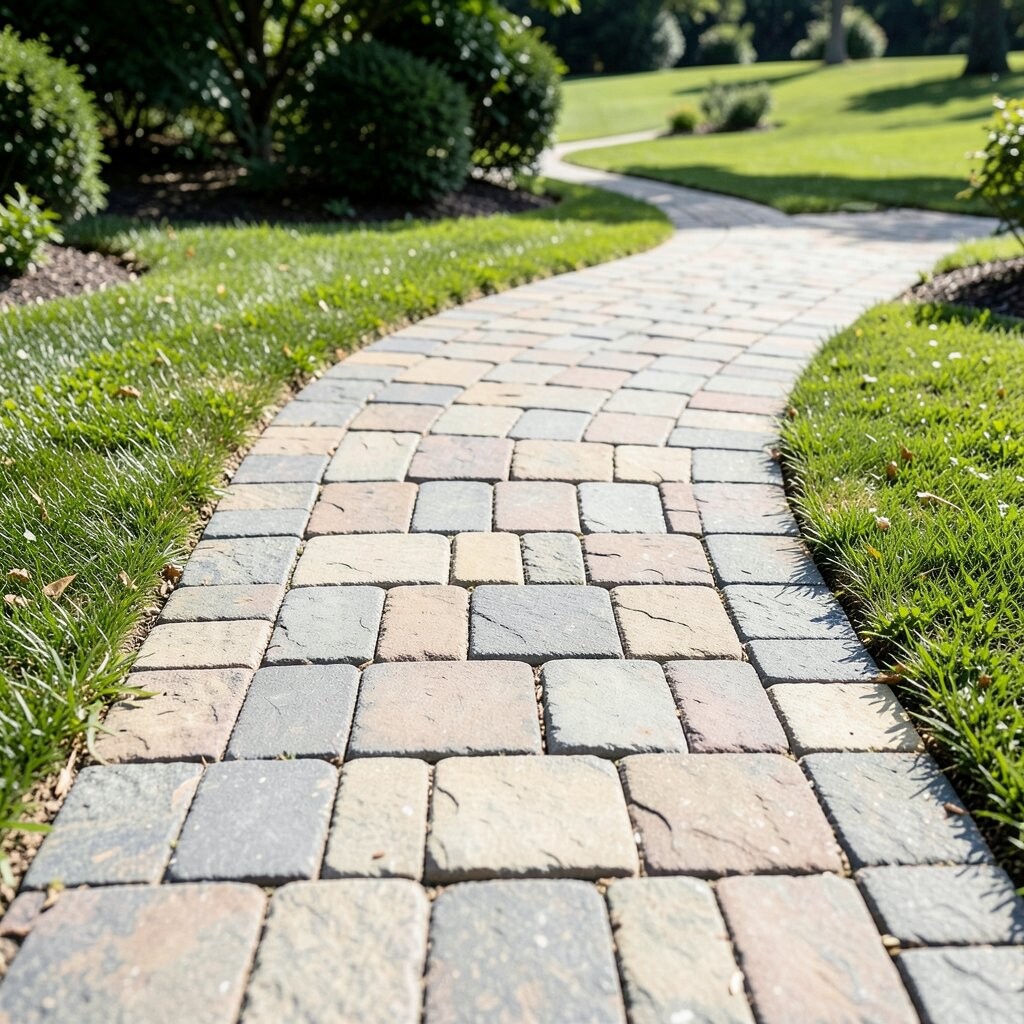
A curved path brings movement into the yard and makes the space feel larger. The gentle bends can lead the eye toward a garden bed, seating area, or side gate.
This design feels more relaxed than a straight walkway. It can also hide tight corners and awkward spots, which makes it a smart choice for small yards. If you want a modern look, use clean-edged pavers in one color; if you want a softer feel, mix a few earthy tones.
Costs can stay friendly if you use common concrete pavers instead of rare stone. Edging helps keep the shape neat, so it is worth planning for that too. Add low plants along the curve for a fuller, more welcoming finish.
3. Mixed Stone Mosaic Path
Mixed Stone Mosaic Path
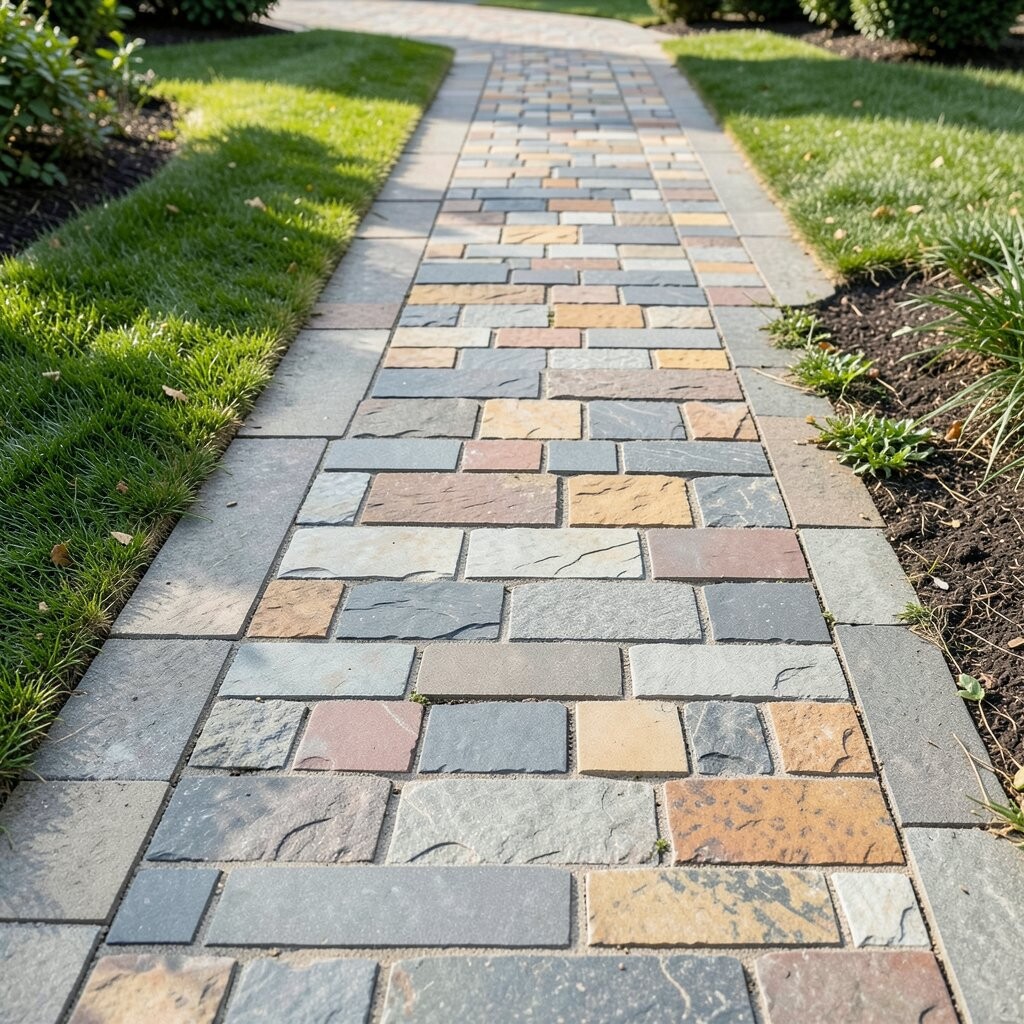
A mosaic path turns the ground into art. Small and medium stones in different shapes create a lively surface that feels handmade and full of character.
This idea stands out because no two sections need to look the same. It can hide dirt well, and it gives your yard a one-of-a-kind charm that feels rich and personal. Try repeating a few stone colors through the yard so the design feels connected.
This style can cost more in labor because it takes time to place each piece. Still, the result can feel worth it if you want a path that feels special and creative. It pairs well with cottage gardens, bird-friendly yards, and other spaces that love a little whimsy.
If you like a current trend, use a mix of natural stone and smooth set joints for a polished but organic look. A simple border can keep the design from feeling too busy. Soft lighting nearby can make the pattern glow at night.
4. Stepping Stone Path with Paved Edges
Stepping Stone Path with Paved Edges
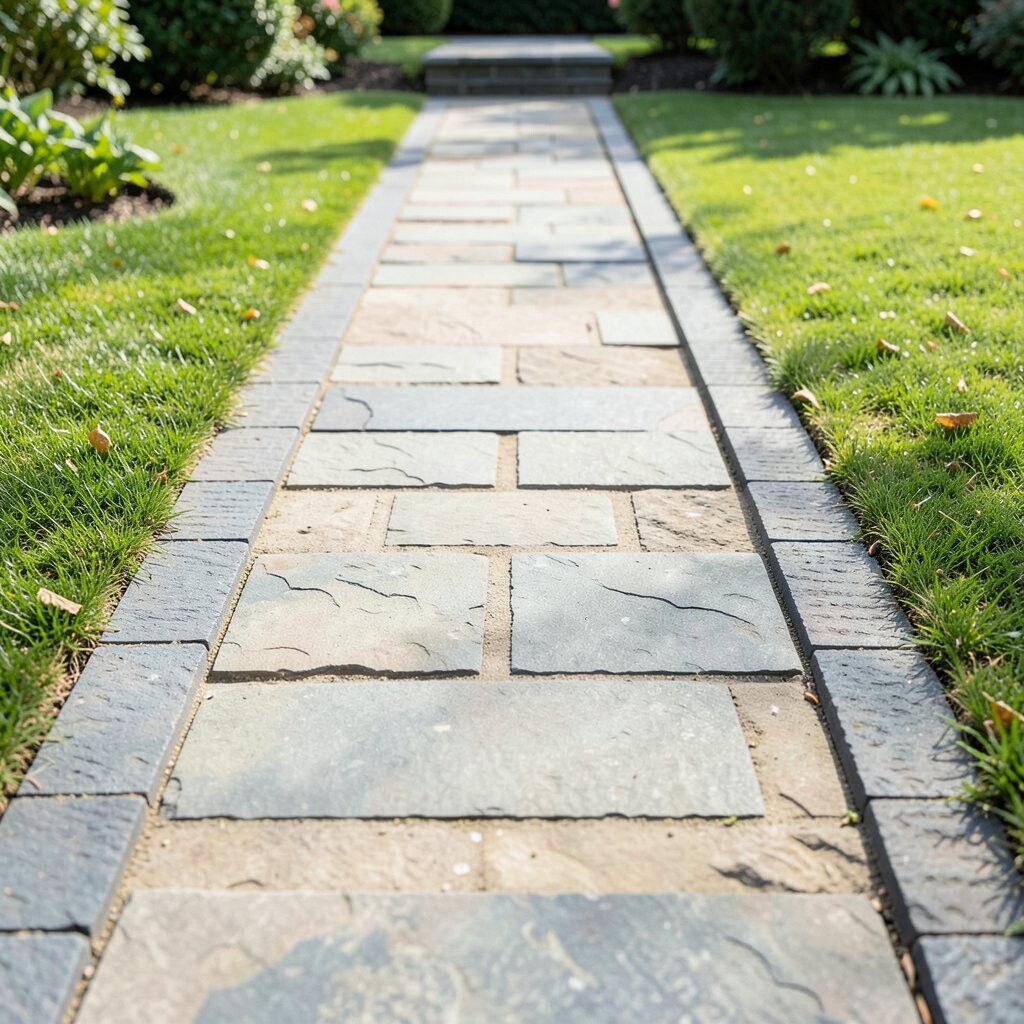
Stepping stones give a yard a light and airy feel. When you add paved edges, the path looks more finished and stays cleaner over time.
This idea is great for lawns and garden routes that do not need a full solid walkway. The open spaces between the stones keep the yard green and help the path feel playful. You can place the stones farther apart for a casual mood or closer together for easier walking.
5. Herringbone Brick Stone Path
Herringbone Brick Stone Path
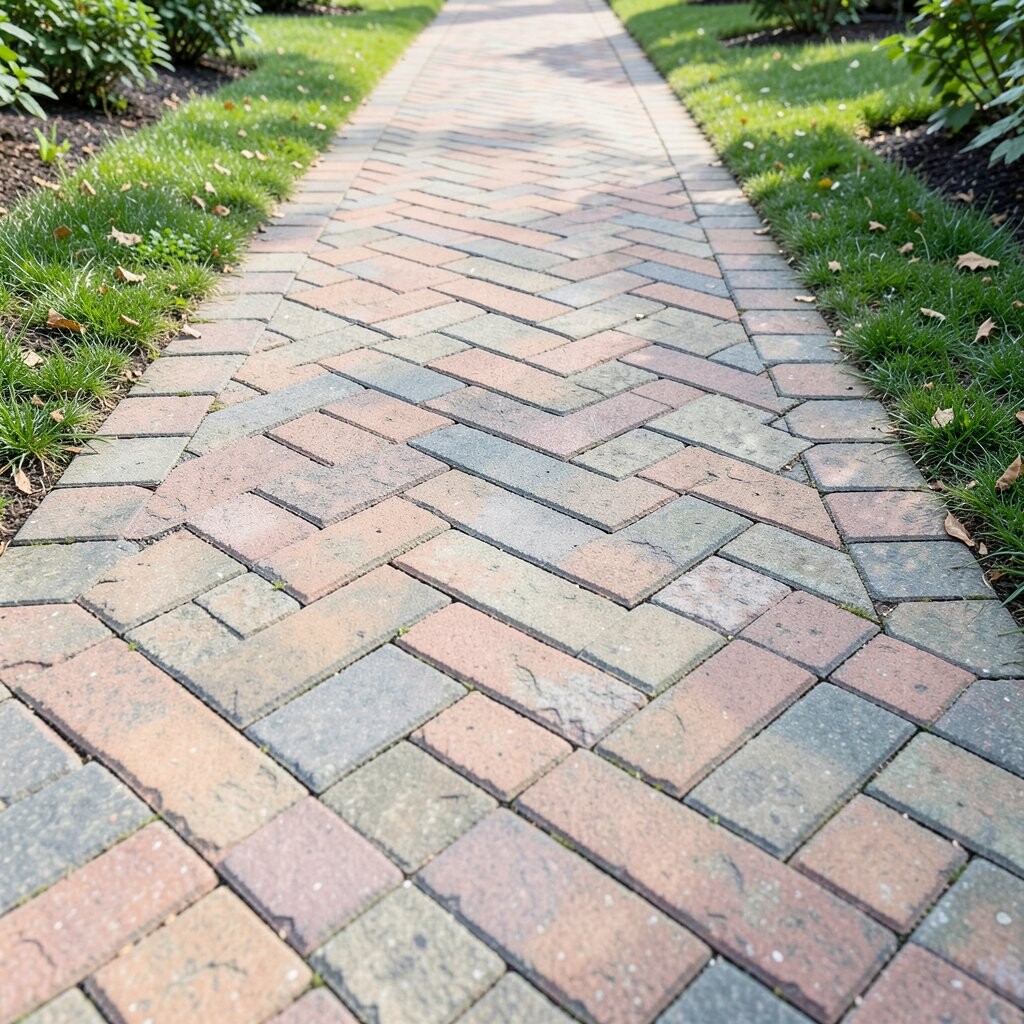
The herringbone pattern brings energy and structure to a yard. It looks crisp, neat, and a little fancy without being too formal.
This style is strong, so it works well for busy paths that get lots of foot traffic. It also adds visual interest through the pattern itself, which means you can keep the rest of the yard simple. Red brick, charcoal pavers, or blended earth tones all work nicely here.
Because the pattern uses careful cutting and placement, labor can raise the cost. Even so, many homeowners love it for its long-lasting feel and classic charm. Pair it with trimmed hedges or simple flower borders for a clean, polished look.
For a fresh trend, try wider joints with fine gravel for a softer edge. This can make the path feel less stiff while still keeping the pattern strong. It is a smart pick if you want both beauty and durability.
6. Wide Stone Boulevard Path
Wide Stone Boulevard Path
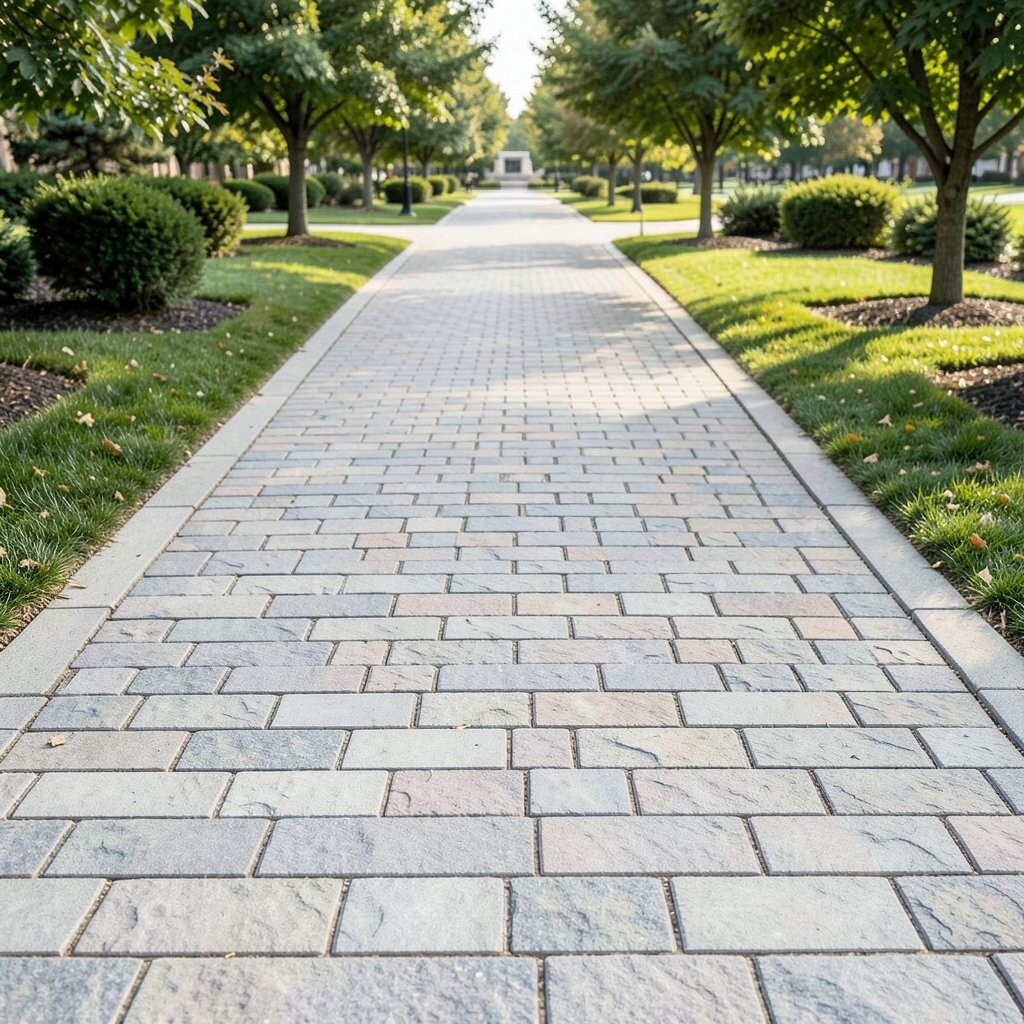
A wide boulevard-style path feels grand and welcoming. It gives people room to walk side by side and makes the yard feel more open.
This layout works well near front yards, patios, or main garden entrances. It can make a small house feel more important and give a large yard a sense of purpose. Use large pavers for a sleek look, or mix in natural stone for a softer style.
Wide paths can cost more because they use more materials, but they also add strong curb appeal. If you want to save money, use the wide design only in key spots and keep the rest simpler. Add planters, lanterns, or low shrubs along the sides to make the path feel extra inviting.
7. Rustic Irregular Stone Trail
Rustic Irregular Stone Trail
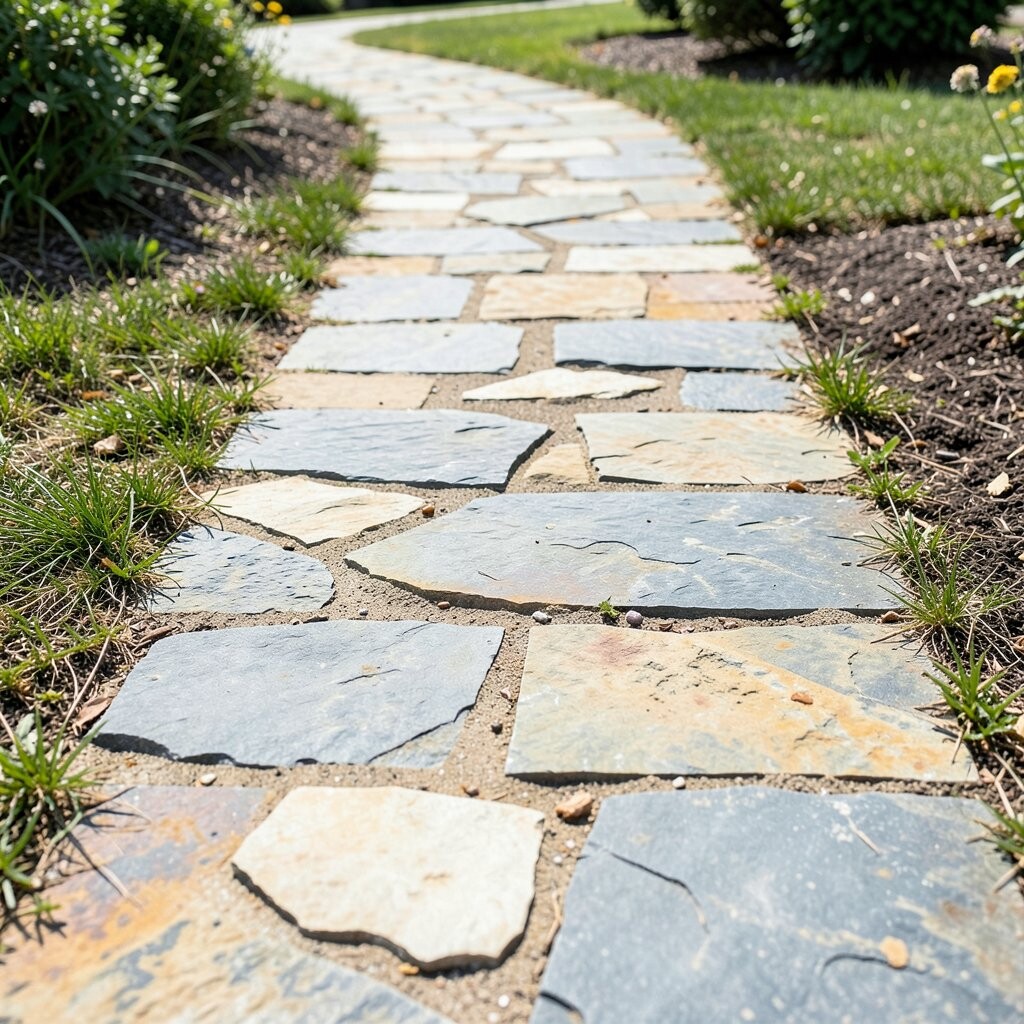
Irregular stones give a path a relaxed, natural feel. The uneven shapes look like they belong in a woodland garden or a quiet backyard retreat.
This type of path is unique because it never feels too perfect. It blends well with ferns, wildflowers, and other easygoing plants, which helps the whole yard feel calm. For a more finished look, place the stones with even spacing and fill the gaps with gravel or ground cover.
Cost can vary a lot based on the stone type and how much cutting is needed. Reclaimed stone may save money and add more character at the same time. This is a good choice if you like a path that feels old, cozy, and full of story.
Many current landscape styles favor natural textures, and this path fits that trend very well. A mossy edge or creeping thyme can make it feel even more alive. It is a lovely option for people who want a yard that feels gentle and welcoming.
8. Modern Large-Slab Path
Modern Large-Slab Path
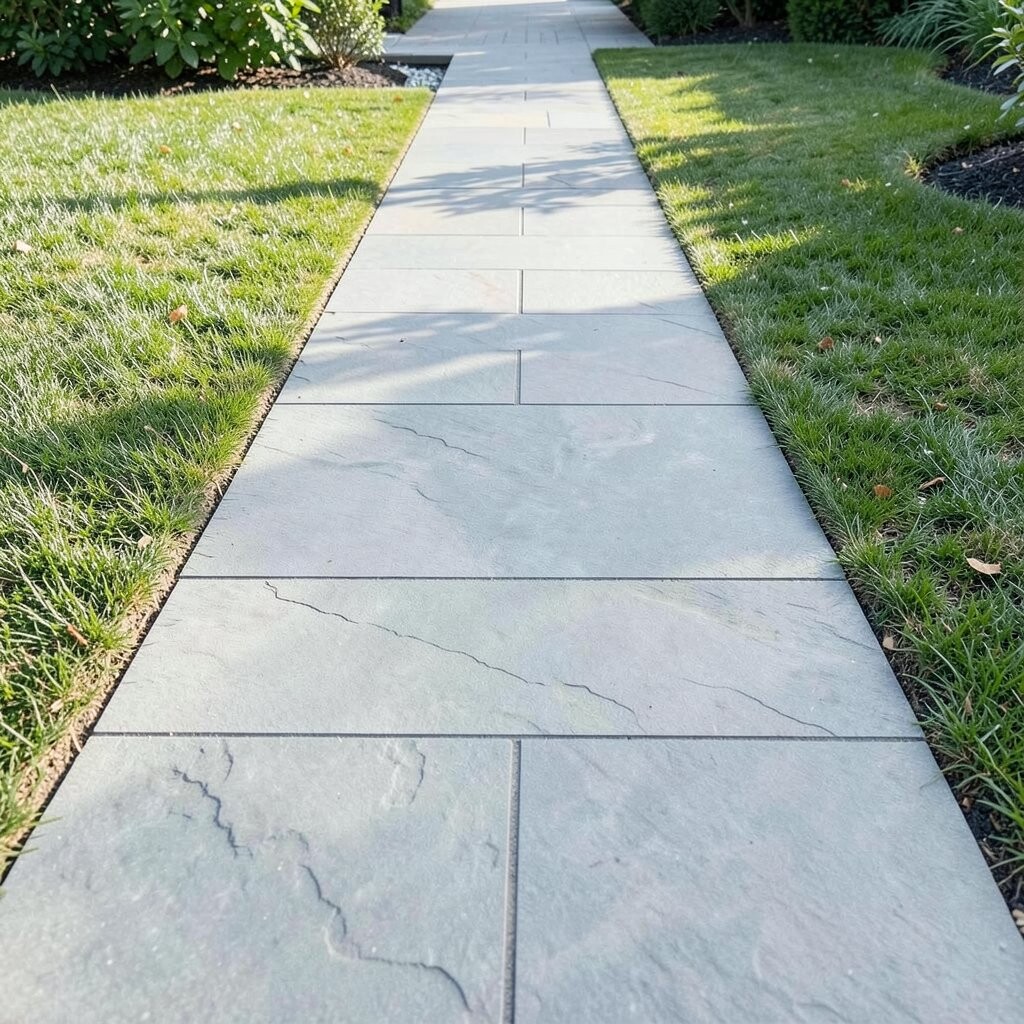
Large slabs create a bold, clean look that feels fresh and modern. The broad surfaces make each step feel smooth and simple.
This idea is perfect for yards with straight lines, simple plantings, and a sleek outdoor style. It can make the yard seem bigger because the eye sees fewer breaks in the surface. Choose pale stone for a bright, airy feel or dark stone for a strong, dramatic mood.
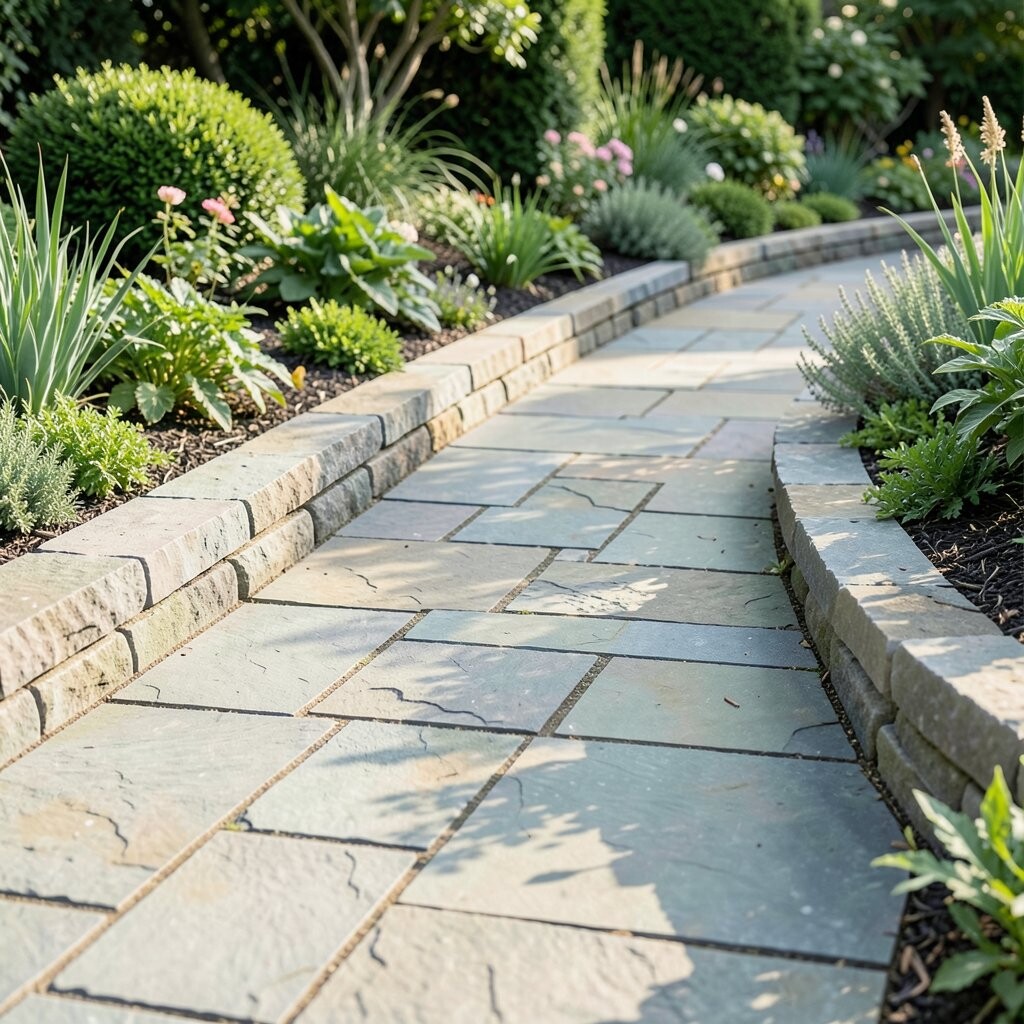
9. Garden Border Path with Raised Stone Edging
Garden Border Path with Raised Stone Edging
A path with raised stone edging gives the yard a neat, framed look. The border helps define the walkway and keeps mulch, soil, and plants from spilling over.
This design is useful in flower gardens where things can get messy fast. It adds structure while still leaving room for color and softness nearby. You can use the same stone for the edge and the path, or mix materials for a more custom feel.
The cost can stay moderate if you keep the border simple and use local stone. Raised edges also make maintenance easier because they help guide water and keep the path tidy. Try adding seasonal flowers beside the border so the walkway changes with the months.
For a current style, many people are pairing stone borders with low, lush planting beds. That mix feels polished but not stiff. It is a great way to make a path feel cared for and full of life.
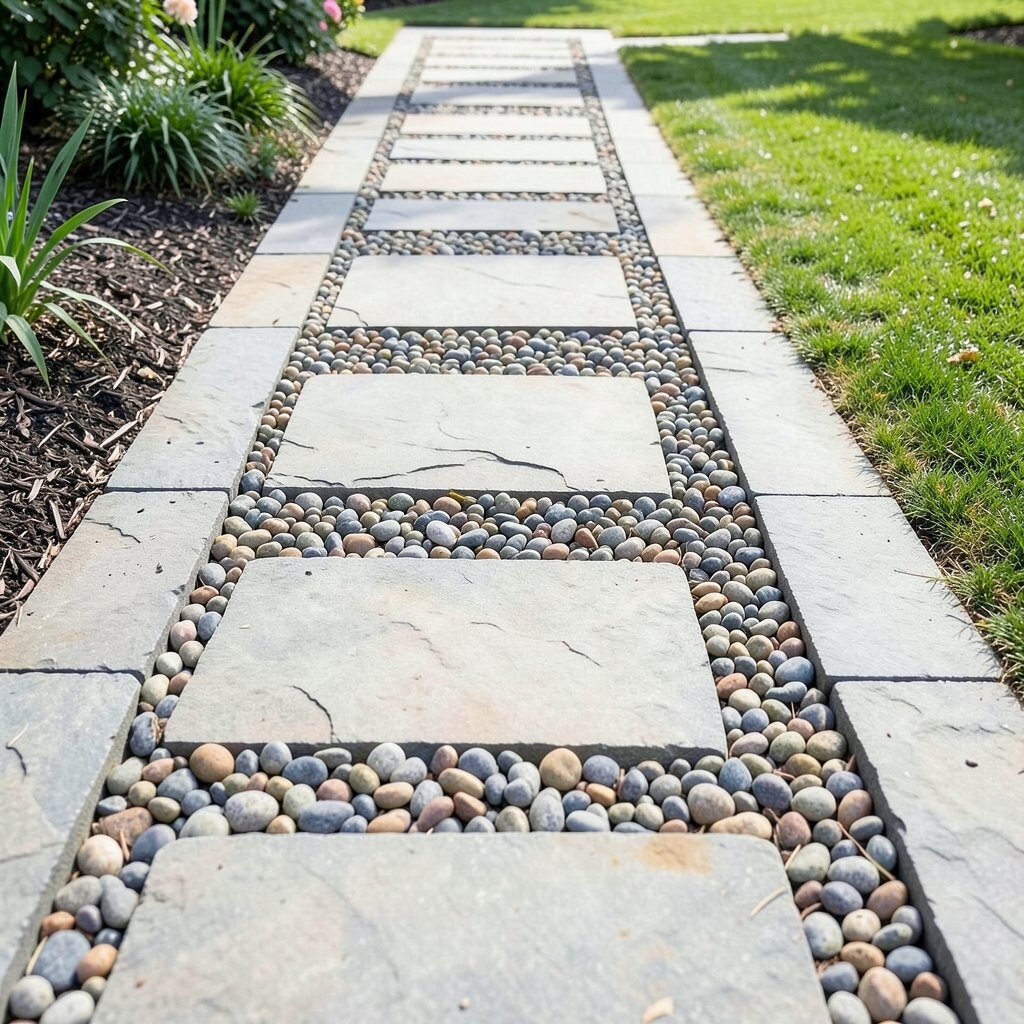
10. Pebble-Filled Stone Inlay Path
Pebble-Filled Stone Inlay Path
This path mixes flat stones with small pebbles for a textured, eye-catching look. The contrast between smooth slabs and tiny stones gives the walkway a handmade charm.
It feels special because the surface has both shape and movement. Pebbles can help with drainage too, which makes this design practical in wet areas. Use a simple stone color palette if you want the path to feel calm instead of busy.
Costs can be lower if you use fewer large stones and fill more space with gravel or pebbles. That makes it a smart choice for bigger yards on a budget. A strong border is important here, since it keeps the small stones in place and makes the path last longer.
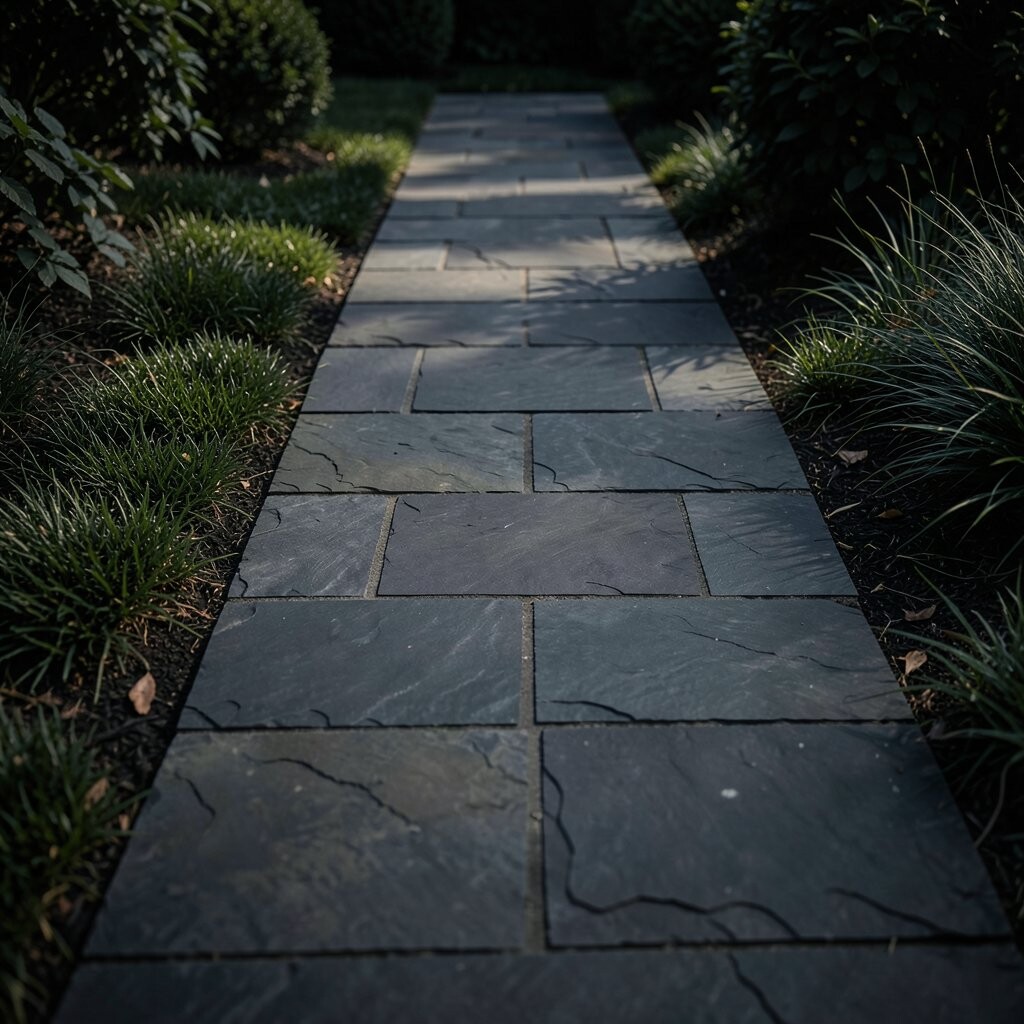
11. Slate Path with Dark Drama
Slate Path with Dark Drama
Slate brings deep color and a smooth, rich look to a yard. Its dark tones can make green plants and bright flowers stand out even more.
This choice feels bold and elegant, almost like an outdoor room. It works well near modern homes, water features, or shaded gardens where the color can shine. If you want a softer mood, mix the slate with lighter gravel or pale edging stone.
Slate can cost more than plain concrete, but its color and texture give strong visual value. It also feels cool and calm, which is nice in warm weather. Use warm lighting nearby to keep the dark surface from feeling too heavy at night.
Many homeowners like this look because it feels current without being flashy. It pairs well with simple furniture and clean plant shapes. If you want a yard that feels rich and quiet, slate is a strong pick.
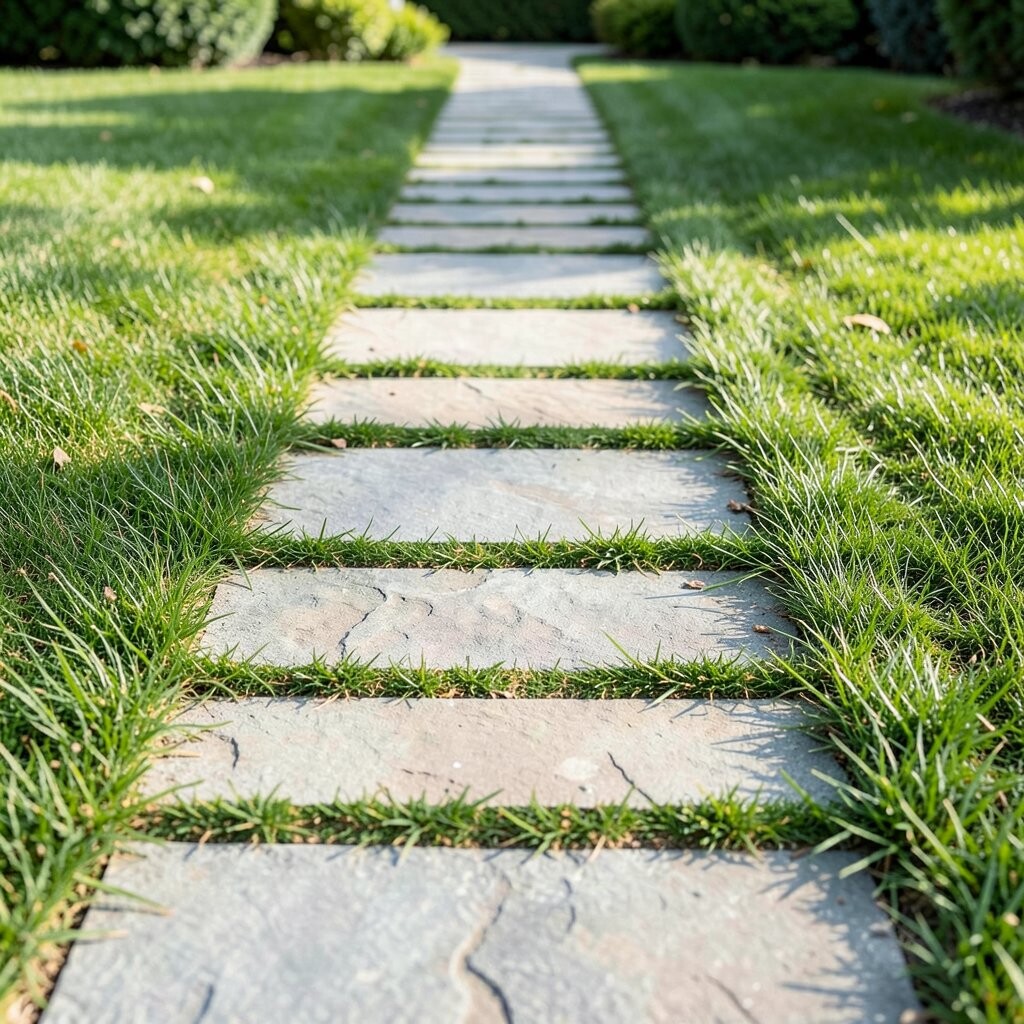
12. Path with Grass Joints
Path with Grass Joints
Stone pieces with grass joints create a soft, living look. The green lines between the stones make the walkway feel fresh and natural.
This design is lovely in family yards because it feels friendly and relaxed. It also helps break up hard surfaces, which can make the whole space feel less rigid. Use strong, flat stones so the walking surface stays safe and easy.
Grass joints need care, so they may not suit people who want a very low-maintenance yard. Still, they can be worth it if you love a lush look and do not mind light trimming. This style often costs less than a fully paved path because it uses less stone.
For a trendier version, some people use low ground covers instead of grass. That can add color and texture while keeping the same soft effect. It is a nice choice for garden lovers who want nature to play a bigger role in the design.
13. Geometric Paved Stone Path
Geometric Paved Stone Path
Geometric paths use sharp shapes and clear lines to make a bold statement. They can feel artistic and tidy at the same time.
This style is great for yards that need a modern edge. It helps guide movement in a clean way and can make even a small space feel carefully planned. Square, hexagon, and rectangle shapes all work well, depending on how playful or serious you want the path to feel.
Because the layout is precise, installation may take more planning and skill. The payoff is a crisp look that feels fresh and stylish. If you want to personalize it, repeat the same shape in a patio border or stepping area nearby.
This is a strong fit for current design trends that favor simple forms and neat surfaces. Use one main stone color for a calm look, or two tones for a little contrast. It can be a smart way to make your yard feel modern without losing warmth.
14. Winding Cottage Stone Path
Winding Cottage Stone Path
A winding cottage path feels soft, sweet, and full of charm. The gentle turns make the yard feel like a place with hidden corners and small surprises.
This style shines when it is surrounded by flowers, herbs, and leafy plants. It creates a storybook mood that many people love because it feels personal and cozy. Choose stones with uneven edges for a more natural look, or smoother pieces for a tidier version.
15. Split-Level Stone Path
Split-Level Stone Path
A split-level path adds depth and interest by changing height in a gentle way. It can help a sloped yard feel easier to use and more beautiful at the same time.
This design is useful when the land is not flat. Steps or small landings can break up the slope and make walking safer, while the stone surface keeps everything looking strong and neat. Use matching materials on each level so the design feels connected.
Cost can rise because leveling and support work may be needed, but the result can be very practical. It also gives you a chance to create small planting pockets or resting spots along the way. Add lighting on each step for safety and a soft evening glow.
Many people like this idea because it feels custom and high-end. It can make a yard with difficult terrain feel like a special feature instead of a problem. If you want a path that adds both style and function, this is a smart option.
16. Minimal Stone Strip Path
Minimal Stone Strip Path
A minimal stone strip path uses slim bands of stone to guide movement with a light touch. The design feels simple, open, and very clean.
This is a great choice for small yards or modern homes that do not want too much visual weight. It keeps the focus on plants, lawn, or other yard features while still giving people a clear place to walk. Straight lines make the space feel calm, but slight curves can soften the look.
Because it uses fewer materials, this style can be easier on the budget. It also suits current tastes that favor open space and less clutter. Add fine gravel, short grass, or low ground cover beside the strips to make the path feel finished without looking crowded.
Personal touches matter here, too. You can choose a warm stone for a cozy mood or a cool-toned stone for a crisp feel. Even a simple path can feel special when the details match the rest of the yard.