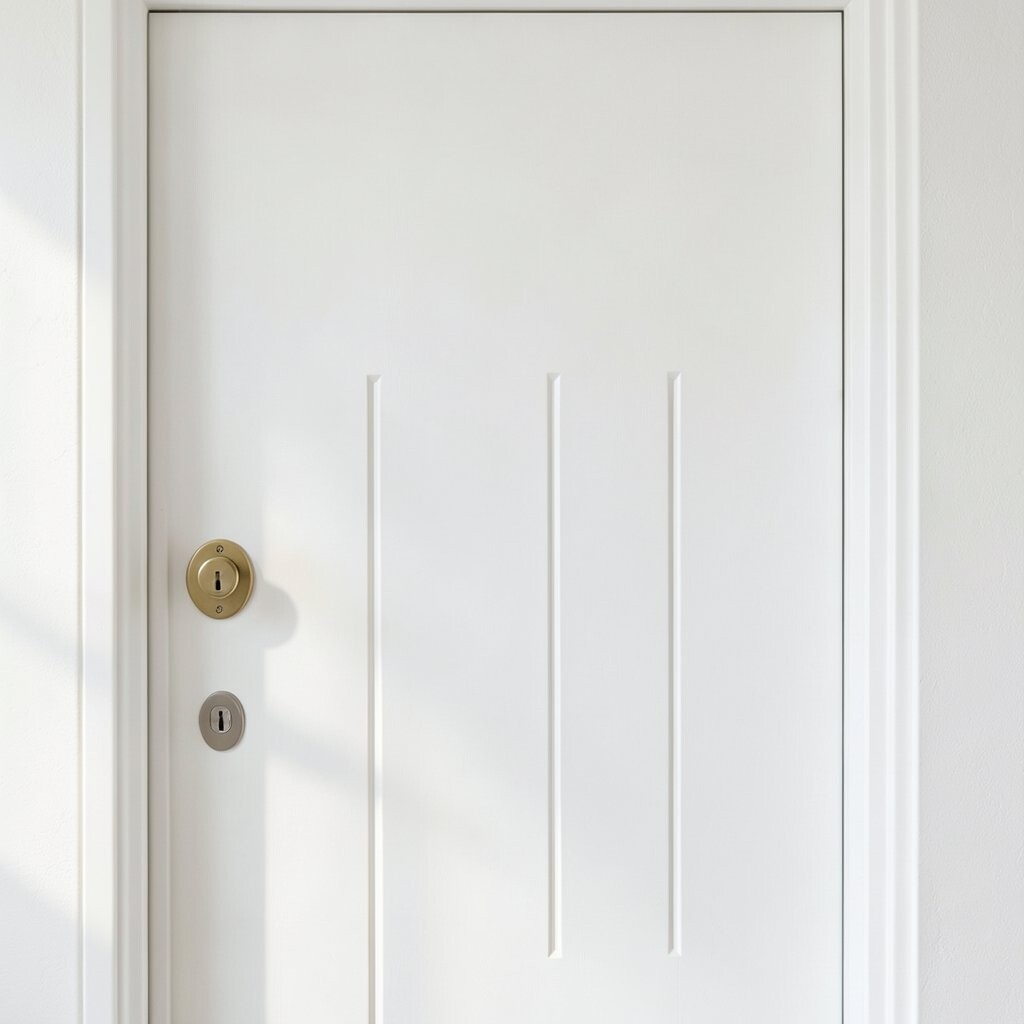
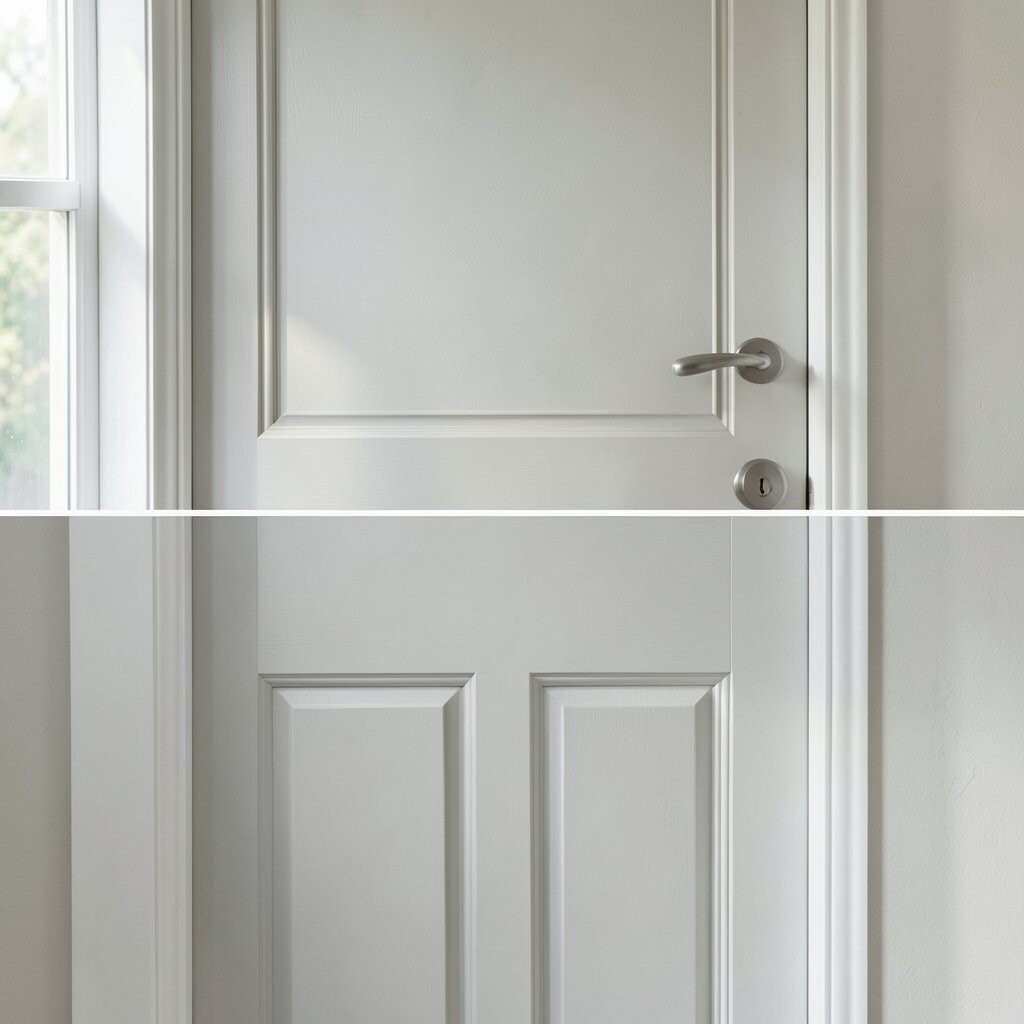
Imagine your door looking bright, clean, and calm, like freshly washed curtains. Choose a white that feels warm instead of icy, so it flatters wood, brick, and siding.
White doors make spaces feel bigger and more welcoming, especially when light hits the surface. They also match almost any trim color, which saves you stress when you’re picking accents. For a simple personalization idea, paint the door knob area slightly darker trim color or add a thin matching stripe for a subtle detail.
To get a smooth look, use painter’s tape carefully around panels and edges. A primer may be needed on stained wood or glossy paint to help the new coat stick. In cost terms, white is often budget-friendly because it’s widely available in many paint lines and sample sizes.
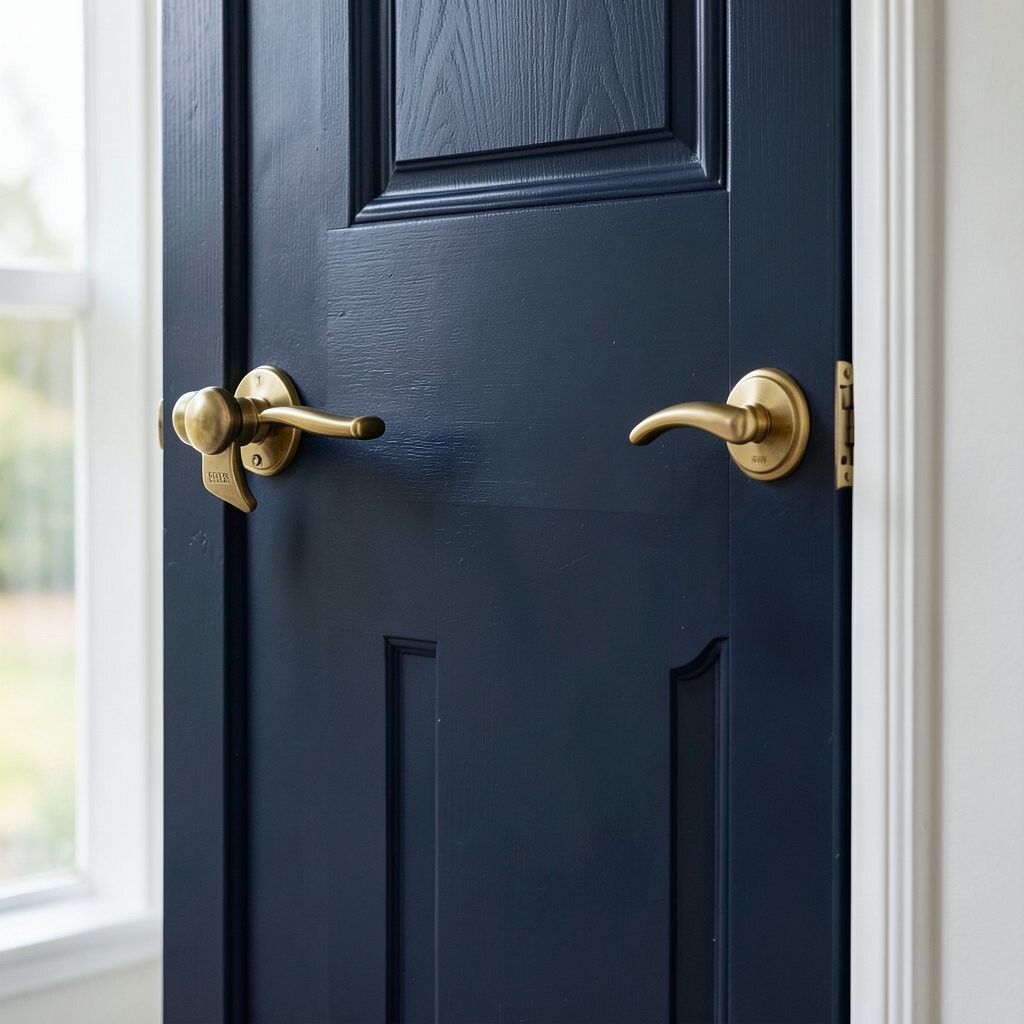
2. Classic Navy With Brass Hardware
Classic Navy With Brass Hardware
Picture a deep navy door paired with shiny brass hardware like a little piece of jewelry. The contrast is strong, yet it still feels classy and cozy.
Navy gives you bold curb appeal without looking too loud, and it hides small scuffs better than light colors. It also looks amazing with white trim, stone accents, and warm wood tones. Try adding a wreath in cream and gold tones to match the vibe and keep the door feeling styled all year.
If you want a trend that’s popular right now, “dark and moody” colors on front doors are showing up everywhere. For tips, use a semi-gloss or satin exterior paint so it cleans easily after weather and dust. Keep in mind that dark colors can cost a bit more if you need extra coats, especially on lighter existing paint.
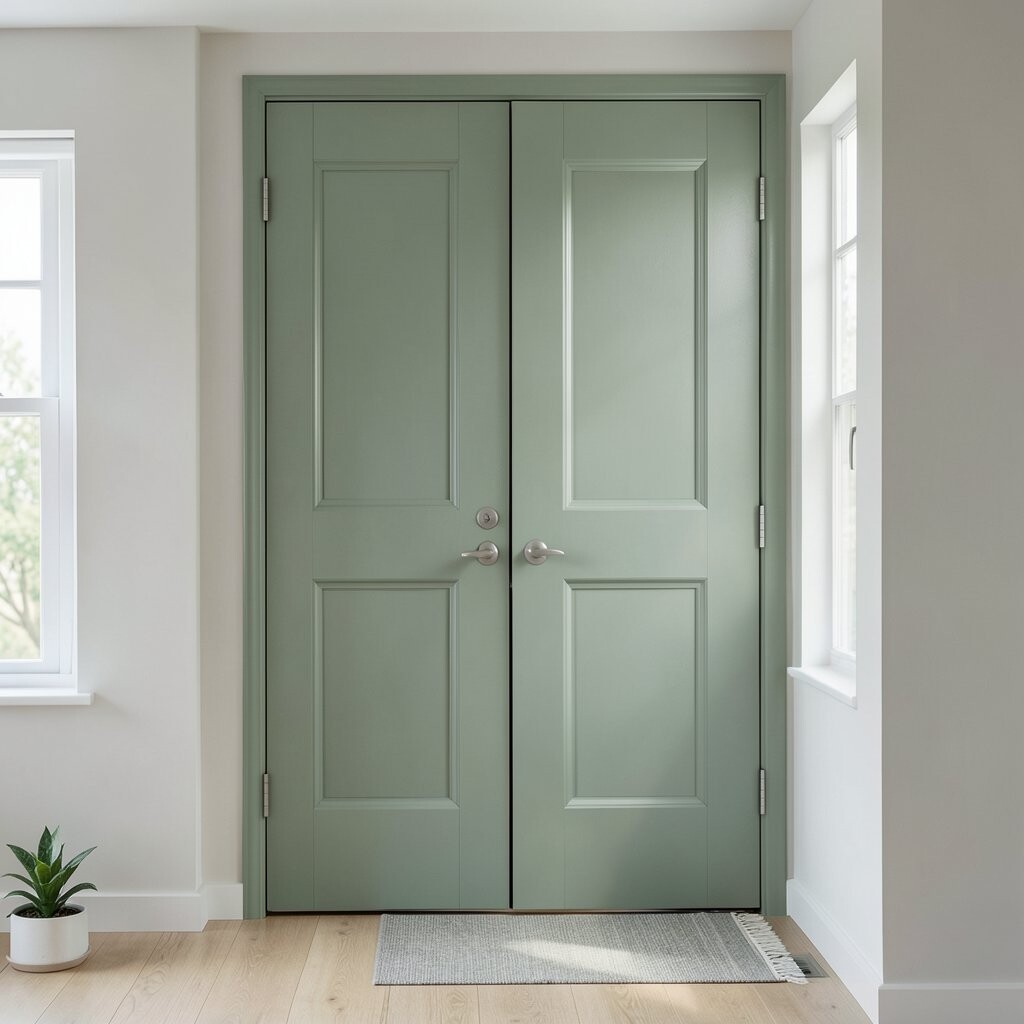
3. Sage Green With Natural Light Panels
Sage Green With Natural Light Panels
Close your eyes and picture a sage-green door that looks soft and airy, like a garden path. It pairs beautifully with planters, window boxes, and greenery.
Sage green feels fresh but not harsh, so it works for both modern and traditional homes. You’ll get an inviting look that doesn’t fight with your landscaping. Add a personalization touch by painting the inside edge of the door a slightly deeper green for a hidden pop when you open it.
For best results, clean the door well and scuff-sand glossy areas so the paint can grip. If your door has panels, use a small angled brush for edges and a foam roller for smooth areas. A smart cost move is buying a paint kit with a matching primer and brushes so you don’t miss small supplies.
This color is also trending because it feels calm and “earthy” instead of trendy-loud. Consider a matte finish if you want a softer look, but satin is usually easier for real-life cleaning.
4. Timeless Charcoal With a Modern Matte Finish
Timeless Charcoal With a Modern Matte Finish
Imagine a charcoal door that looks sleek and grounded, like smooth stone. The matte finish makes it feel high-end and calm, not shiny and slippery-looking.
Charcoal hides dirt and minor wear, which is great for busy entries. It also makes porch lights stand out, and it gives your home a confident look. If you love personalization, add a thin painted frame around the door panels in a slightly lighter gray for a “built-in” style.
Before painting, check for peeling paint and patch any rough spots, because matte finishes show texture more clearly. Use a quality exterior paint to reduce fading, especially if your door gets strong sun. Cost can be managed by focusing your best products on the visible face while using standard supplies for masked edges.
5. Warm Terracotta for a Cozy, Earthy Feel
Warm Terracotta for a Cozy, Earthy Feel
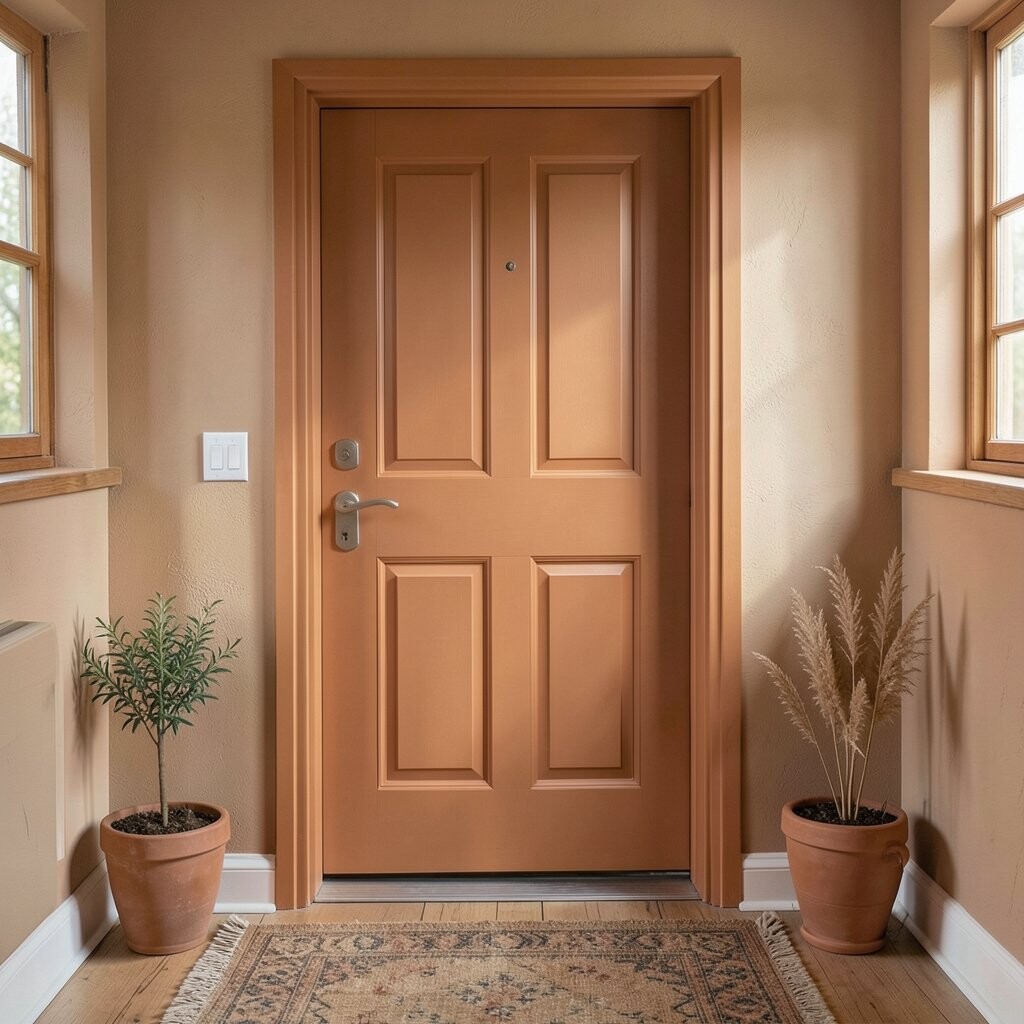
Think of terracotta like a clay-colored hug that brings warmth to your porch. It looks gorgeous with outdoor lighting and plants, and it feels welcoming even on cloudy days.
Terracotta stands out without being neon, and it pairs well with natural materials like wood, stucco, and brick. You’ll get a unique personality that feels different from the common blue-white-gray mix. To personalize, match your door color with one accent pot or a set of matching welcome mats.
For tips, use a primer if your old paint is dark, so you don’t need too many coats. A satin or eggshell exterior finish helps the color stay clean and easier to wipe. Cost-wise, terracotta can require extra layers depending on the existing color, so plan for a little extra paint.
6. Playful Coral With Light Trim Contrast
Playful Coral With Light Trim Contrast
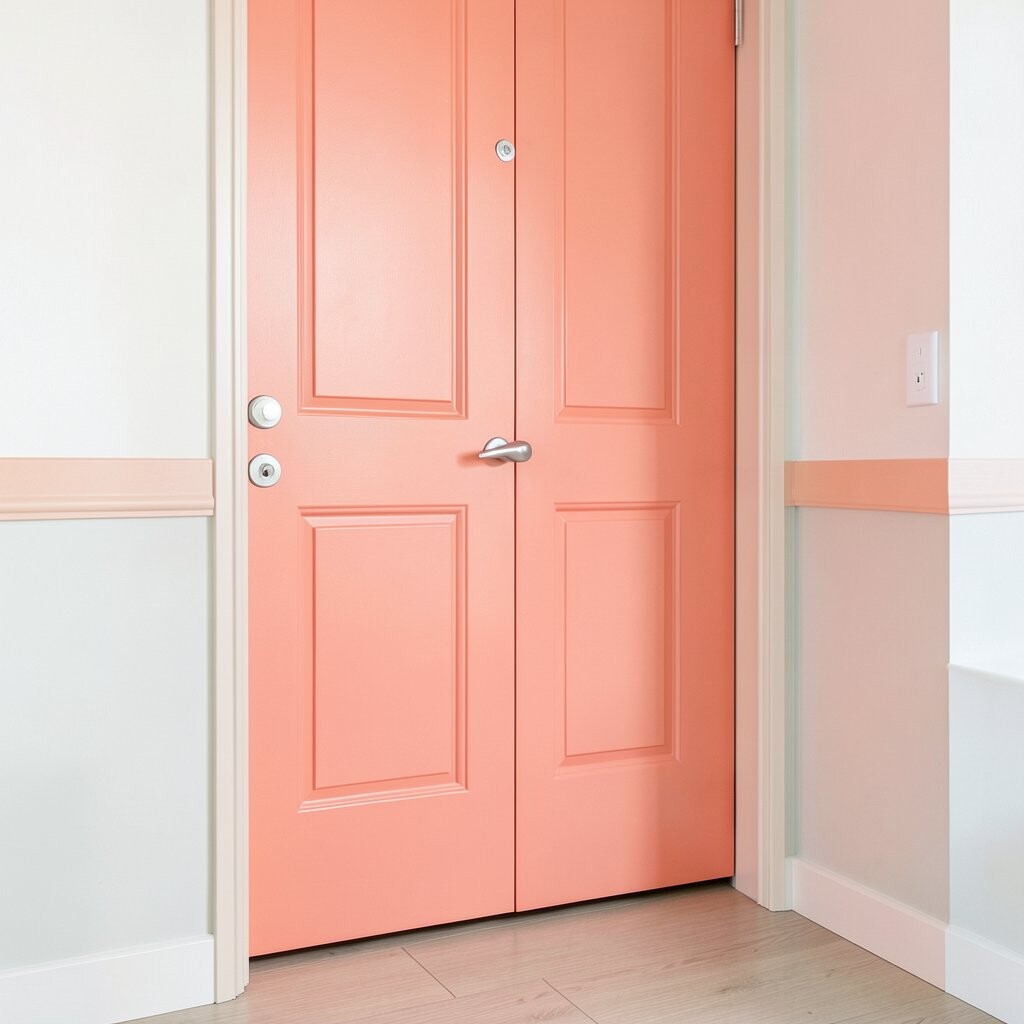
Picture coral paint that looks cheerful and sun-kissed, like a bright summer postcard. When paired with crisp white trim, it creates a lively and friendly look.
Coral can boost curb appeal fast because it’s warm, energetic, and easy to notice. It also feels special for entryways because it doesn’t blend into the background. Try personalization by using coral only on the door and keeping the surrounding trim classic, so the door stays the main character.
For smooth results, use painter’s tape in small sections and press edges firmly to prevent bleeding. A tip for durability is choosing exterior paint rated for weather and UV exposure. In cost terms, coral may be more expensive than basic neutrals, and you might need multiple coats to reach full color.
Right now, warm “peachy” and coral tones are getting attention because they feel optimistic and modern at the same time.
7. Classic Red With a Crisp Porch Lighting Setup
Classic Red With a Crisp Porch Lighting Setup
Imagine deep red that looks bold and welcoming, like a house that’s always ready for guests. It instantly signals “main entry,” especially when your porch light matches the style.
Red doors are a timeless choice, and they pair nicely with black hardware and white trim. The benefit is strong curb impact, while still being friendly and traditional. For personalization, add a small painted stripe at the top of the door panels in a darker red, so it looks layered and detailed.
To keep the look clean, pick a finish that resists scuffs, like satin. Prep matters a lot with red because it can fade if you skip primer or use poor-quality paint. A budget tip is to buy the paint in a bigger can if you have other trim work, so you don’t end up paying extra for small containers.
Trends show red returning in bolder shades, especially in homes with simple lines and modern hardware.
8. Soft Blue With Coastal-Style Wreaths
Soft Blue With Coastal-Style Wreaths
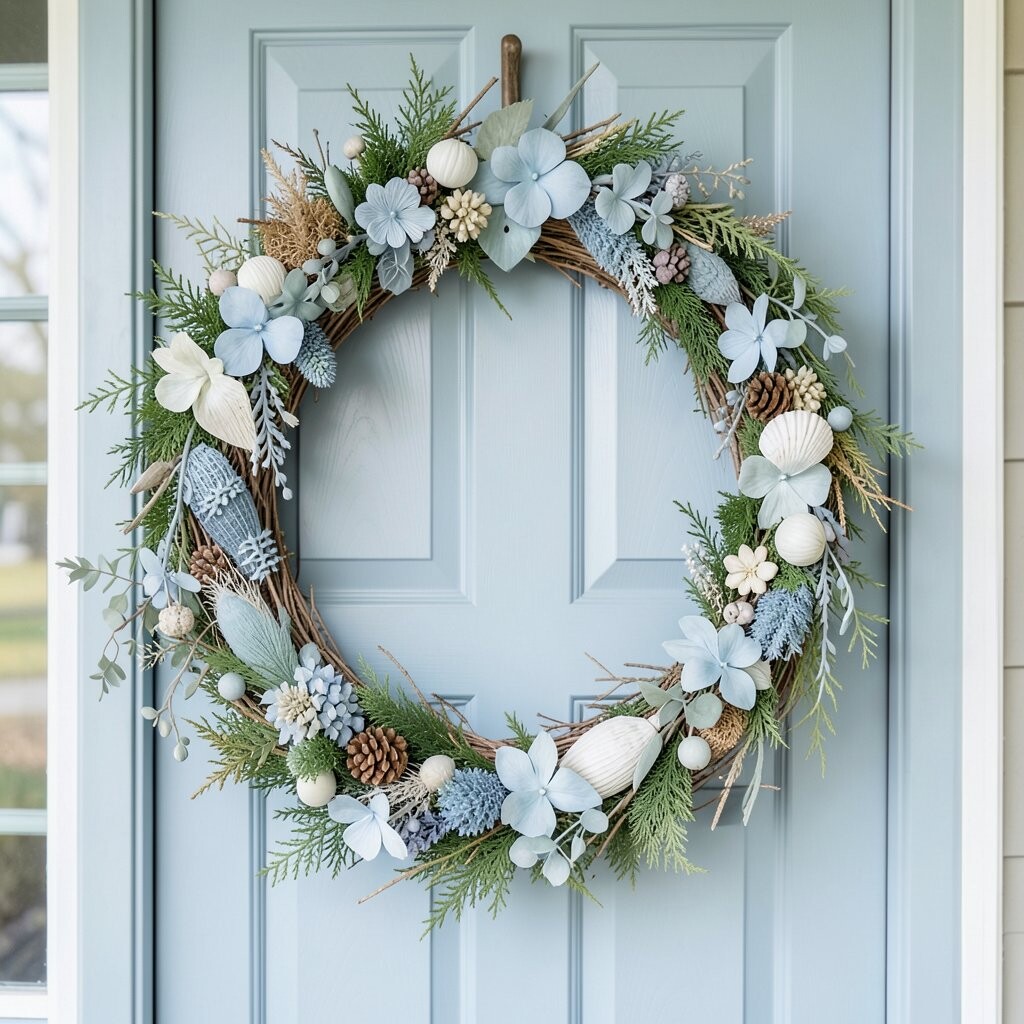
Picture a gentle blue door that feels airy and calm, like sea glass. It gives your entryway a breezy look that works beautifully with neutral siding.
Soft blue brings a fresh feeling and blends well with white trim, light stone, and natural wood. It also helps your home feel relaxed instead of formal. If you want personalization, paint the lower panels a slightly deeper blue so the design feels more dimensional.
For tips, clean and dry the door fully before painting and consider sanding lightly for better adhesion. Use exterior paint with mildew resistance if your porch is damp. Cost considerations are mostly about quality: a mid-range exterior paint often saves money by needing fewer coats.
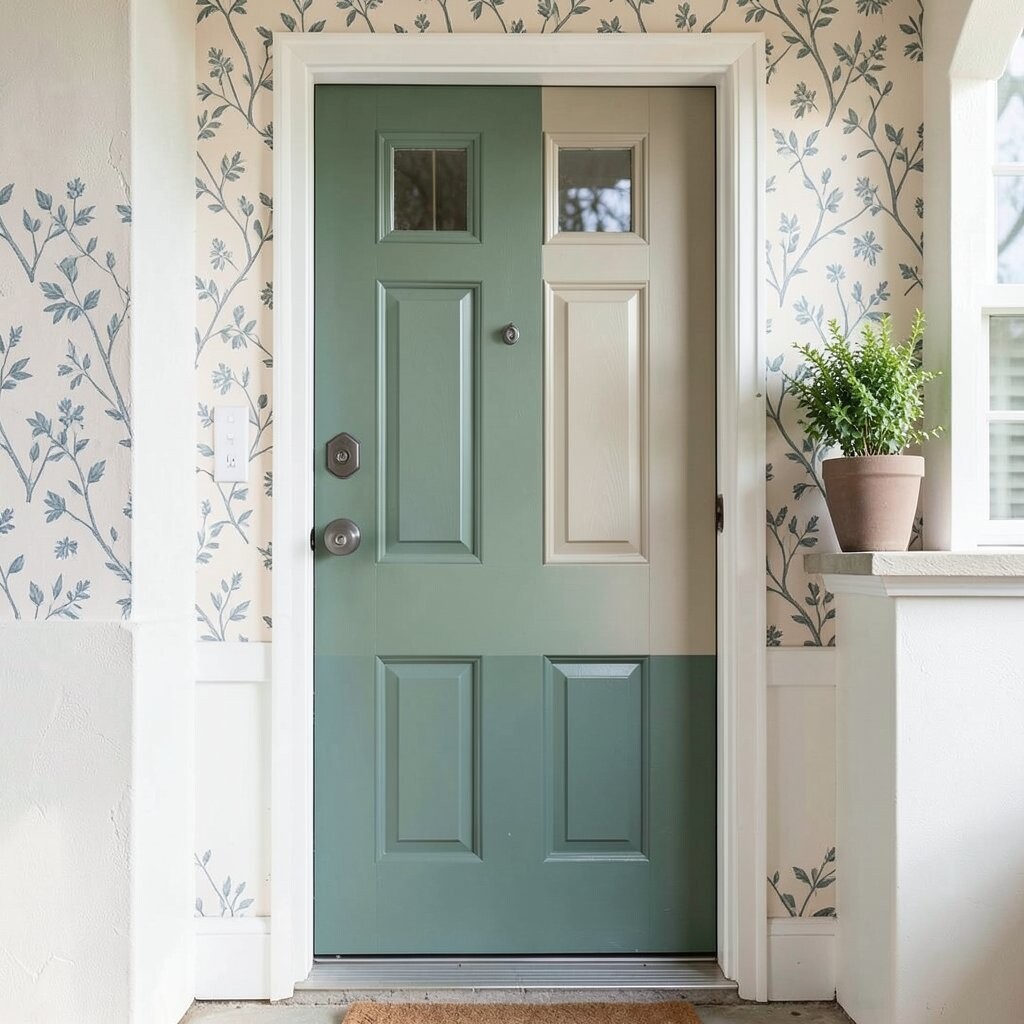
9. Two-Tone Door With Matching Lower Panel Accent
Two-Tone Door With Matching Lower Panel Accent
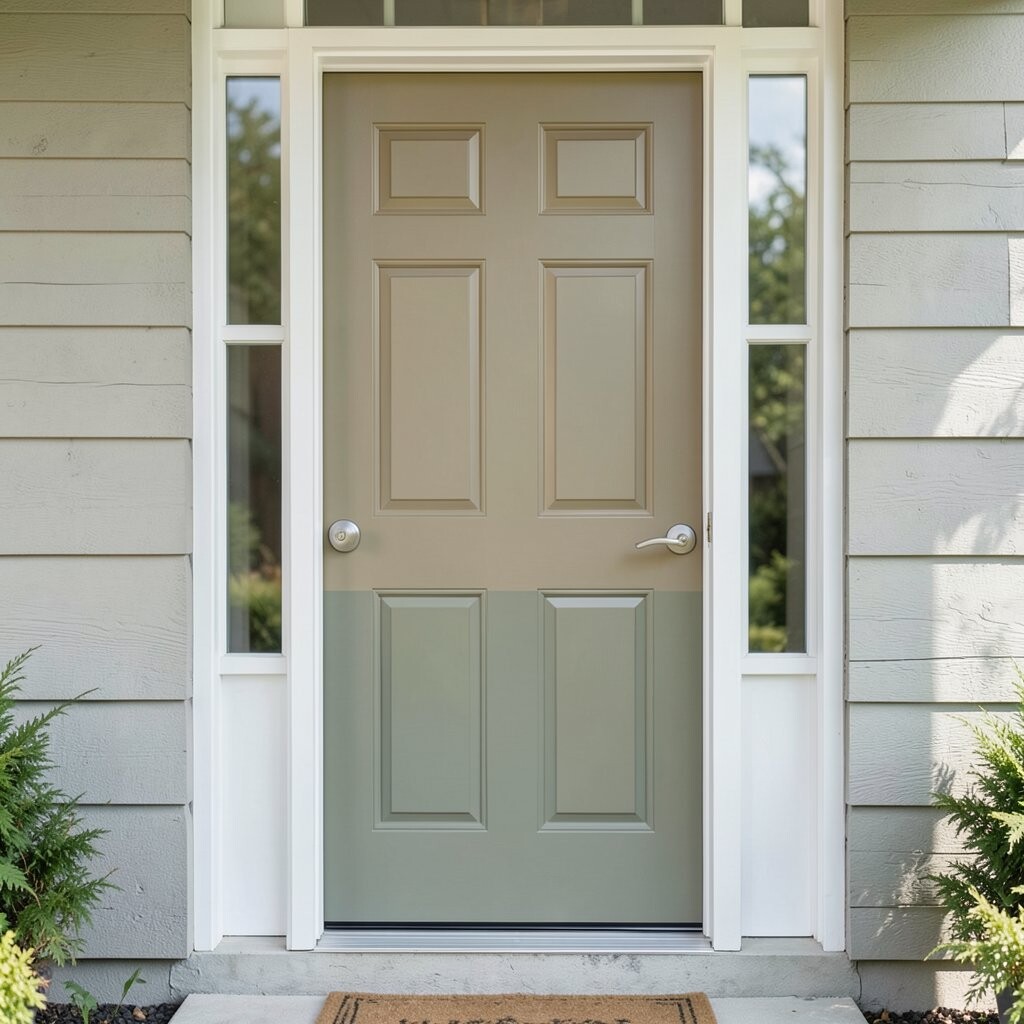
Imagine a door where the top looks bright and the bottom looks bold, like a neat color-block design. This style makes even a basic door feel custom.
Two-tone painting gives you a unique look without needing fancy carpentry. It also lets you tie the door to other colors in your home, like shutters, railings, or outdoor furniture. Try personalization by choosing a neutral for one section and a color you love for the other section.
For a clean edge, mark the separation line with tape and keep your brush work steady. A helpful tip is to paint the outline first, let it set slightly, then fill in the larger areas. Cost can be a little higher because you’ll buy two colors, but you’ll often save money on decor because the door becomes the statement.
10. Black Door With Warm Wood Stain Look
Black Door With Warm Wood Stain Look
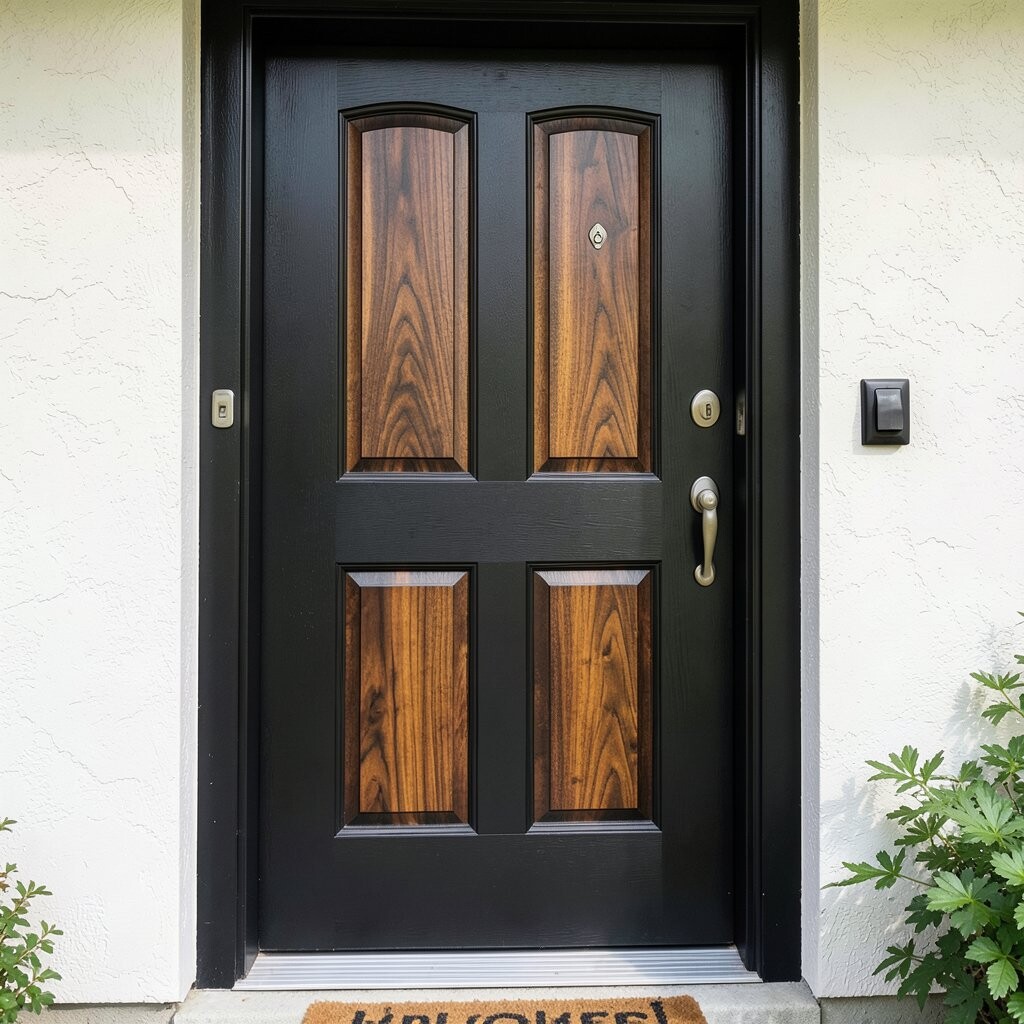
Picture a nearly-black door that feels dramatic, with subtle warmth that makes it inviting. This style is especially striking when your porch has wood textures or tan stone.
Black doors look modern and crisp, and they can make your house feel more “finished.” They also hide wear and dirt better than many light shades. For personalization, add a warm-toned accent—like staining the door’s panel edges with a light glaze effect—so it doesn’t feel too plain.
To avoid a heavy look, balance black with warm lighting and clean trim colors. Use a satin exterior paint so the surface is easier to wipe down and doesn’t show every fingerprint. Cost-wise, black may require extra coats when covering older colors, so check your paint coverage label before you buy.
11. Light Greige With Subtle Panel Highlights
Light Greige With Subtle Panel Highlights
Think of greige as the perfect middle: not too warm and not too cool. A light greige door feels calm and modern, while still blending with almost everything.
This color helps your home look neat and updated, and it’s forgiving if your siding has many shades. You also get the benefit of easy matching with wreaths and seasonal decor. Personalize by highlighting the door panels with a slightly deeper greige, so the design looks richer without being loud.
For tips, keep your brush strokes consistent and use a quality angled brush for panel edges. If your door has grooves, take time to ensure paint gets into corners so it doesn’t look patchy. Cost considerations are usually smooth with greige because it’s common and often easy to find in reliable exterior lines.
12. Emerald Green With Gold Details
Emerald Green With Gold Details
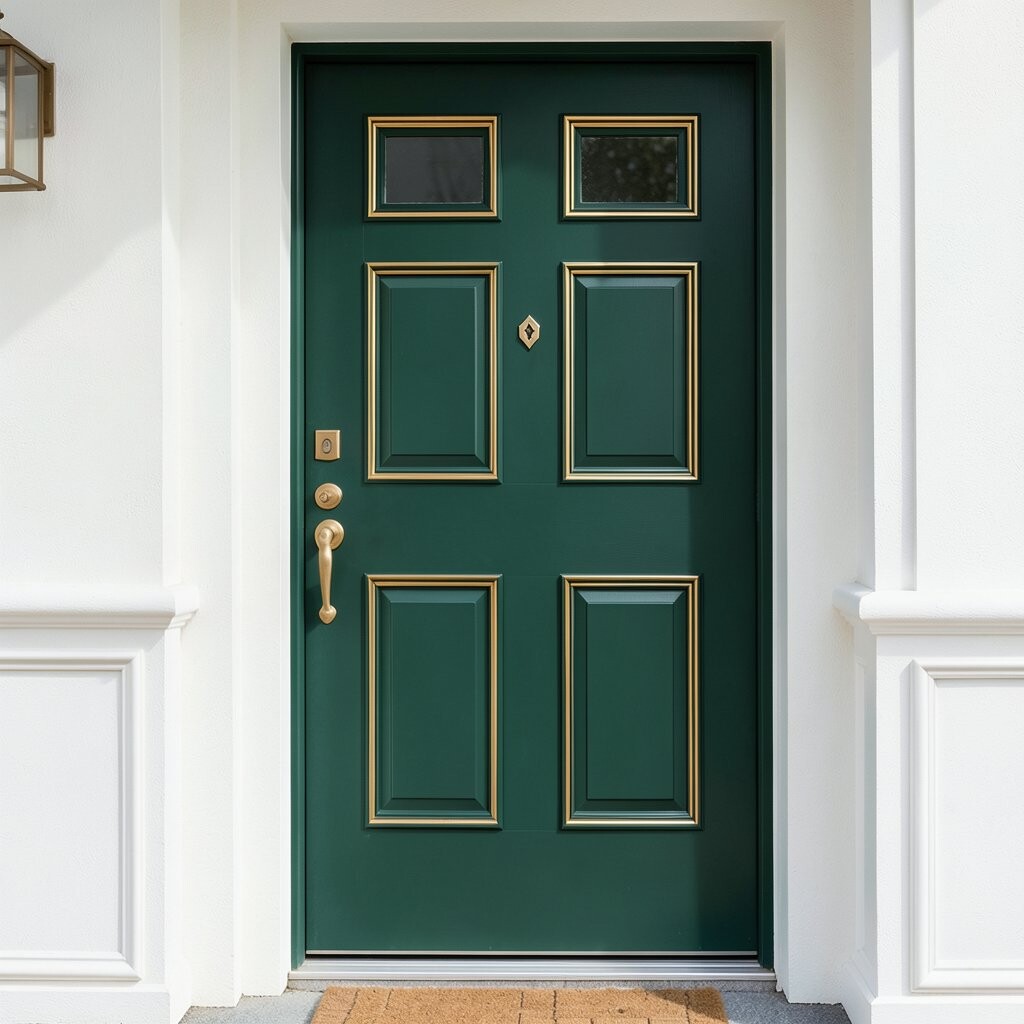
Picture a rich emerald door that looks elegant, almost like a jewel tone under porch light. When you pair it with gold or brass hardware, it feels like a polished upgrade.
Emerald green brings uniqueness and depth, giving your home a special mood. It also makes greenery pop, which is great for seasonal changes. For personalization, consider painting the door trim or small grooves around panels with a gold-toned accent glaze for a luxurious look.
To keep it looking sharp, choose an exterior paint that’s rated for UV protection and use primer to prevent uneven absorption. A tip for long-lasting shine is to keep your finish satin so it’s durable and easier to clean. Cost may be slightly higher because jewel tones sometimes need careful coverage, but the final look can feel very worth it.
13. Pastel Yellow With a Sunlit Entry Vibe
Pastel Yellow With a Sunlit Entry Vibe
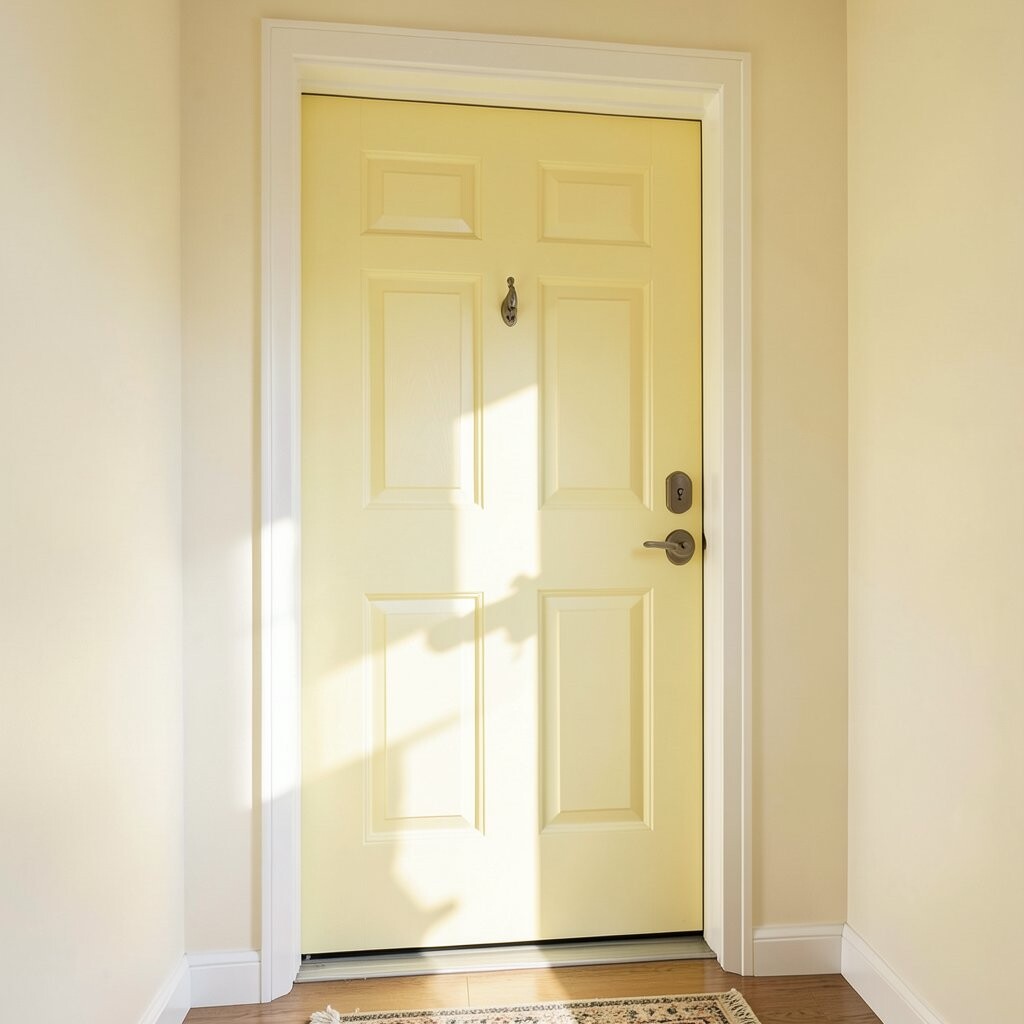
Imagine a pastel yellow door that looks bright and friendly, like morning sunshine. It instantly makes your entry feel cheerful and inviting.
Yellow can create a warm welcome, and it looks especially great if your porch lighting is soft white or warm toned. It also pairs well with navy accents, white trim, and natural stone. To personalize, paint a small decorative arch or corner shape in a slightly darker yellow to add charm without overwhelming the door.
For tips, use a steady hand and tape well around any glass panels, because pastel colors show mistakes more easily. Consider using a mildew-resistant primer if the door gets damp. Cost considerations are similar to other lighter colors, but you may need more paint for full coverage depending on the original door color.
14. Color-Blocked Door With Wallpaper-Style Panel Patterns
Color-Blocked Door With Wallpaper-Style Panel Patterns
Picture a door that looks like a mini gallery, with painted shapes that feel playful and designed. Instead of solid color everywhere, you use stripes, blocks, or panel patterns for a custom look.
This is a great way to get uniqueness without buying special doors or expensive materials. You can match your home style, whether it’s modern, cottage, or artistic, by choosing shapes and colors that fit. Personalize by repeating a tiny motif from your house, like a color used in planters or a stripe found on outdoor decor.
For tips, sketch your pattern lightly with pencil first, then use tape to build clean lines. Paint thin coats so colors don’t bleed and let each section dry before adding the next. Cost can stay reasonable because you’re using your existing door surface, but you will spend more on multiple paint colors and extra supplies like tape and small brushes.
This kind of pattern styling matches a current trend of expressive, character-filled entryways. If you want it to feel extra polished, finish with a durable exterior topcoat in satin so the design stays crisp.
Keep safety in mind too: label cups, work in good ventilation, and don’t rush drying times for the cleanest outcome.