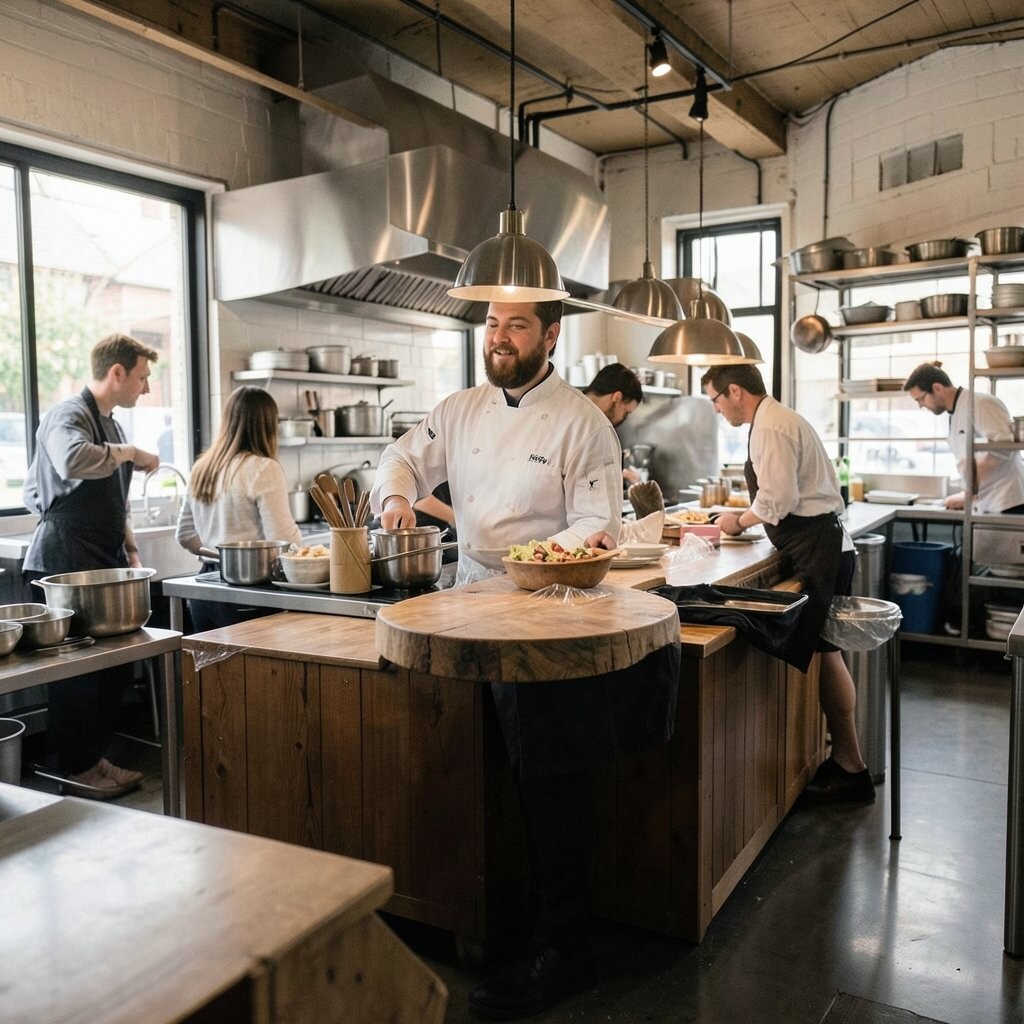
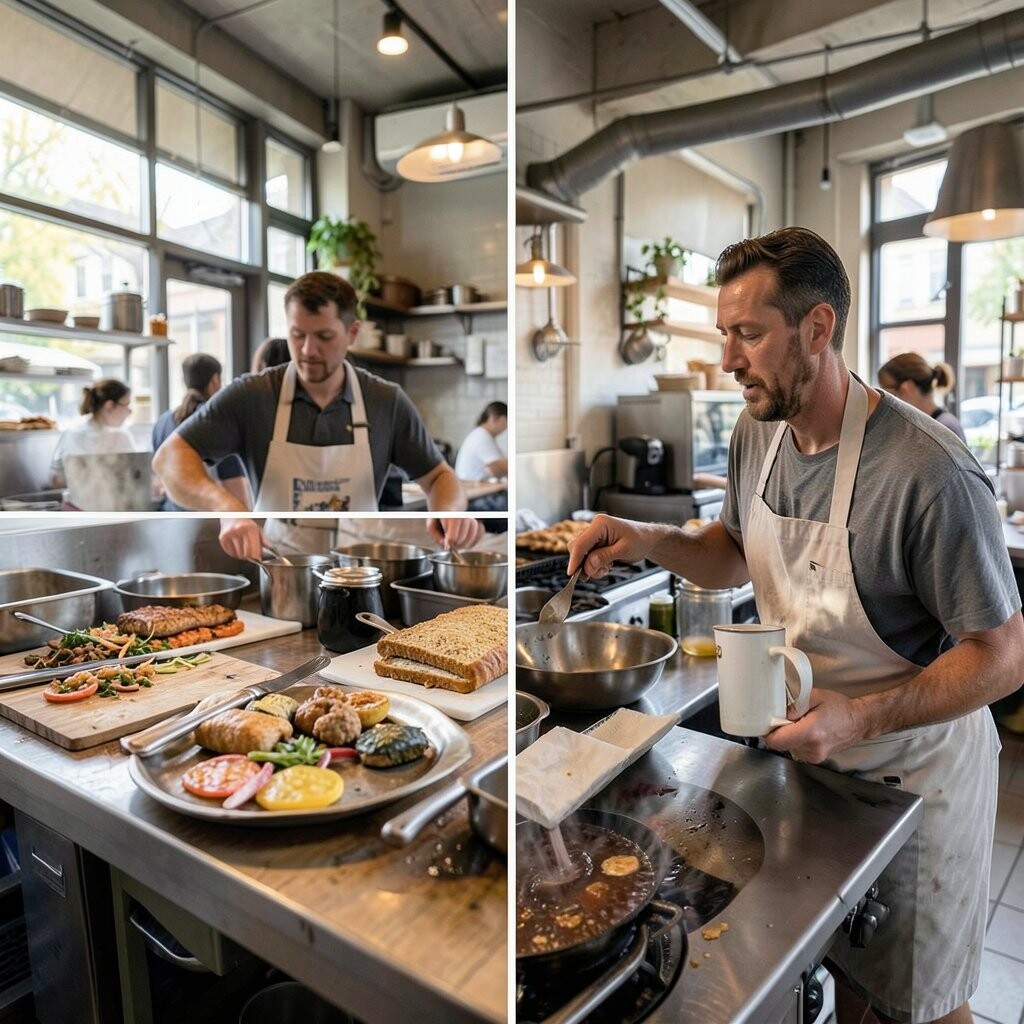
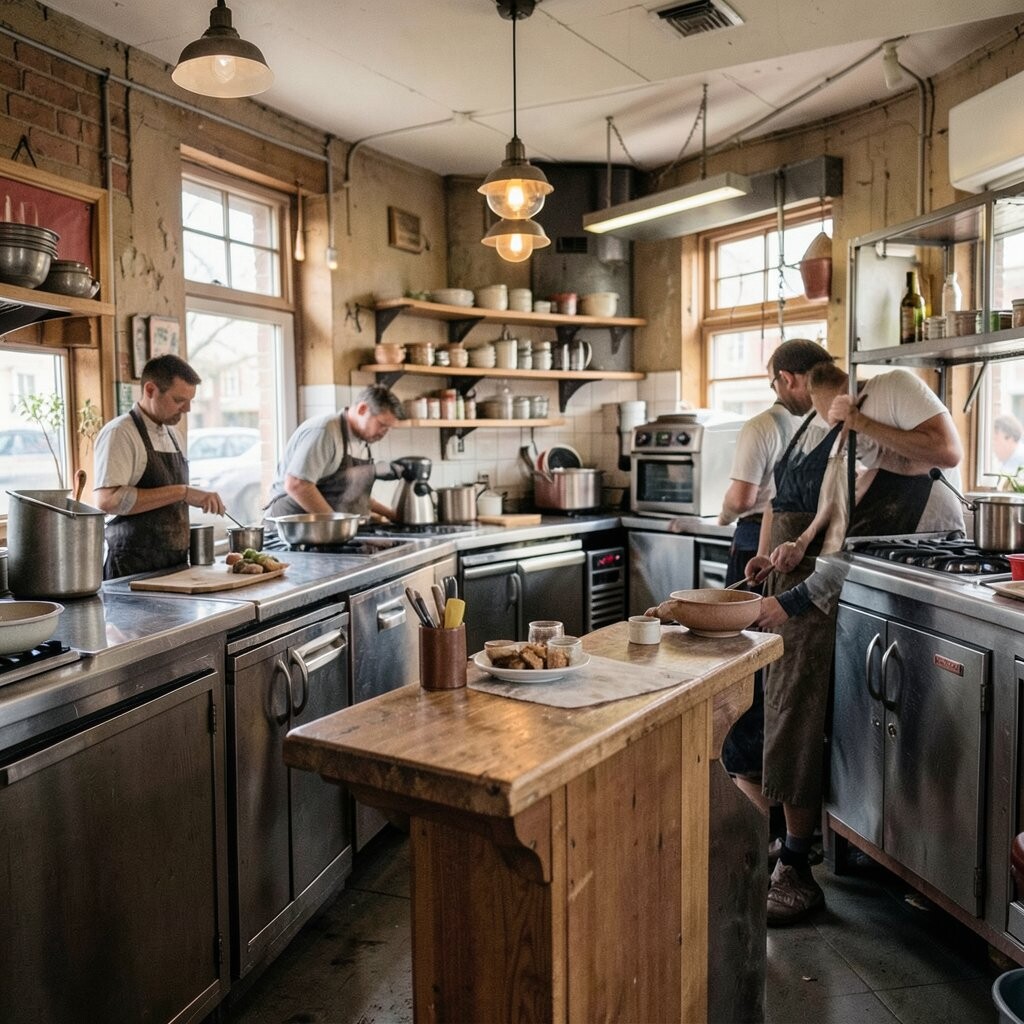
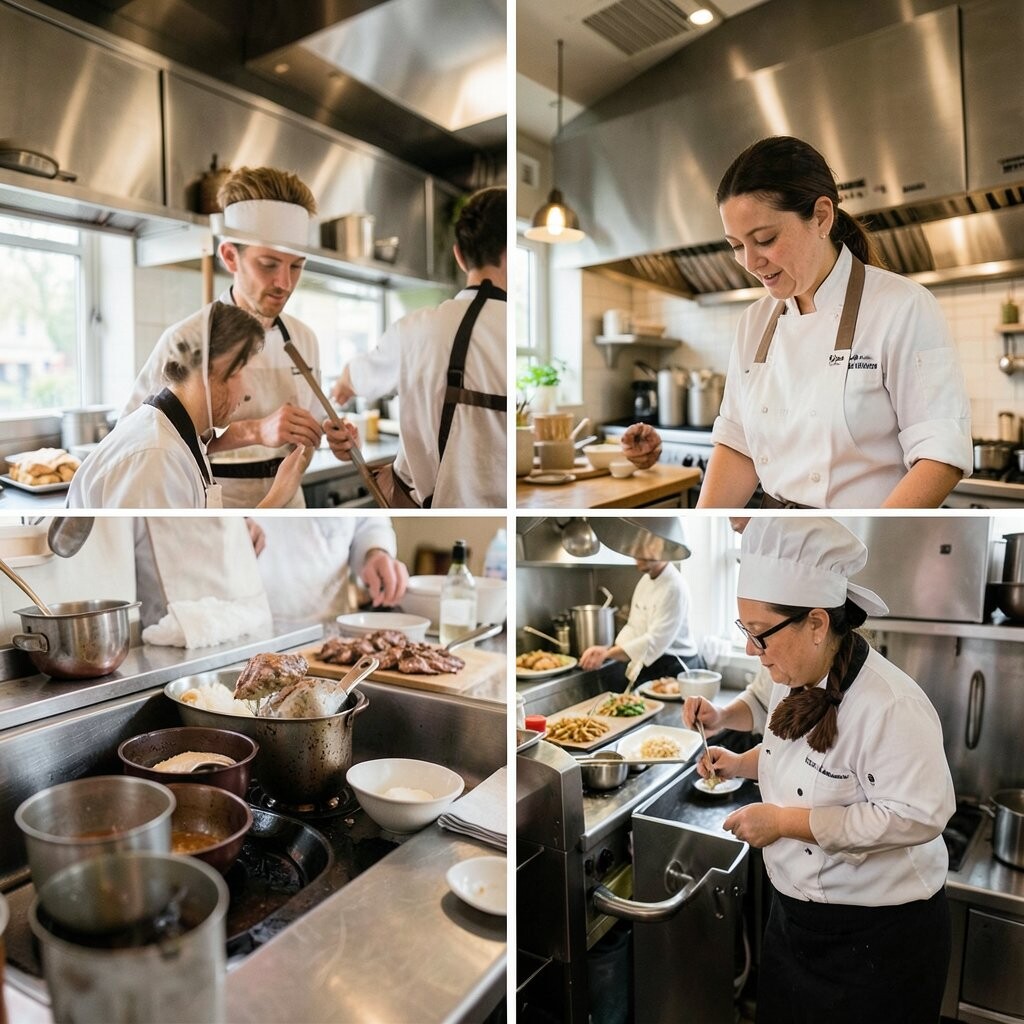
Set up a small chef’s counter right by the kitchen pass and serve a surprise menu. Guests love the close-up view of pans, flames, and quick hands at work.
This idea feels special because every plate comes with a little drama. Keep the menu short to control food cost, and use one strong theme like coastal, smoky, or garden fresh. Add a personal touch with a handwritten card that explains the night’s mood and the chef’s inspiration.
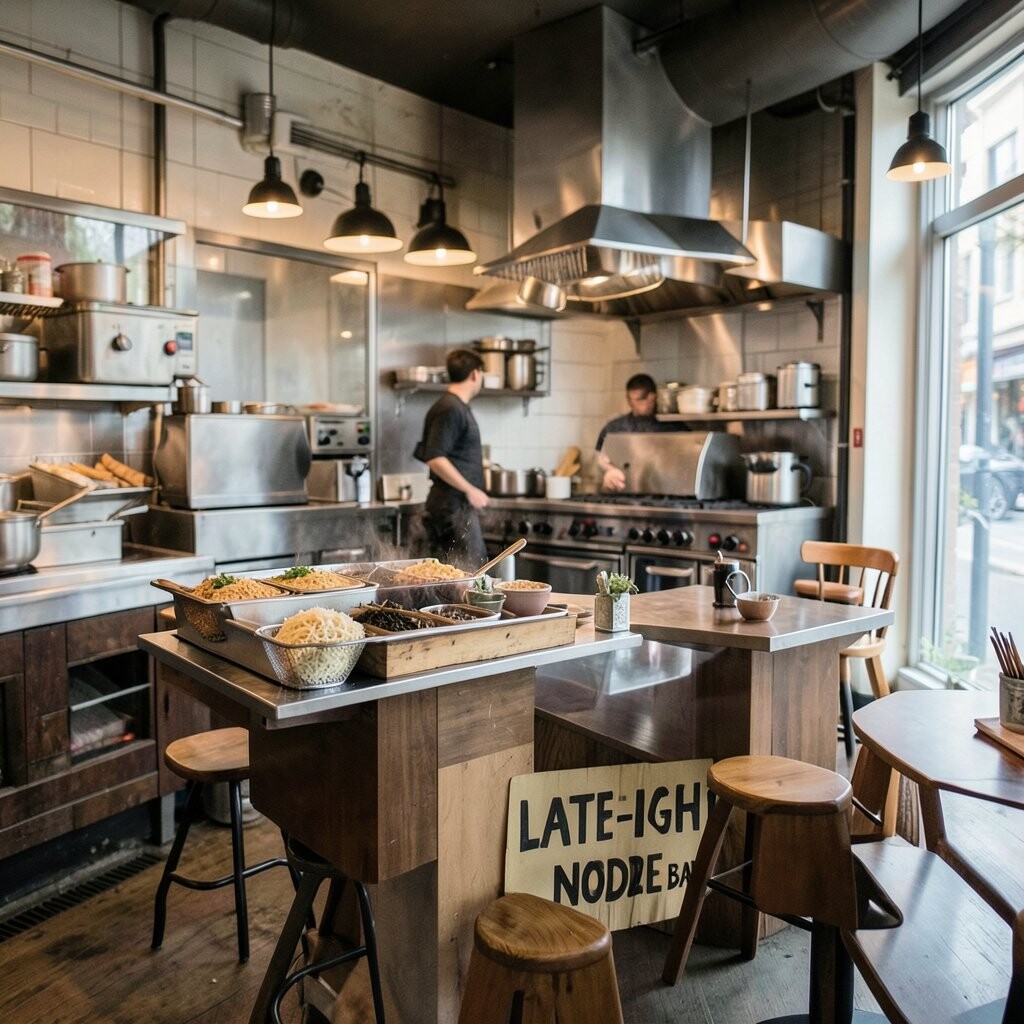
2. Late-Night Noodle Bar
Late-Night Noodle Bar
Turn the kitchen into a glowing noodle stop after regular dinner service. Steam, broth, and bright garnish bowls make the space feel warm and lively.
This works well because noodles are fast, filling, and easy to customize. You can offer spicy, mild, vegetarian, or protein add-ons without adding too much labor. A late-night pop-up fits current cravings for comfort food and gives the team a simple, low-waste menu.
Use one signature broth and a few topping choices to keep prep steady. Guests can build their own bowl, which makes the meal feel personal and fun. If you want to keep costs down, use ingredients already on hand from the main kitchen line.
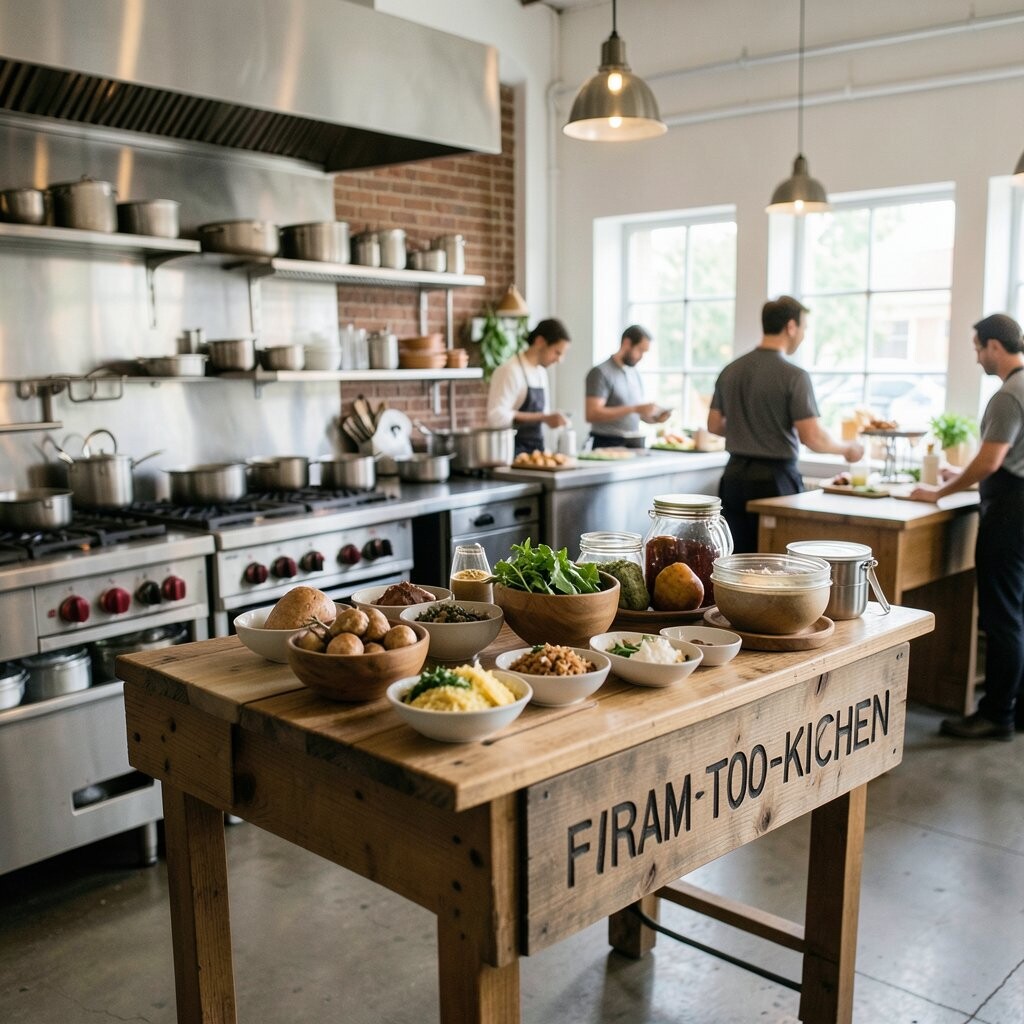
3. Farm-to-Kitchen Tasting Table
Farm-to-Kitchen Tasting Table
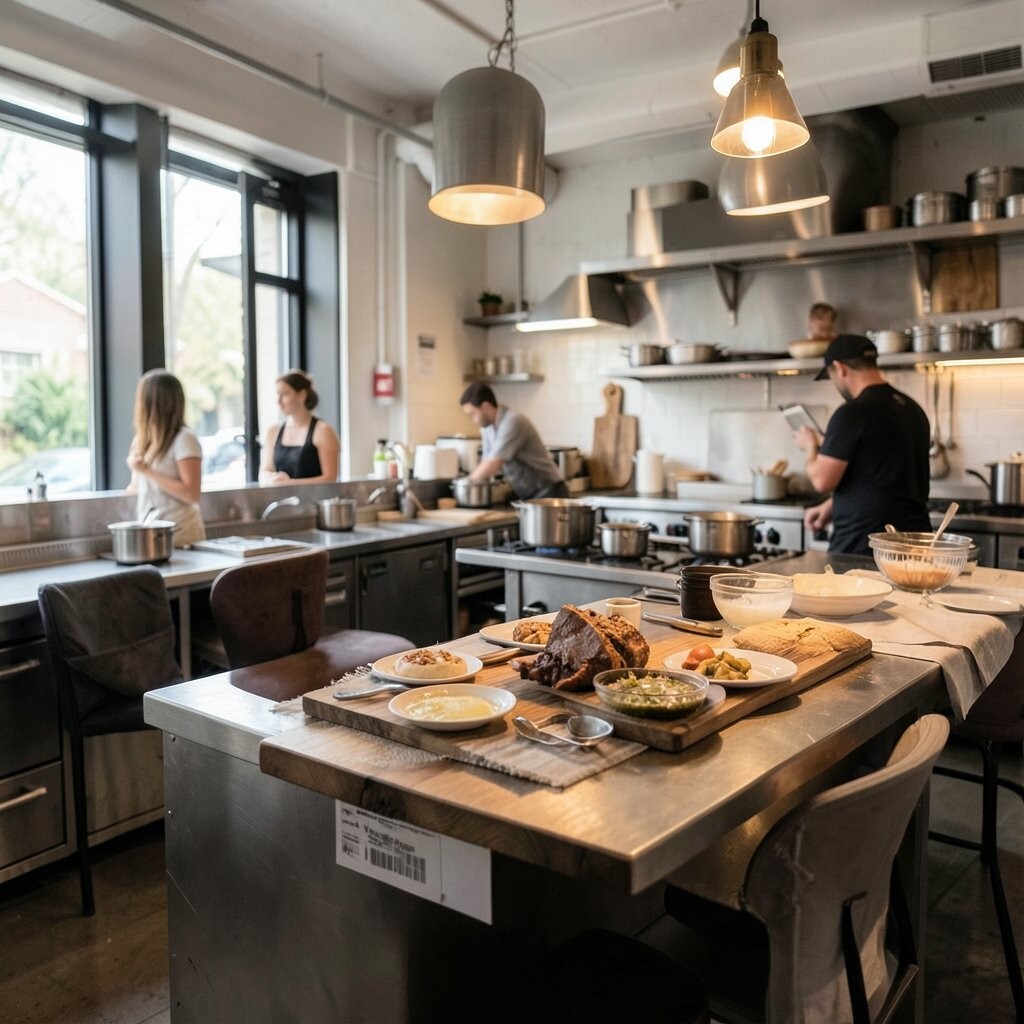
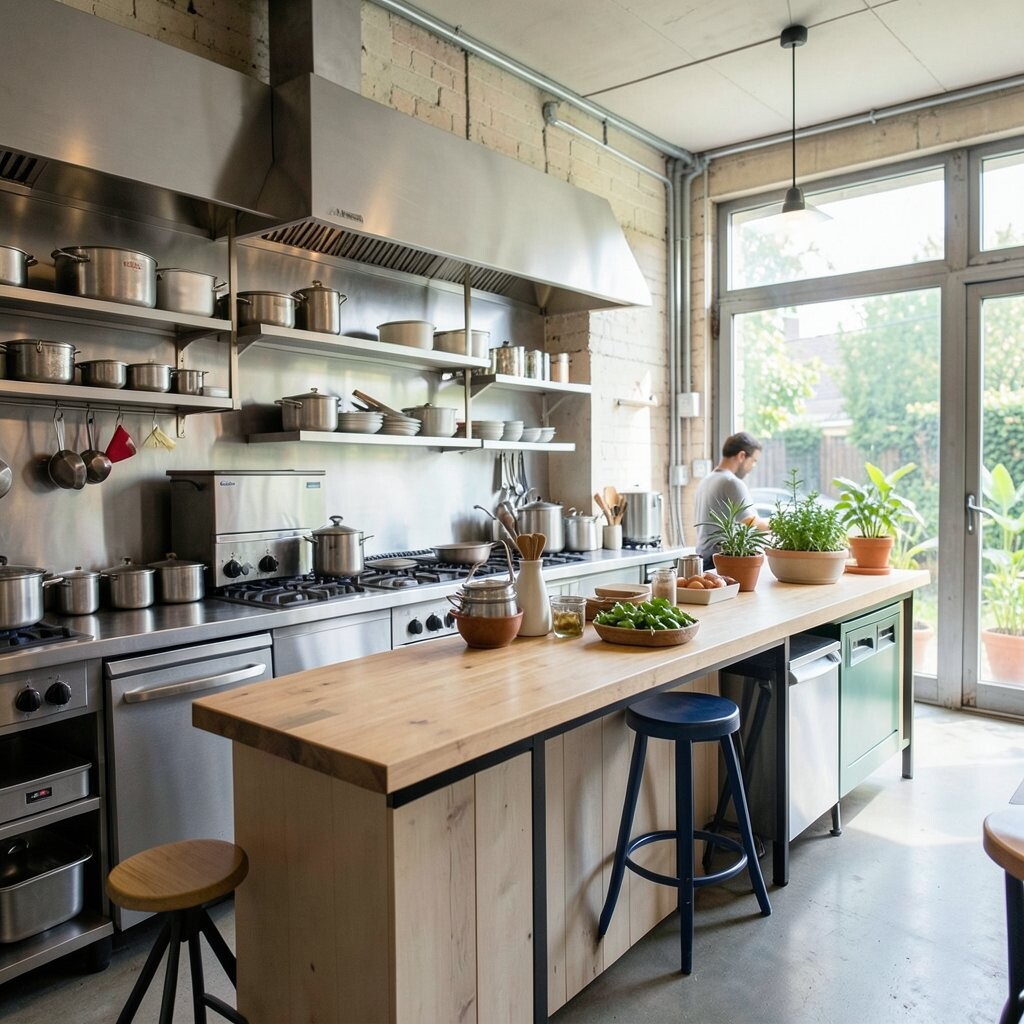
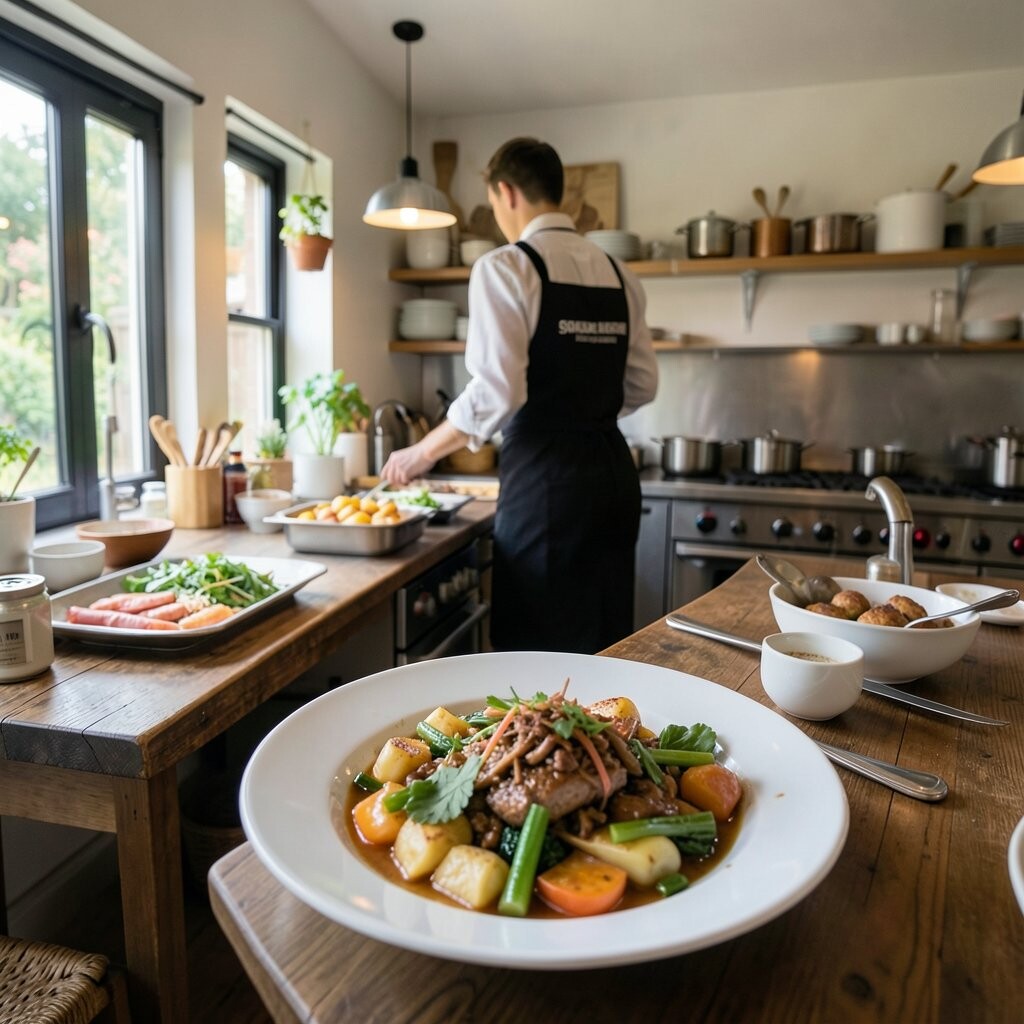
Bring in crates of herbs, greens, and colorful produce so the room looks fresh and alive. The setup feels like a mini market inside the kitchen.
This style gives guests a clear view of where the food idea starts. It also helps the restaurant show off local sourcing, which many diners care about right now. Keep the plates simple and bright so the ingredients stay the star.
You can add small story cards naming the farm or grower. That makes the event feel honest and personal without much extra work. A farm theme can also help the team plan around seasonal prices and save money.
Try a tasting flight with one vegetable in many forms, like roasted, pickled, and raw. The variety makes the menu feel creative without needing a huge list. Soft wood boards, baskets, and cloth towels can make the space look warm and rustic.
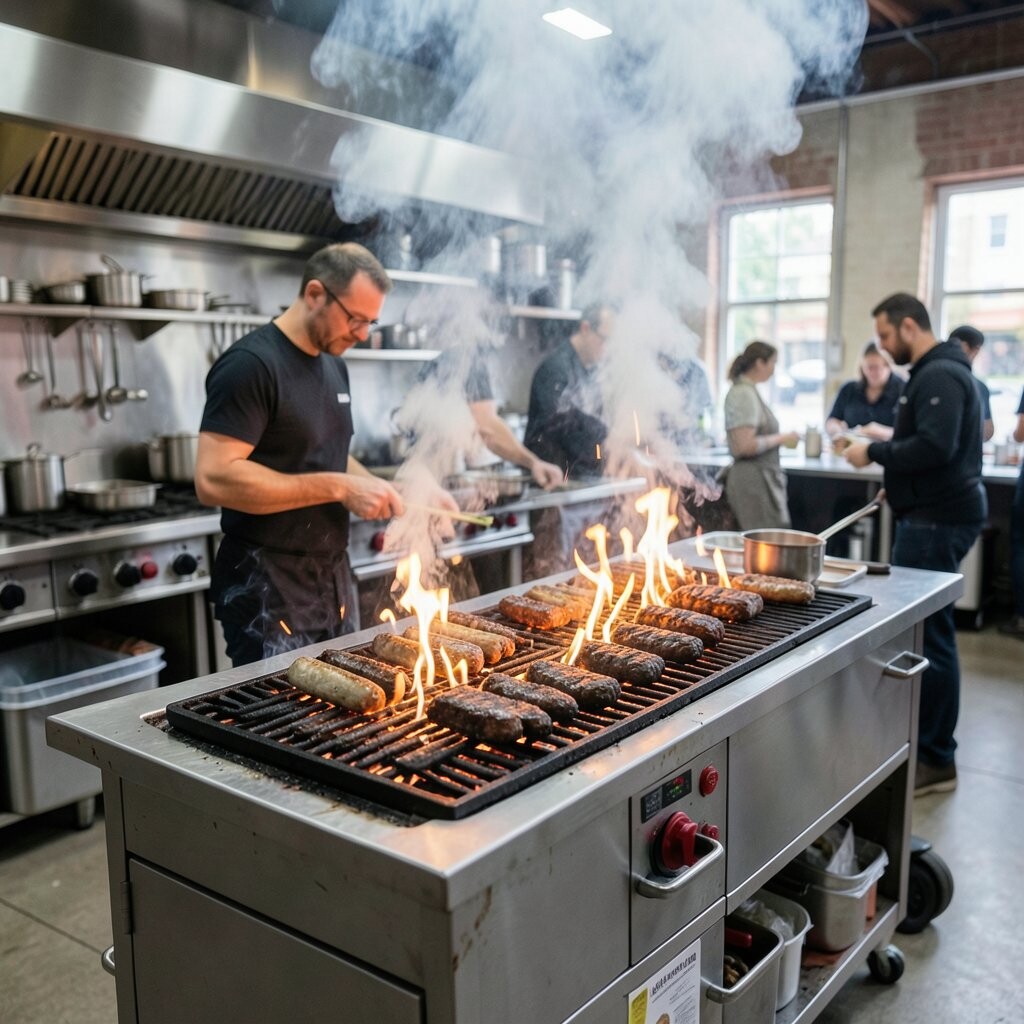
4. Fire and Smoke Grill Pop-up
Fire and Smoke Grill Pop-up
Build the event around the look and smell of open flame. Char marks, sizzling pans, and smoky air create a bold kitchen scene that guests remember fast.
This pop-up feels exciting because it taps into the popular love for grill flavors and rustic cooking. Keep the menu focused on items that cook well over heat, like skewers, vegetables, seafood, or flatbreads. A few strong sauces can make each dish feel different without raising prep costs too much.
5. Dessert Lab Night
Dessert Lab Night
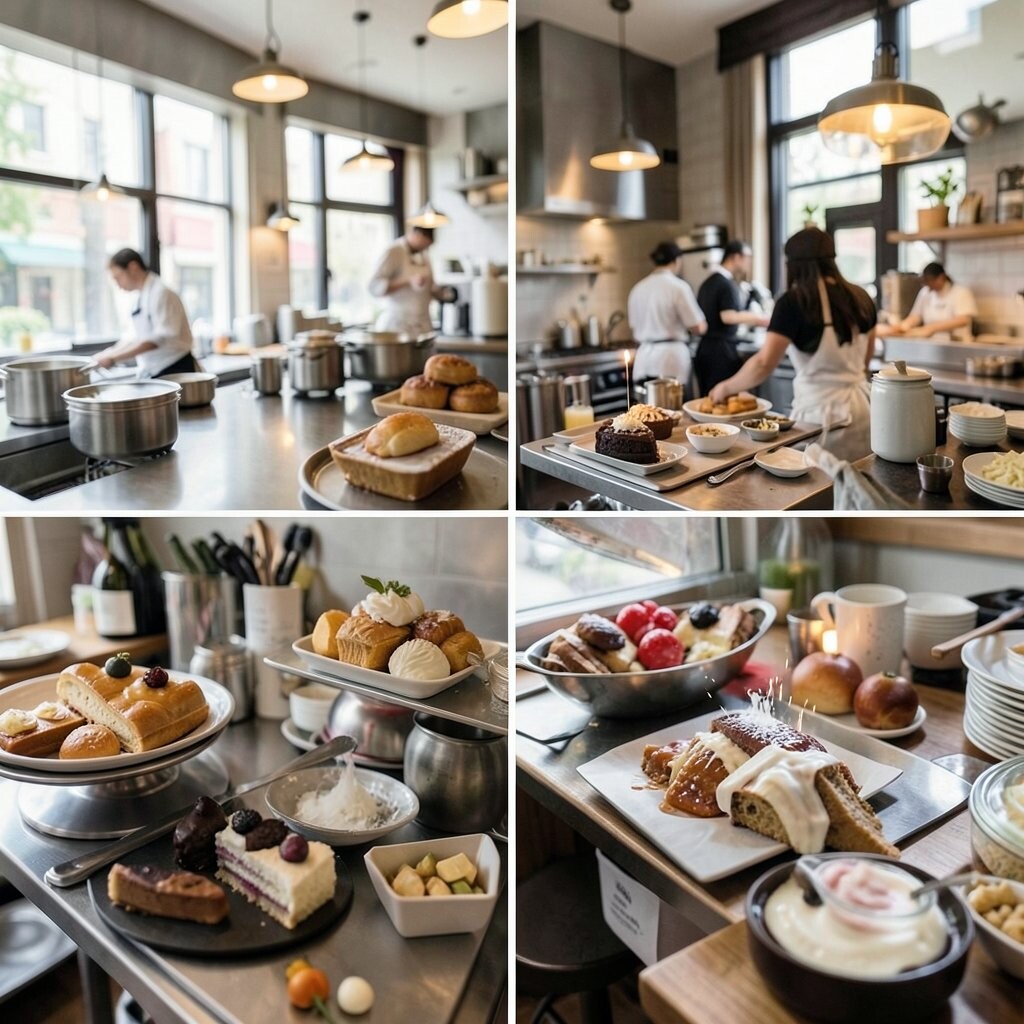
Use the kitchen as a sweet workshop with whipped cream, chocolate, fruit, and crunchy toppings. Bright colors and shiny glassware make the room feel playful and fun.
This idea is great for social sharing because desserts look good in photos. You can keep portions small and still make guests feel treated, which helps with food cost control. Offer a build-your-own sundae, plated mini cakes, or a tasting of tiny sweets.
Personalize the night with fun names for each dessert station. That can make the menu feel like a game while still keeping the kitchen workflow simple. If you want a current trend angle, add plant-based cream, less-sweet treats, or global flavors like matcha and tahini.
6. Global Street Food Takeover
Global Street Food Takeover
Choose one street food style and give the kitchen a bold new look. Paper lanterns, bright signs, and fast-moving plates can make the room feel like a busy market lane.
This pop-up is unique because it brings travel-style flavors into a familiar restaurant space. It can be budget-friendly if you use a few core ingredients across many dishes. Guests also like the casual feel, since street food feels relaxed and easy to enjoy.
Keep the menu short and focused on one region or city. That helps the team stay organized and keeps the story clear for guests. Add a sauce bar or topping station so people can make the meal their own.
Use bold colors and strong smells to pull people in from the dining room. A small playlist with matching music can add more energy without much cost. This kind of pop-up works well for weekend crowds and food lovers looking for something new.
7. Midnight Breakfast Club
Midnight Breakfast Club
Serve pancakes, eggs, bacon, and waffles after dark for a fun twist. The contrast of sleepy breakfast food and late-night energy gives the kitchen a cool glow.
This idea is easy to sell because breakfast food feels comforting and familiar. It can also be smart for cost, since many ingredients are simple and versatile. Add a few playful drinks like coffee shakes or citrus spritzes to make the menu feel fresh.
Decorate with checkered cloths, warm lights, and old-school diner touches. Guests may enjoy building their own plates with syrup, fruit, and savory extras. A personal menu note from the chef can make the whole event feel like a secret club.
8. Build-Your-Own Bowl Bar
Build-Your-Own Bowl Bar
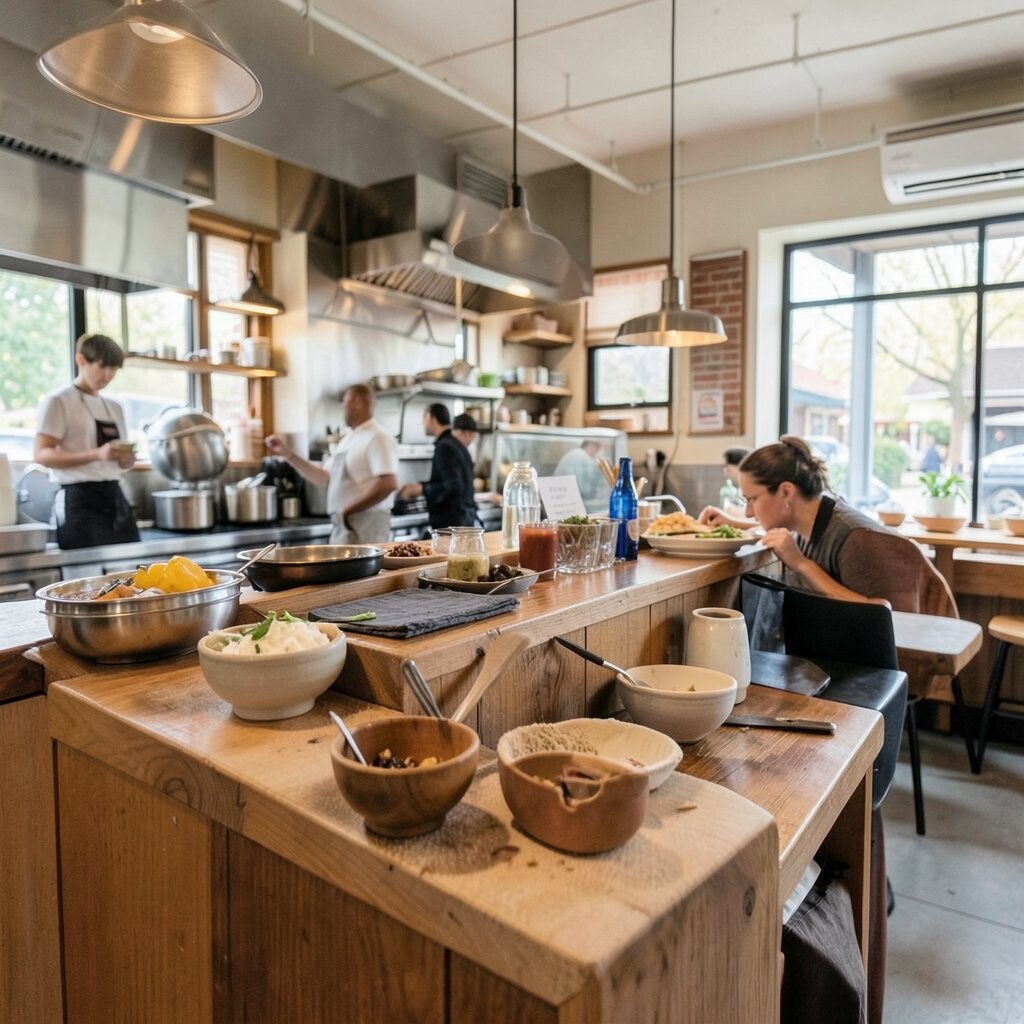
Set up a colorful line of grains, greens, proteins, and sauces. The kitchen looks neat and bright when everything is arranged in clean, easy-to-see containers.
This pop-up is popular because guests love control and choice. It also helps the kitchen manage inventory by using one base set of ingredients in many ways. You can make it healthy, hearty, vegan, or high-protein with very little extra setup.
Give each bowl a theme, like spicy, fresh, or rich and creamy. That makes the menu feel special even though the format stays simple. Keep the portions easy to scoop so service stays fast during busy hours.
A signature sauce can be the star and help the event stand out. Use bright labels and simple icons so guests can build bowls without confusion. This is a strong option for current wellness trends and quick service goals.
9. Vintage Diner Revival
Vintage Diner Revival
Bring back old-school charm with chrome touches, bright stools, and classic menu boards. The kitchen can feel like a happy time machine with the right lights and colors.
This style works well because people enjoy familiar comfort and retro style. It can be done on a modest budget using simple props, old trays, and classic recipes. Milkshakes, burgers, fries, and pie slices fit the theme with little fuss.
Try using playful names that sound like they came from another era. That adds character and helps the pop-up feel like a story, not just a meal. You can also make it personal by sharing a family recipe or chef memory on the menu.
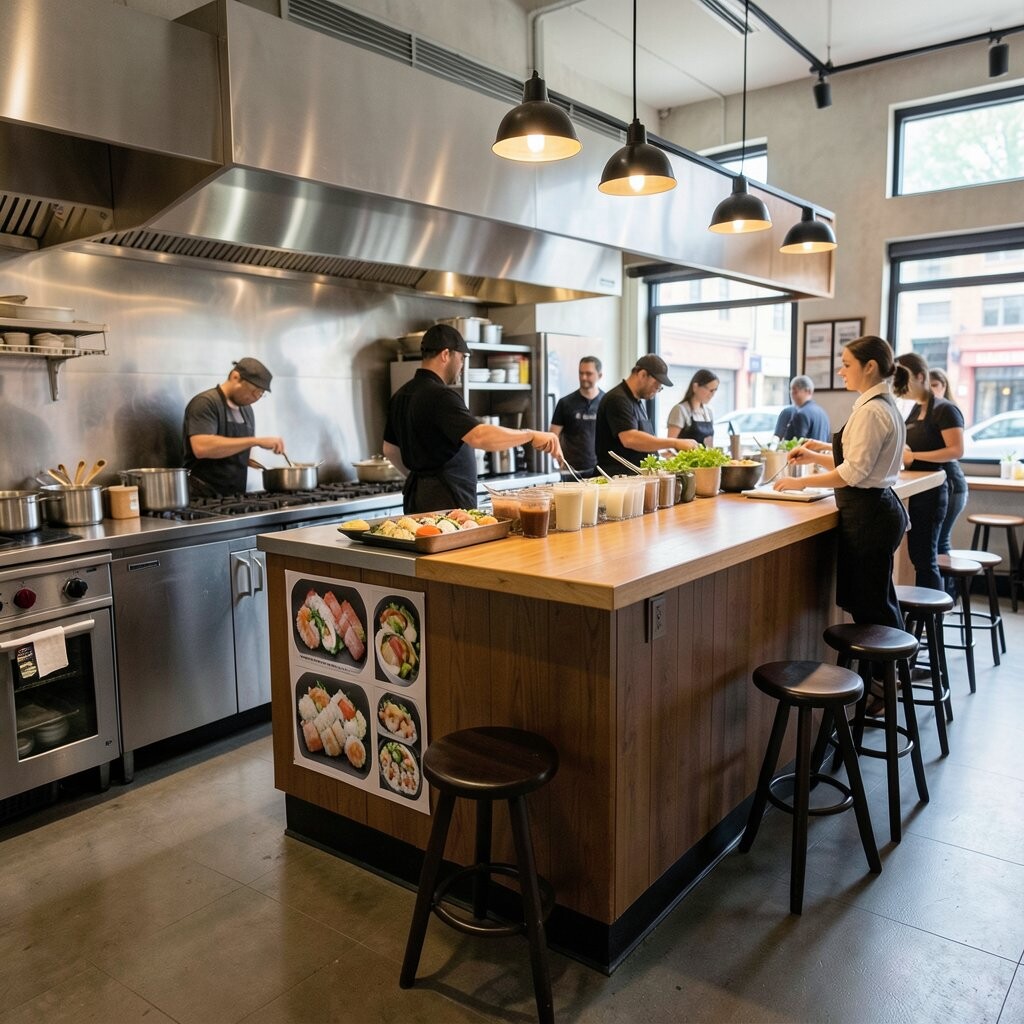
10. Sushi and Hand Roll Corner
Sushi and Hand Roll Corner
Create a clean, calm setup with neat lines, pale wood, and fresh fish displays. The visual style feels sharp and modern, which makes the kitchen look polished.
This pop-up feels special because guests can watch each roll come together. Hand rolls are trendy right now because they are fast, fresh, and easy to eat. Keep the ingredient list tight to protect quality and control cost.
Offer a few fish choices, plus cucumber, avocado, and tempura crunch. That gives guests enough variety without overloading the team. A small soy, wasabi, and pickled ginger station can make the experience feel complete.
Personal touches like torched toppings or house-made sauces can set the menu apart. Use clear signs so guests know what each roll includes. A sushi corner also works well in a smaller kitchen because the setup can stay compact and tidy.
11. Pasta Window Night
Pasta Window Night
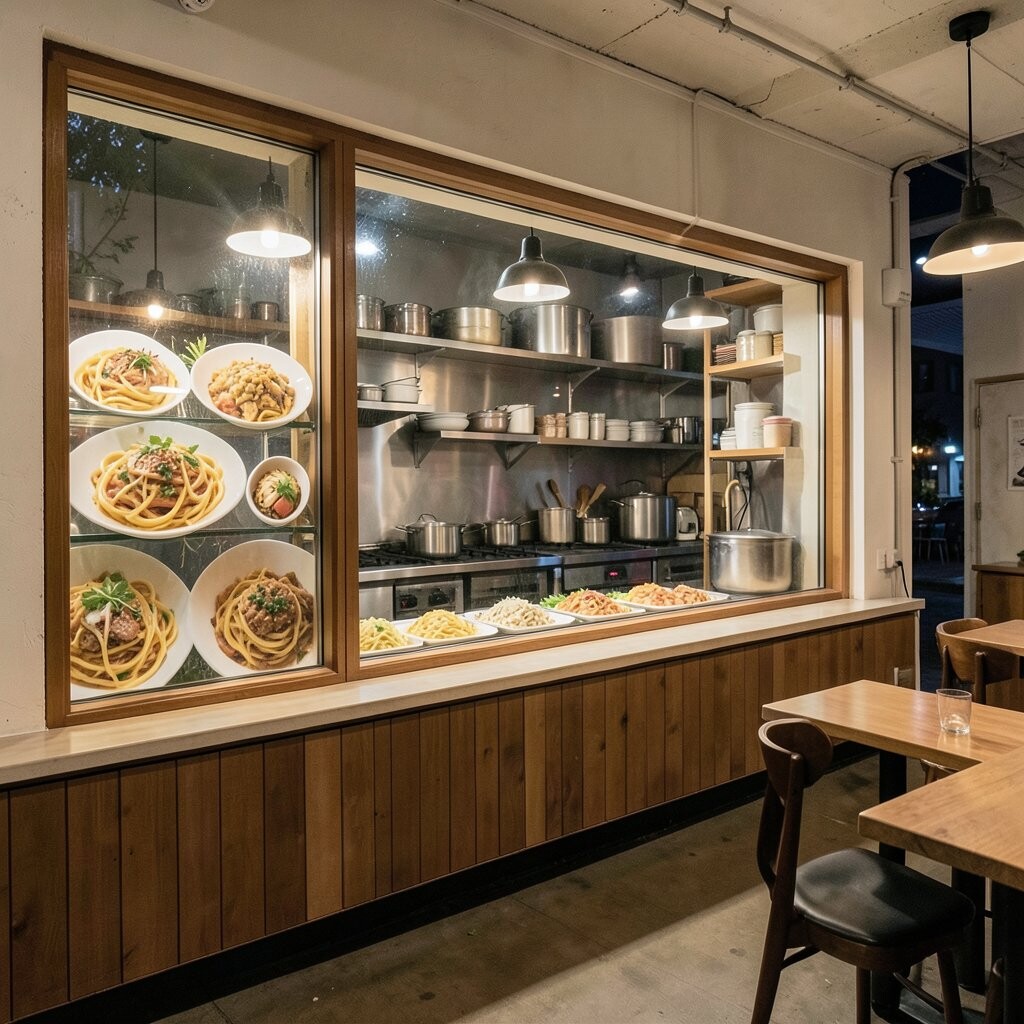
Turn the kitchen pass into a pasta window with long trays of noodles and bubbling sauce. The steam and shine of fresh pasta make the space feel rich and inviting.
This pop-up is attractive because pasta feels comforting and easy to love. You can keep costs smart by making one or two sauces and changing the shape, garnish, or protein. Fresh herbs and grated cheese add a finished look without much extra work.
Offer a few simple choices like creamy, tomato, or olive oil based plates. That keeps service smooth and gives guests a sense of control. If you want a more personal feel, name each dish after a memory, place, or family tradition.
12. Taco and Tortilla Night
Taco and Tortilla Night
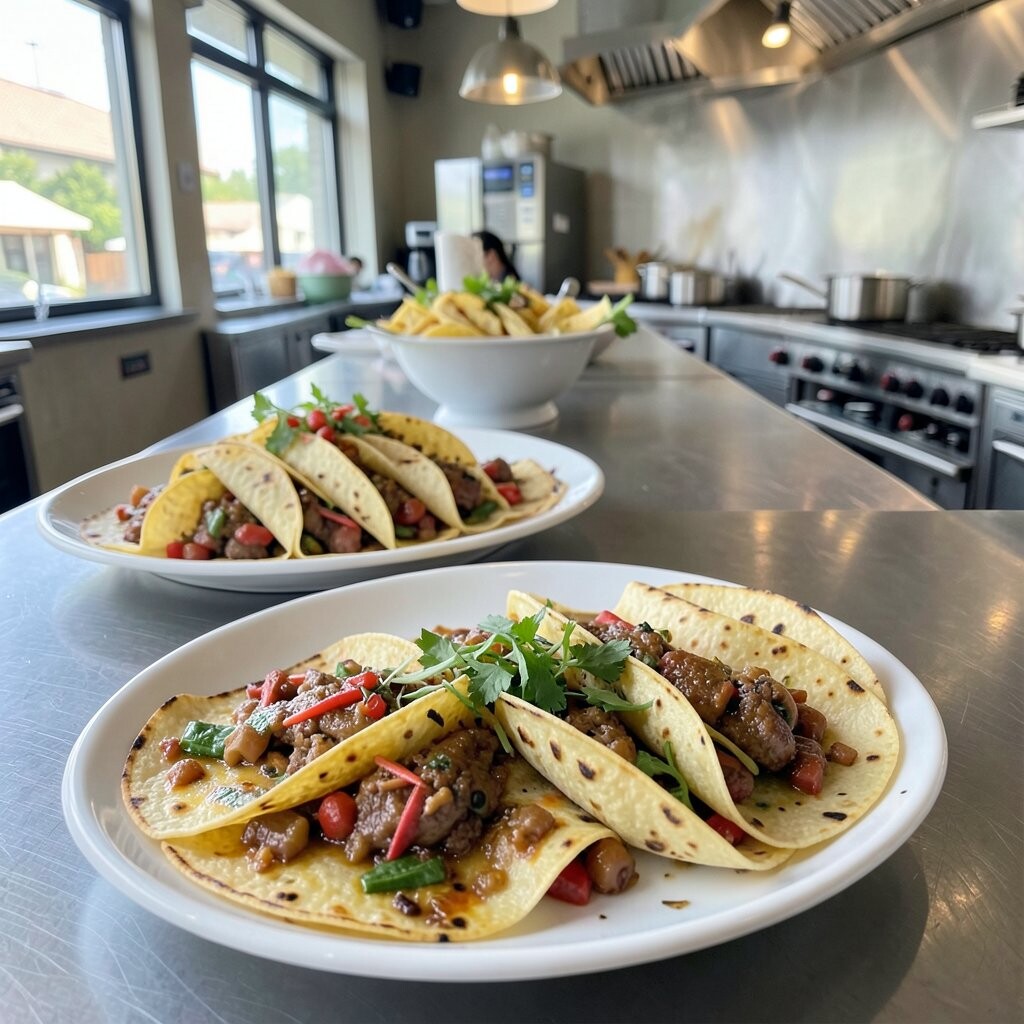
Fill the kitchen with warm tortillas, colorful salsas, and fresh toppings. The scene feels lively and bright, with lots of color on every plate.
Tacos are a strong pop-up choice because they are flexible and crowd-friendly. The kitchen can prep fillings ahead of time, which helps service move fast. You can also keep costs in check by using a few ingredients in many combinations.
Make the event unique with one special filling or one house-made salsa that guests cannot get every day. Add a build-your-own option so people can choose heat level and toppings. This format works well for current trends because diners like casual food that still feels fresh and fun.
Decorate with woven baskets, paper flags, and bright serving trays. That gives the room a festive mood without much spending. A taco night can also be a good fit for groups, since it feels social and easy to share.
13. Soup and Bread Hearth Pop-up
Soup and Bread Hearth Pop-up
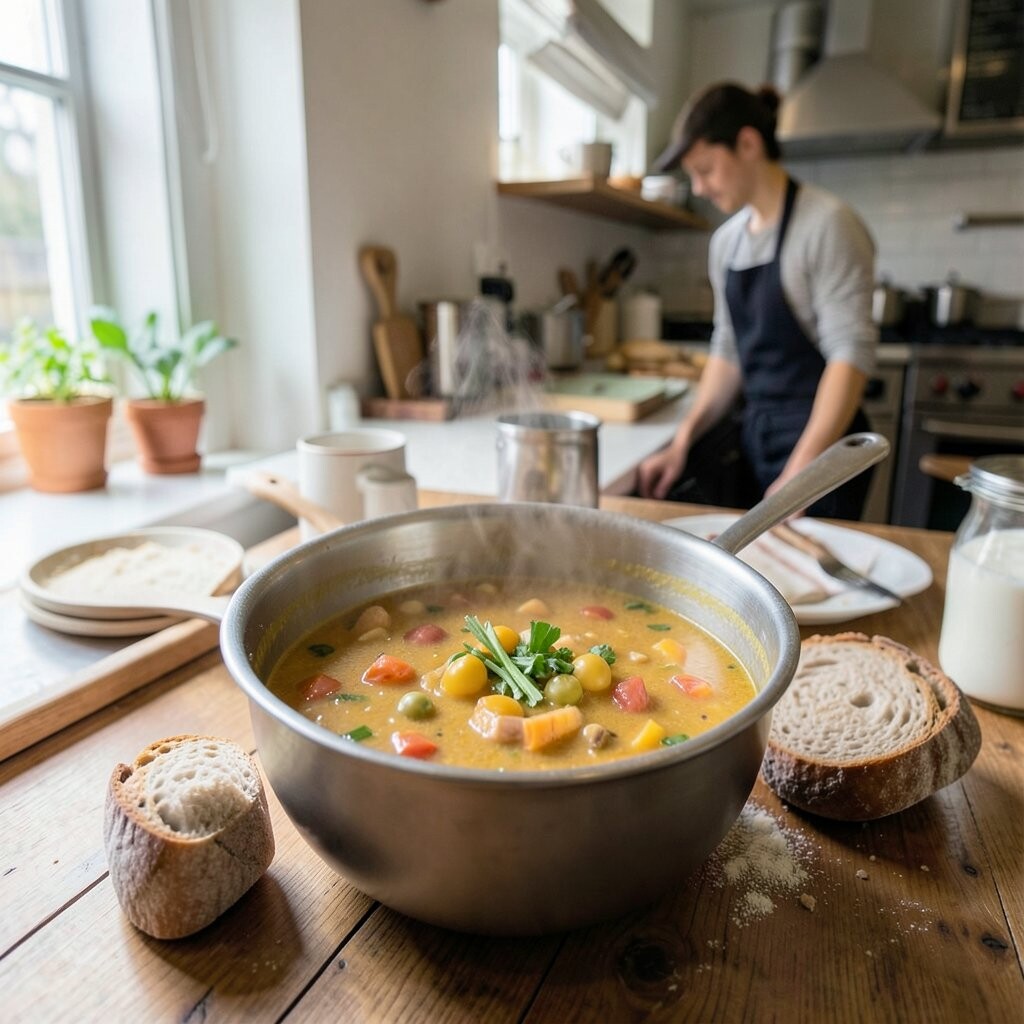
Create a cozy kitchen scene with bowls of soup, crusty bread, and warm steam in the air. The look is simple, but the feeling is rich and comforting.
This idea stands out because it turns humble food into a special event. Soup is often low-cost and can use seasonal produce, which helps the budget. Bread service adds a homemade touch and makes guests feel cared for.
Use deep bowls, linen napkins, and wooden boards to make the table setting feel calm. Offer one broth-based soup and one creamy option so the menu feels balanced. A small herb garnish or flavored oil can make each bowl look polished.
Guests may enjoy choosing from toppings like seeds, croutons, or chili oil. That small bit of control adds fun without making the kitchen work harder. This style also fits well with cooler weather and comfort-food trends.
14. Plant-Based Power Kitchen
Plant-Based Power Kitchen
Give the kitchen a fresh green look with herbs, vegetables, and bright natural colors. The room can feel modern and clean with simple plates and lots of texture.
This pop-up is timely because many diners want more plant-based choices. It can also help with cost since vegetables and grains often stretch farther than meat. Focus on bold seasoning, rich sauces, and smart plating so the food feels full of energy.
Try roasted cauliflower, grain salads, lentil patties, or mushroom skewers. Each dish can feel hearty if the flavors are strong and the textures are mixed well. Personalize the menu with local produce or a chef’s favorite spice blend.
Keep the setup colorful so it looks exciting, not plain. A plant-based pop-up can work for health-minded guests, flexitarian diners, and anyone curious about lighter meals. Simple labels can help explain ingredients and make the menu feel easy to trust.
15. Seafood Shack Special
Seafood Shack Special
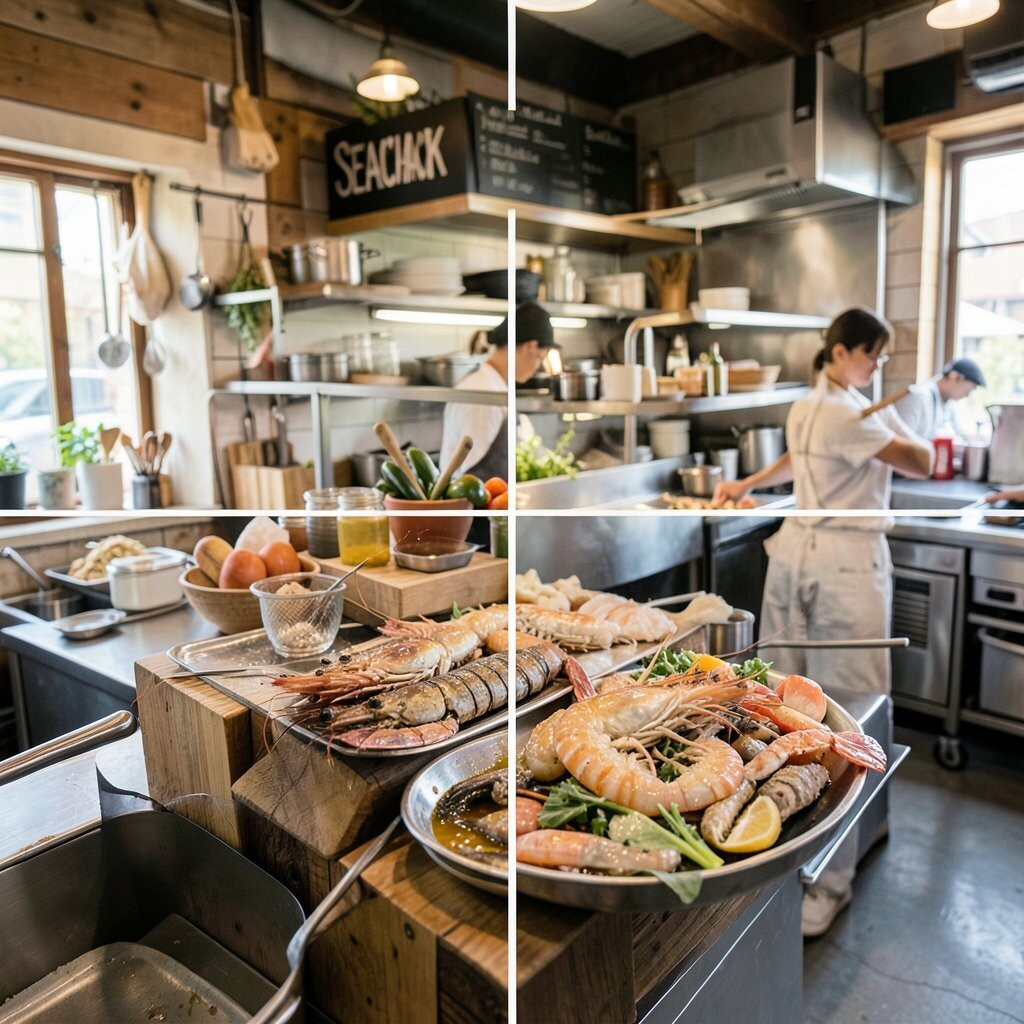
Bring a breezy coastal feel into the kitchen with nets, blue tones, and simple wooden trays. The visual mood should feel fresh, salty, and relaxed.
This idea works well when you want a menu that feels light but still special. Seafood can be cost-aware if you choose the right items and keep the menu focused. Oysters, shrimp, fish sandwiches, or chowder can all fit the theme.
Add lemon wedges, herb butter, and crisp slaws for a bright finish. That makes each plate feel complete without too many extra steps. A seafood shack theme also pairs well with current casual dining trends and summer events.
Use chalk signs and simple paper wraps to keep the look easy and fun. Guests often enjoy a seaside story, so a menu note about the catch or source can add charm. If you want to personalize it, name dishes after beaches, harbors, or family trips.
16. Pizza Slice Lab
Pizza Slice Lab
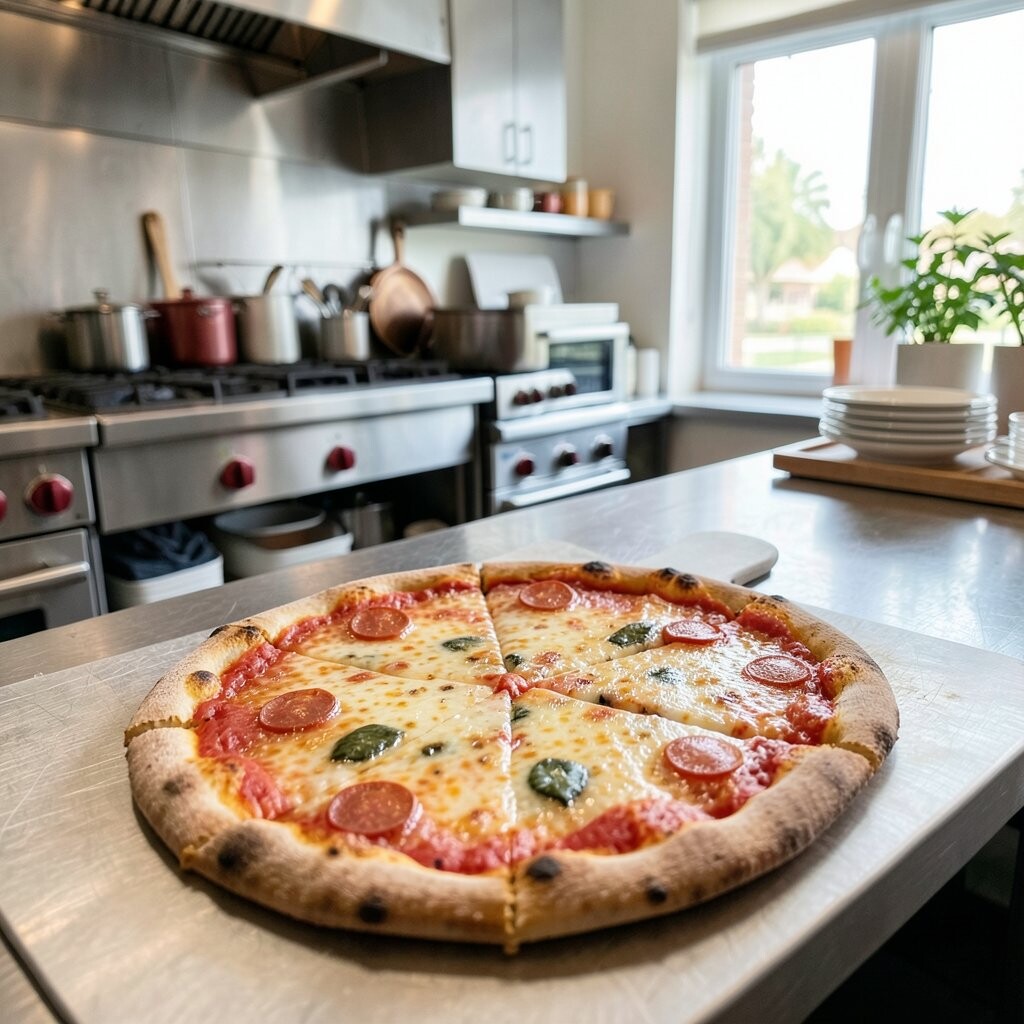
Turn the kitchen into a hot, fast pizza spot with bubbling cheese and golden crusts. The smell alone can pull people in and make the room feel alive.
This pop-up is a crowd-pleaser because pizza feels familiar but still leaves room for creativity. You can offer one dough style and change the toppings to keep prep simple. That helps control costs while still giving guests something new.
Try square slices, thin crust, or a folded style to make the event feel different. A few strong topping combos can create a fun menu without a lot of waste. Guests may enjoy building their own slice with herbs, sauces, and finishing oils.
Use a visible oven area if possible, since the heat and movement add excitement. This kind of pop-up works well for casual nights, sports events, and group dining. A personal touch like a chef’s favorite slice can make the menu feel more real.
17. Tapas and Small Plates Social
Tapas and Small Plates Social
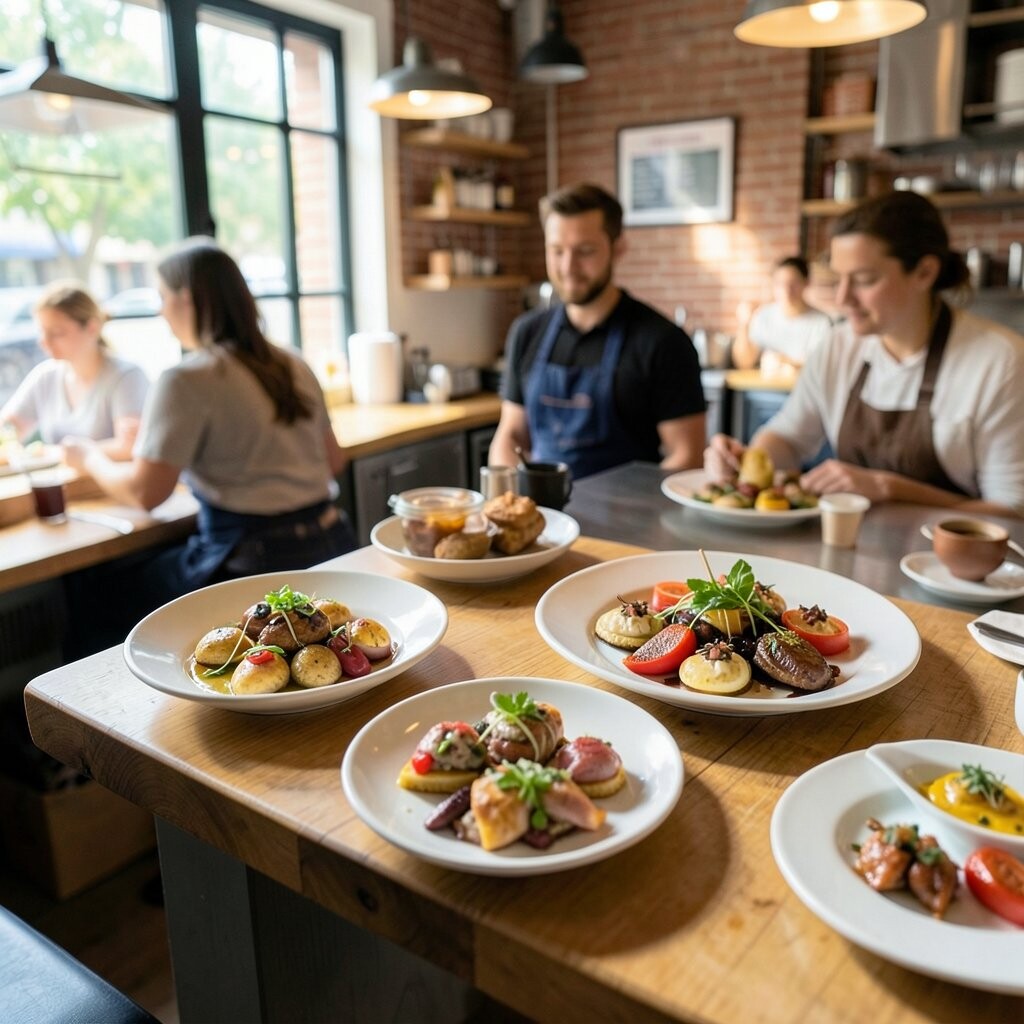
Set the kitchen up for sharing with small plates, tiny bites, and a warm glow. Tables filled with many little dishes create a lively, colorful look.
This style is great for guests who like variety and conversation. Small plates can also help the kitchen manage price by using modest portions in smart ways. The menu can be built around seasonal items, house sauces, and simple garnishes.
Keep the flavors bold so each bite feels worth it. You might offer roasted vegetables, crostini, meatballs, dips, or marinated seafood. Personalize the night with a regional theme or a chef’s tasting path that guides guests through the menu.
Use shared platters and easy-to-read cards to make ordering simple. The social feel is a big part of the charm, since people like to sample and compare. This pop-up also fits current dining trends that favor shared meals and relaxed pacing.
18. Hot Sauce and Spice Bar
Hot Sauce and Spice Bar
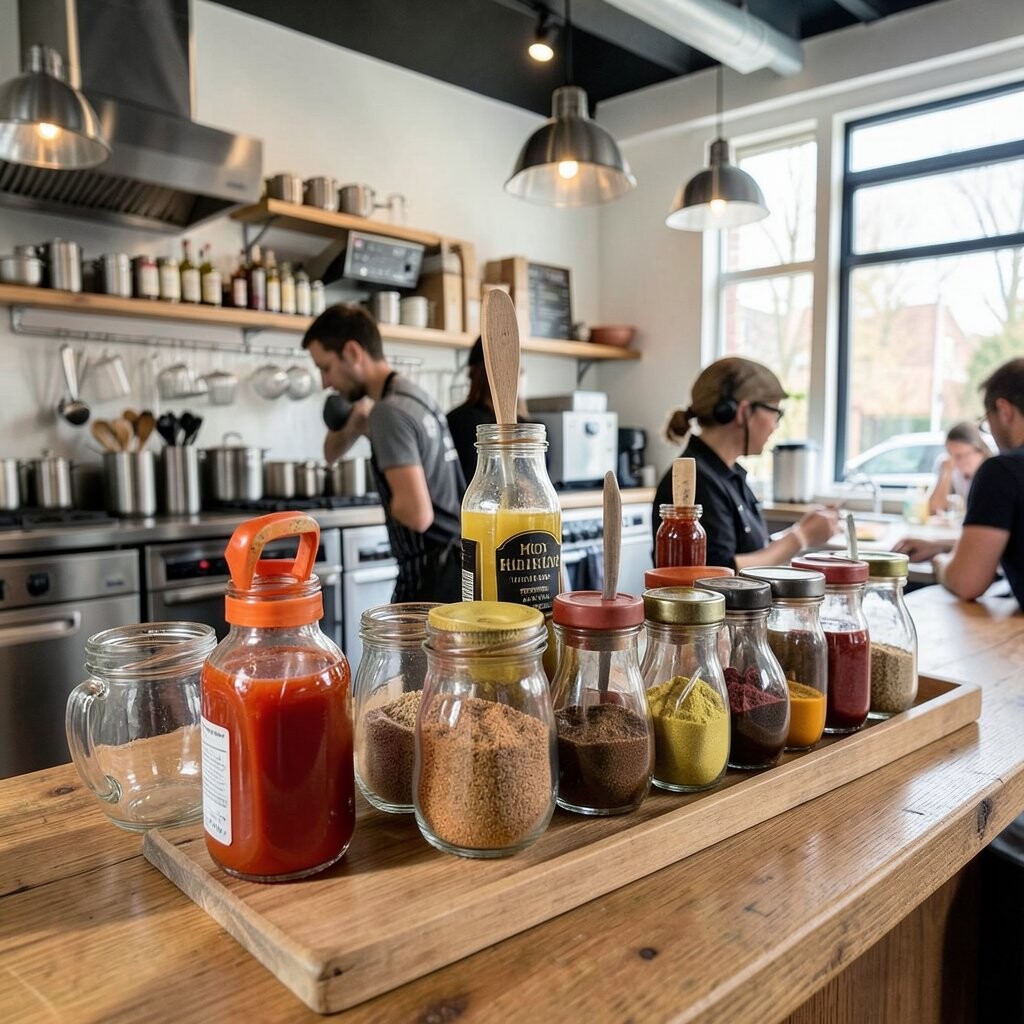
Give the kitchen a fiery edge with bright bottles, bold labels, and sizzling dishes. The look should feel energetic, loud, and full of heat.
This pop-up stands out because spice fans love trying new levels of heat. It can be low cost if you build sauces from a few base ingredients and add different peppers or seasonings. The menu can include wings, fries, tacos, noodles, or grilled items.
Offer gentle, medium, and hot options so more guests feel welcome. That keeps the experience fun instead of scary. A tasting flight of sauces can make the event feel interactive and memorable.
Use small signs with flavor notes like smoky, sweet, or citrusy. That helps guests choose the right heat level and adds a bit of trust. A spice pop-up also works well with current trends around bold flavors and custom food experiences.
19. Seasonal Market Dinner
Seasonal Market Dinner
Arrange the kitchen like a small market stall with baskets, herbs, and fresh produce. The colors can shift with the season, which keeps the space feeling current and alive.
This idea is unique because the menu changes with what is fresh and available. That can help with cost and reduce waste since you buy what is in season. Guests often enjoy the feeling that the meal is tied to the time of year.
Build the menu around one seasonal star, like tomatoes, squash, berries, or asparagus. Then add supporting dishes that match the same mood and color. A personal note about why the chef chose those ingredients can make the night feel thoughtful.
Use simple plates and natural textures so the food stands out. This kind of pop-up can feel elegant without needing a huge budget. It also gives the kitchen a chance to stay flexible and keep the menu fresh.
20. Chef Collaboration Night
Chef Collaboration Night
Invite another chef or a local food maker to share the kitchen for one special evening. The space feels electric when two styles meet in one room.
This pop-up is exciting because guests get fresh ideas and a new point of view. It can also help with marketing since both partners bring their own audience. The menu can be split into shared dishes, which keeps prep focused and costs easier to manage.
Choose a partner with a style that complements the restaurant instead of competing with it. That makes the event feel smooth and balanced. You can personalize the night with a joint signature dish or a story about how the collaboration came together.
Use a simple layout so both teams can move without stress. Guests often love the feeling of being part of a one-time event that may never happen again. A collaboration night fits current trends around chef partnerships, special experiences, and limited-time menus.