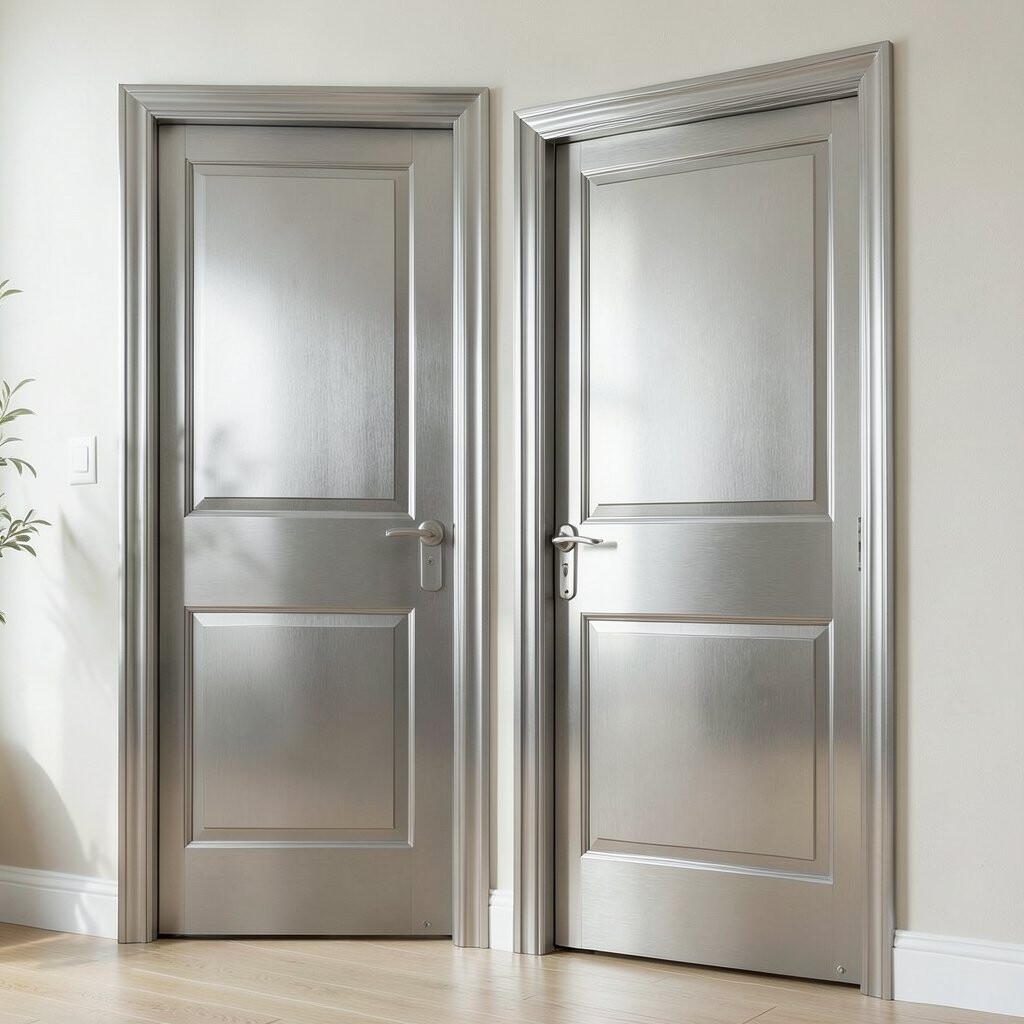
Picture a door that looks calm and clean, with fine streaks like a polished piece of kitchen hardware. The metallic tones give a soft shine instead of a loud sparkle.
This finish helps hide small scratches and wear marks because the brushed pattern breaks up the surface. It also pairs nicely with modern hardware, like sleek knobs and long pulls. For tips, prep the door well, then use light coats so the grain-like lines stay even. If you want personalization, add a subtle gray glaze in the grooves or around panel edges.
For cost, you can find brushed-nickel paints in mid-range budgets, and you may save money by using primer only where the old finish is failing. A current trend is pairing cool metallic paint with matte black accents for a “clean tech” look.
2. Antique Copper Patina
Antique Copper Patina
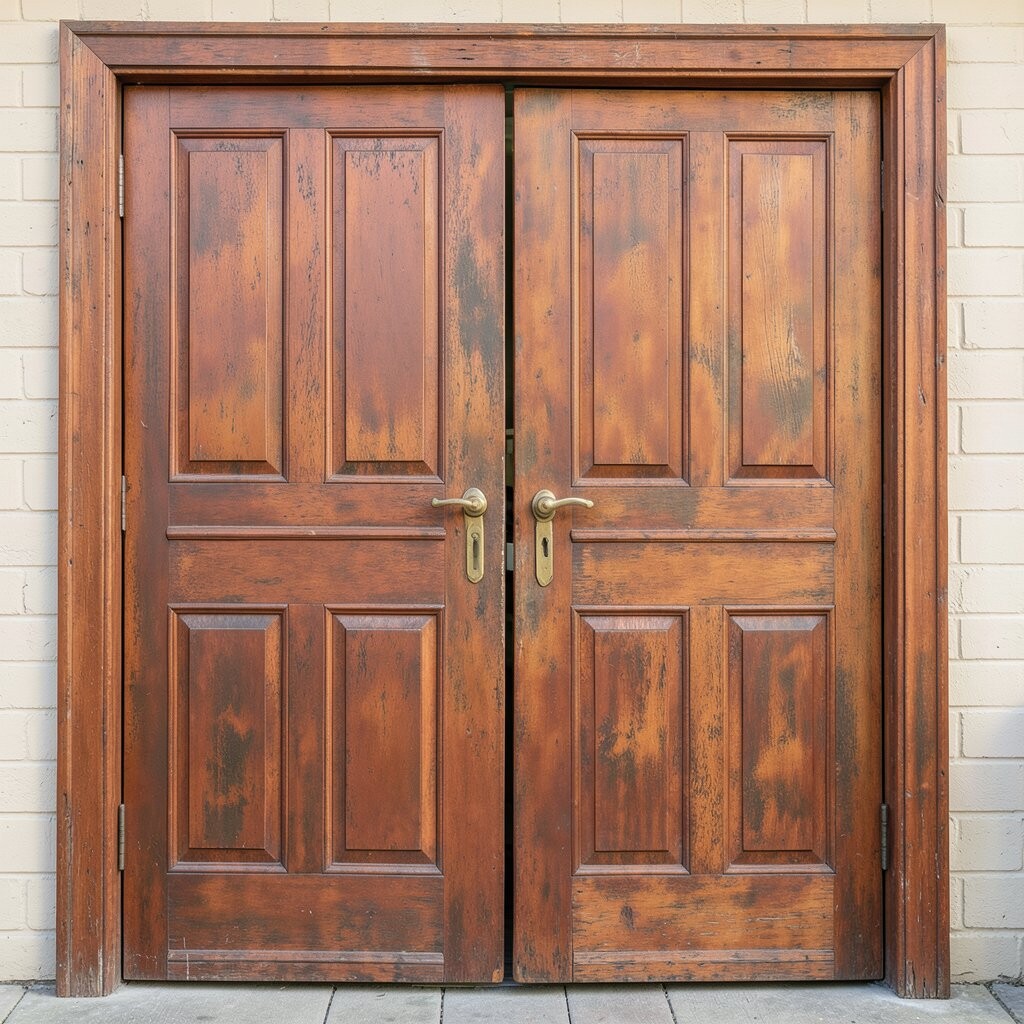
Imagine warm copper that looks gently aged, like a vintage lantern left in the sun. The door will glow with amber highlights while the low spots deepen into darker tones.
Patina styles are great for older doors because they make imperfections feel intentional. To get this look, base-coat in copper, then add a controlled wash and a patina medium so you can shape the “age” yourself. Use a foam brush or rag for the soft blending, and wipe back faster than you think.
Personalize by sealing more heavily on raised panels so they pop, while leaving light texture in the flat areas. Cost can vary, but copper tones and patina additives are often worth it because you need fewer steps than some specialty systems.
3. Oil-Rubbed Bronze Shimmer
Oil-Rubbed Bronze Shimmer
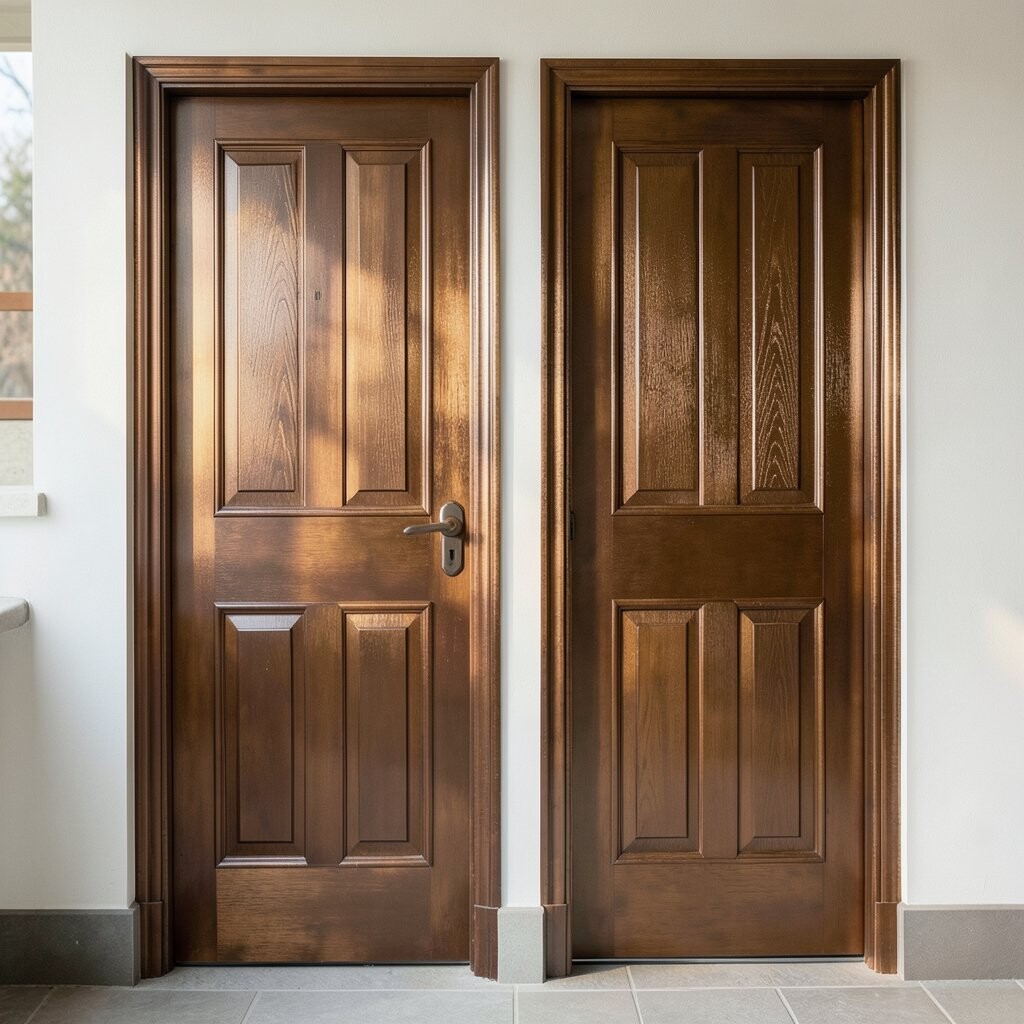
This finish gives you deep brown and near-black metallics with a low, moody shine. When light hits, it looks like hidden metal is sitting just under the surface.
It’s a smart pick if your old door has dents or uneven sheen, since the dark metallic hides those bumps better than bright colors. For tips, apply thin coats and let each layer dry fully so the metallic particles don’t clump. Consider adding a very light top glaze on edges to make corners look crisp.
Uniqueness comes from your blending choice: go heavier around panel lines for a classic carved look. In terms of cost, bronze finishes are often mid-range, and you can stay on budget by using a basic primer and focusing spending on the top coat. Right now, dark metallics with warm undertones are popular with farmhouse and traditional styles alike.
To personalize, match it to your lighting fixtures—bronze looks especially good with warm bulbs.
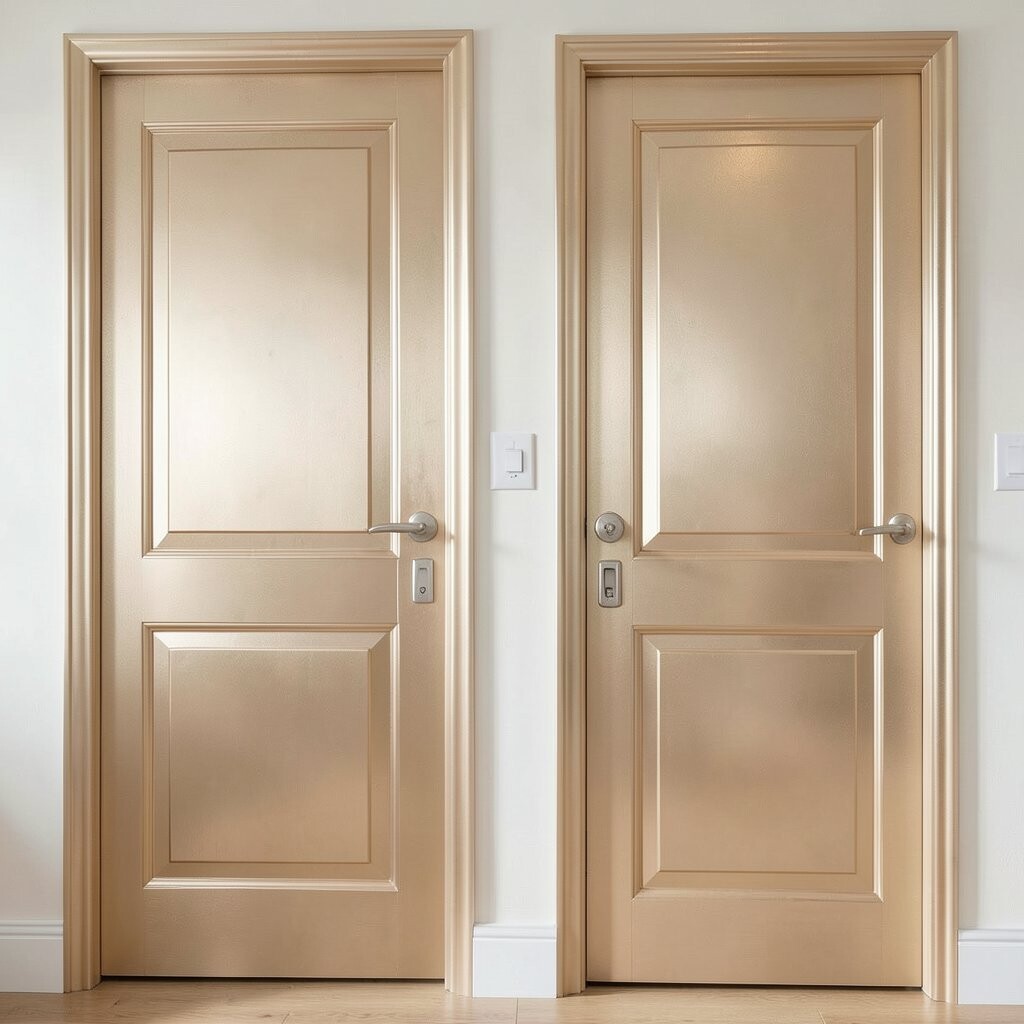
4. Champagne Metallic Pearl
Champagne Metallic Pearl
Think of soft, creamy light that changes as you move past the door. Champagne pearl metallic creates a smooth glow that feels elegant without feeling flashy.
This finish can brighten a hallway fast, especially if your door used to look dull or yellowed. For best results, use a primer that seals everything evenly, then apply the pearl top coat in steady, smooth strokes. Keep your humidity in mind so the pearl doesn’t settle in streaks.
If you want personalization, add a hint of blush or warm taupe in the first metallic layer, then finish with a clear pearl top coat for depth. Cost-wise, pearl paints can be a little pricier, but you often get a dramatic upgrade with just one quality top coat.
A current trend is pairing champagne metallic doors with brass-style hardware and light-colored walls for a “hotel lobby” feel.
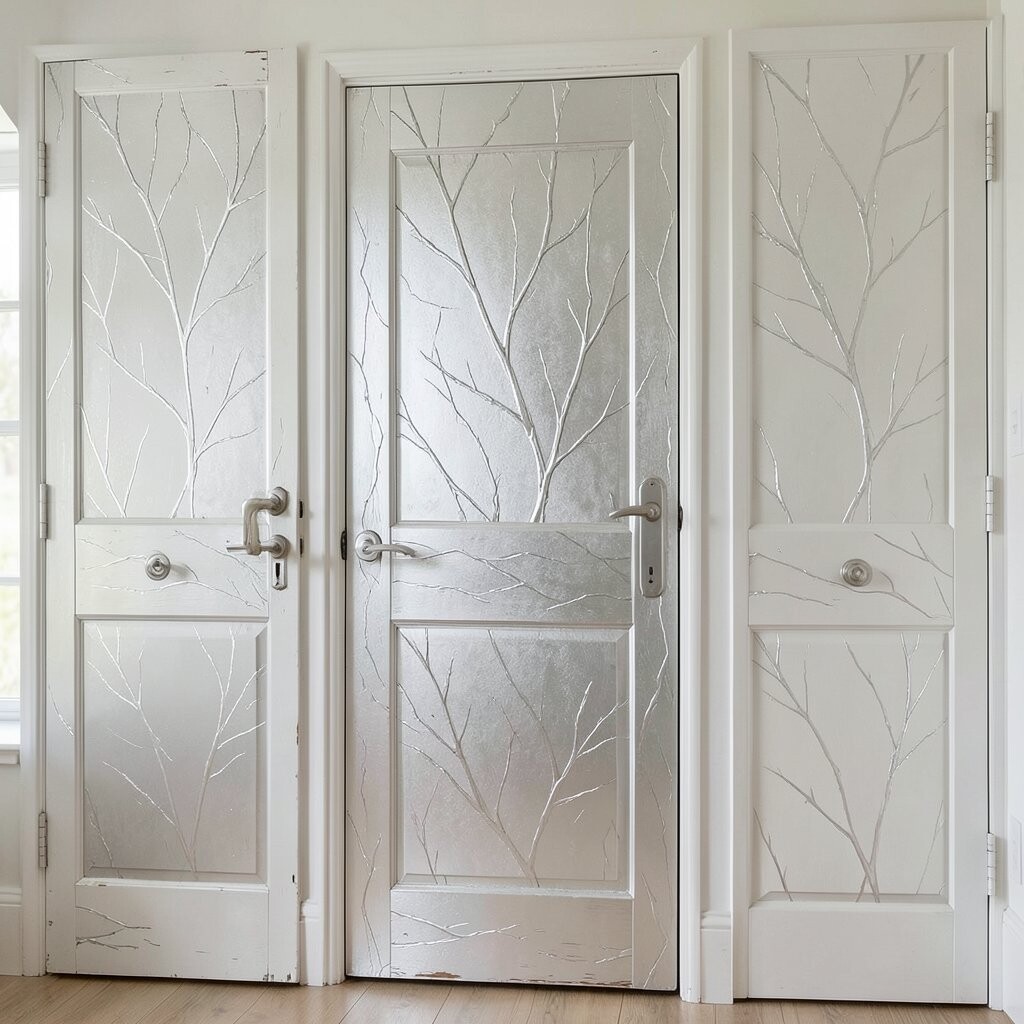
5. Silver Leaf-Style Metallic Veins
Silver Leaf-Style Metallic Veins
Close your eyes and picture paper-thin metal lines swirling across a surface. A silver leaf style gives your door an art piece look while still feeling like paint.
This option is perfect when you want uniqueness and don’t mind a bit of character. It can make an older door look intentionally decorative, because the “veins” draw the eye and hide patchy spots. For tips, apply a metallic base, then use a leaf-effect medium with gentle movements so the pattern stays organic.
Personalize by choosing how bold the veins are: lighter for subtle elegance, stronger for a dramatic gallery vibe. Cost considerations: some leaf-style products are mid-range, and you can cut costs by using the medium only where you want the most visual impact. A trend you’ll see often is metallic “marble” and leaf textures used on entry doors and interior doors for statement moments.
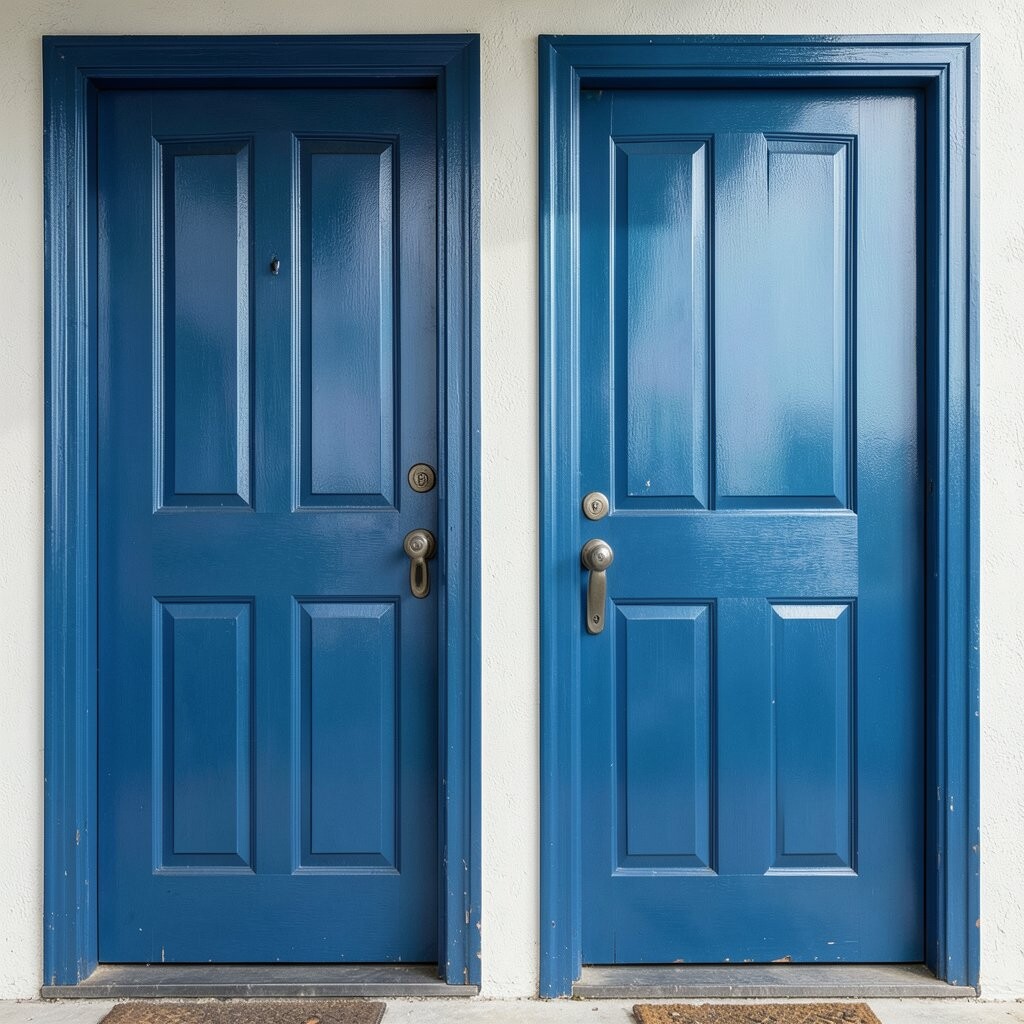
6. Steel Blue Metallic
Steel Blue Metallic
Steel blue metallic makes the door look like it’s wrapped in cool metal with a slight sky-like tint. You’ll see bright flashes and darker steel depth, especially in the panel areas.
This finish adds personality while still reading as refined, which is great if you want something different from silver or gold. It also gives older doors a “fresh factory” vibe, helping uneven old color disappear under the blue metallic tone.
To get the best results, sand lightly, fill any deep gouges, and then spray or roll with a consistent method. If you brush, use a high-quality brush and keep strokes gentle. Personalize by adding a fine gray glaze into corners for extra contrast.
Cost is usually comparable to other premium metallic paints, but steel-blue tones may require a good primer to keep the undercolor from showing through. Current trends lean toward deep blues and cool metal finishes in modern homes.
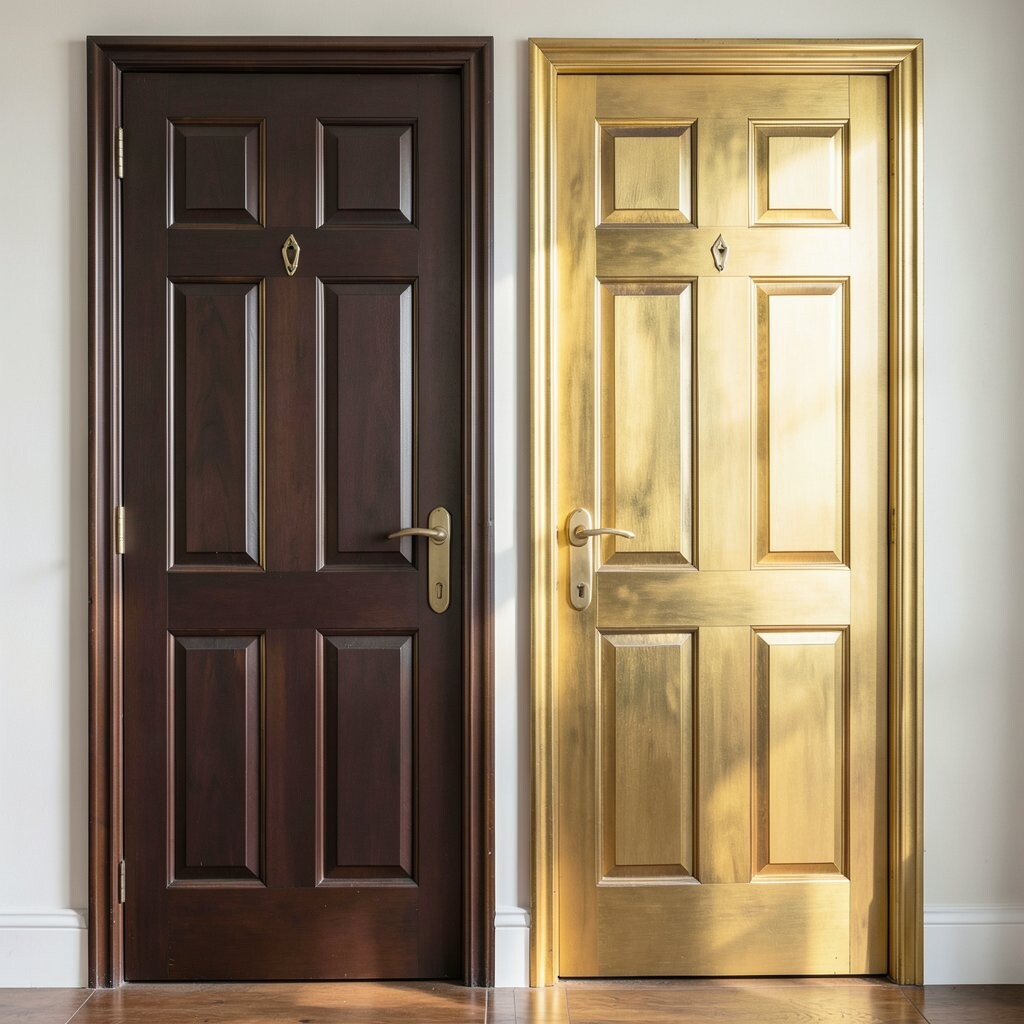
7. Gold Metallic Over Dark Stain
Gold Metallic Over Dark Stain
Try a rich base coat of dark stain, then layer gold metallic paint so it looks like warm metal over aged wood. The result feels like luxury, yet it still honors the door’s history.
This approach is especially helpful if your door has natural wood depth or older stain that you want to keep. The dark underlayer makes the gold look deeper and more dimensional, rather than bright and flat.
For tips, let the stain cure fully, then seal it with a compatible primer so the gold top coat bonds well. Personalize by using a gold glaze on raised panels only, leaving the flat panels slightly darker for contrast. Cost considerations: gold metallic products can feel higher-priced, but you may need less product if you control thickness and use a quality base.
8. Oil-Slick Rainbow Metallic
Oil-Slick Rainbow Metallic
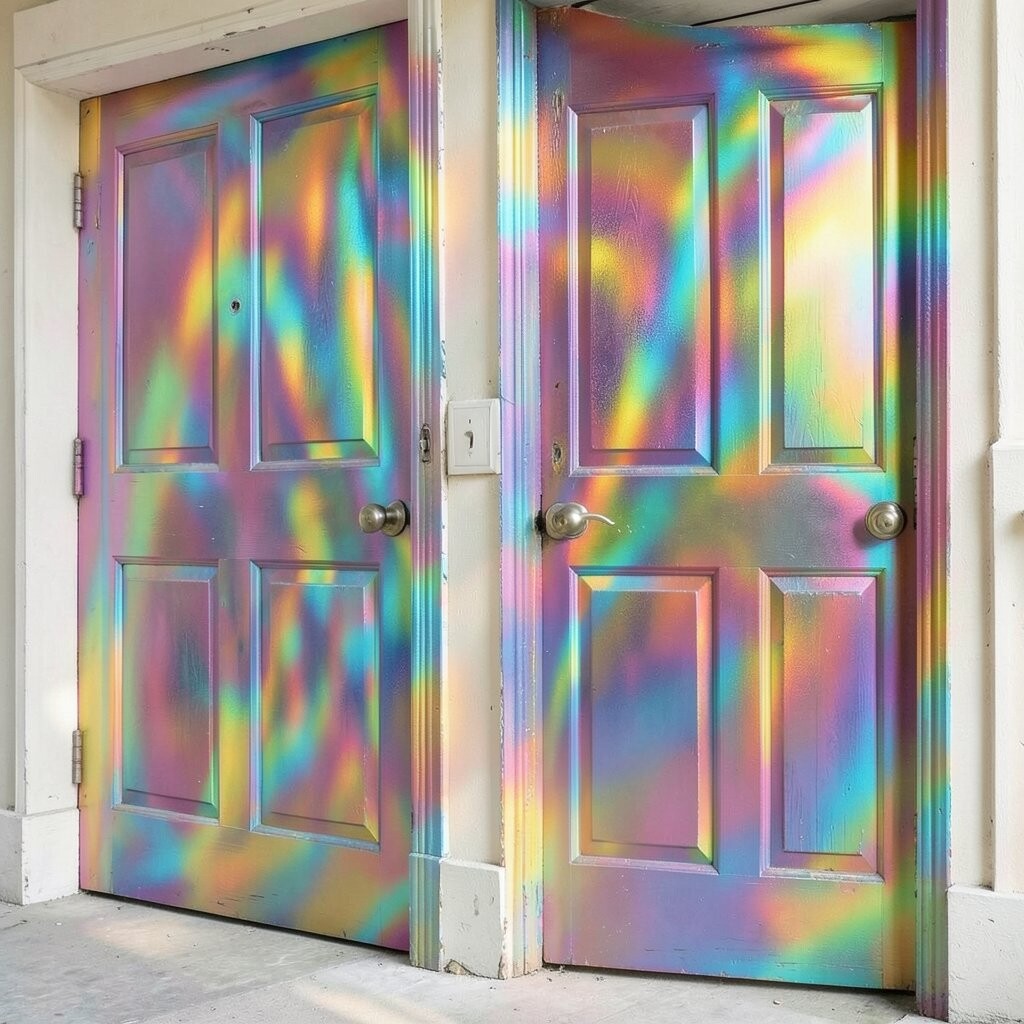
This finish looks like a thin film floating on water, shifting color from angle to angle. From one side it can read teal, then it can flip to violet or warm amber as you walk by.
It’s a bold choice that can turn a plain old door into a conversation starter. The unique effect helps hide small flaws because the colors and sheen keep your eye moving. For tips, test a small hidden section first and apply in thin layers so the shifting pigments stay smooth.
Personalization is all about your angle and your lighting, so consider where the sun hits the door or where a lamp shines. Cost-wise, color-shift paints may be pricier, but the “wow” factor often makes it worth the splurge for entry doors or main hallways.
Right now, iridescent finishes are trending in artsy interiors, and pairing them with simple hardware helps the color do the talking.
9. Metallic Matte Gunmetal
Metallic Matte Gunmetal
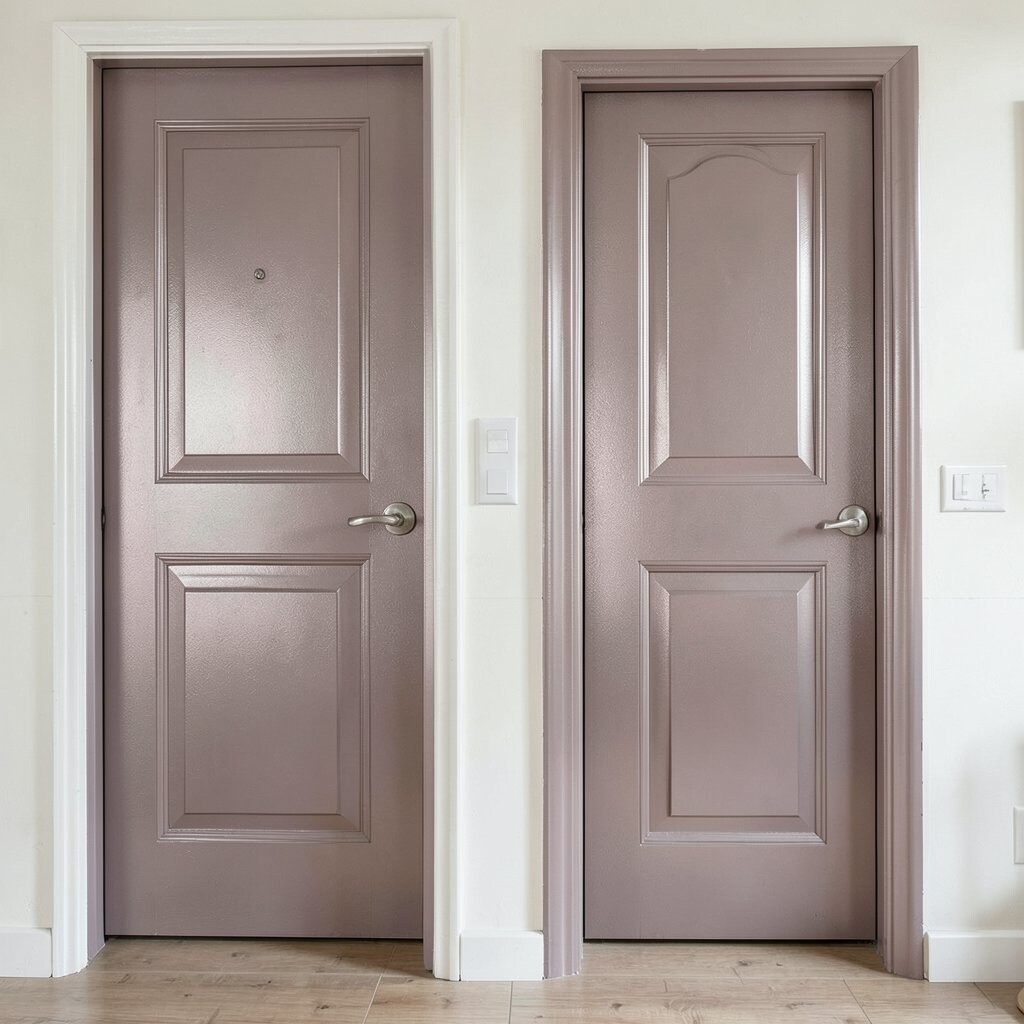
If you love a modern look with less glare, gunmetal metallic matte is a strong match. It gives a metal feel without the mirror shine.
This finish is great for older doors because it reduces the visibility of roller marks and minor surface unevenness. It also looks classy with both warm and cool design styles, making it easy to personalize without guessing too hard.
For tips, choose a matte metallic top coat and keep your coats even to prevent patchiness. Use painter’s tape carefully around trim and remove it while the paint is slightly tacky. Personalize by adding a satin topcoat only on panel edges if you want a subtle raised highlight.
Cost considerations are generally steady with mid-range metallic paints, and matte formulas often require fewer touch-ups because they don’t show every tiny streak. Current trends include matte metals in minimalist interiors and sleek apartment styles.
10. Antiqued Silver With Crackle Lines
Antiqued Silver With Crackle Lines
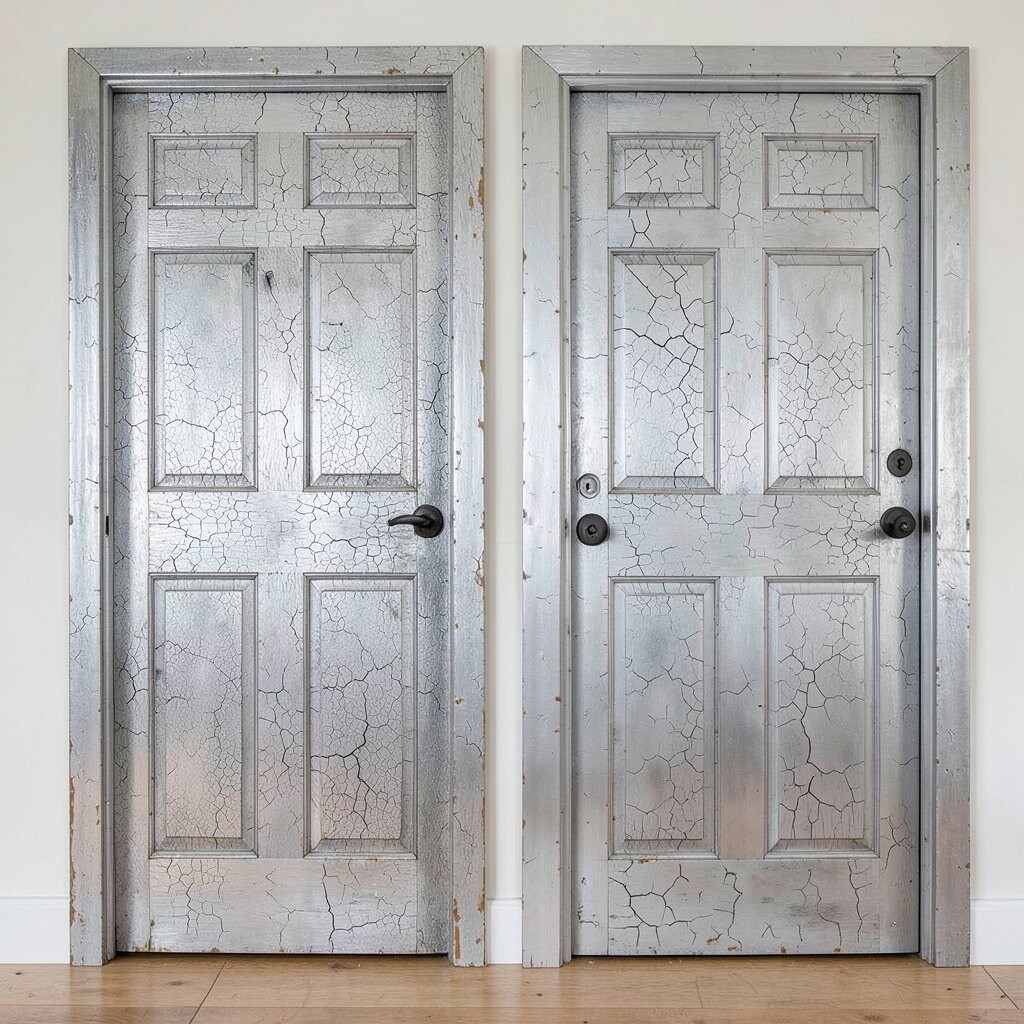
Imagine silver that looks like it has been timeworn, with fine crackle lines that resemble aged porcelain. This finish brings instant “vintage” energy to a tired door.
Crackle styles add texture, which can help disguise surface dents and uneven old layers. The shimmer still shows, but the crackle gives the door a story, so imperfections feel part of the design.
To get it right, apply a crackle medium system in the right layer order, then add metallic paint on top. Work slowly and don’t over-brush after the medium goes on, because cracking needs a natural spread. Personalize by controlling crackle size: a slightly thicker or thinner application can change how bold the lines appear.
11. Bronze-Green Verdigris Accent
Bronze-Green Verdigris Accent
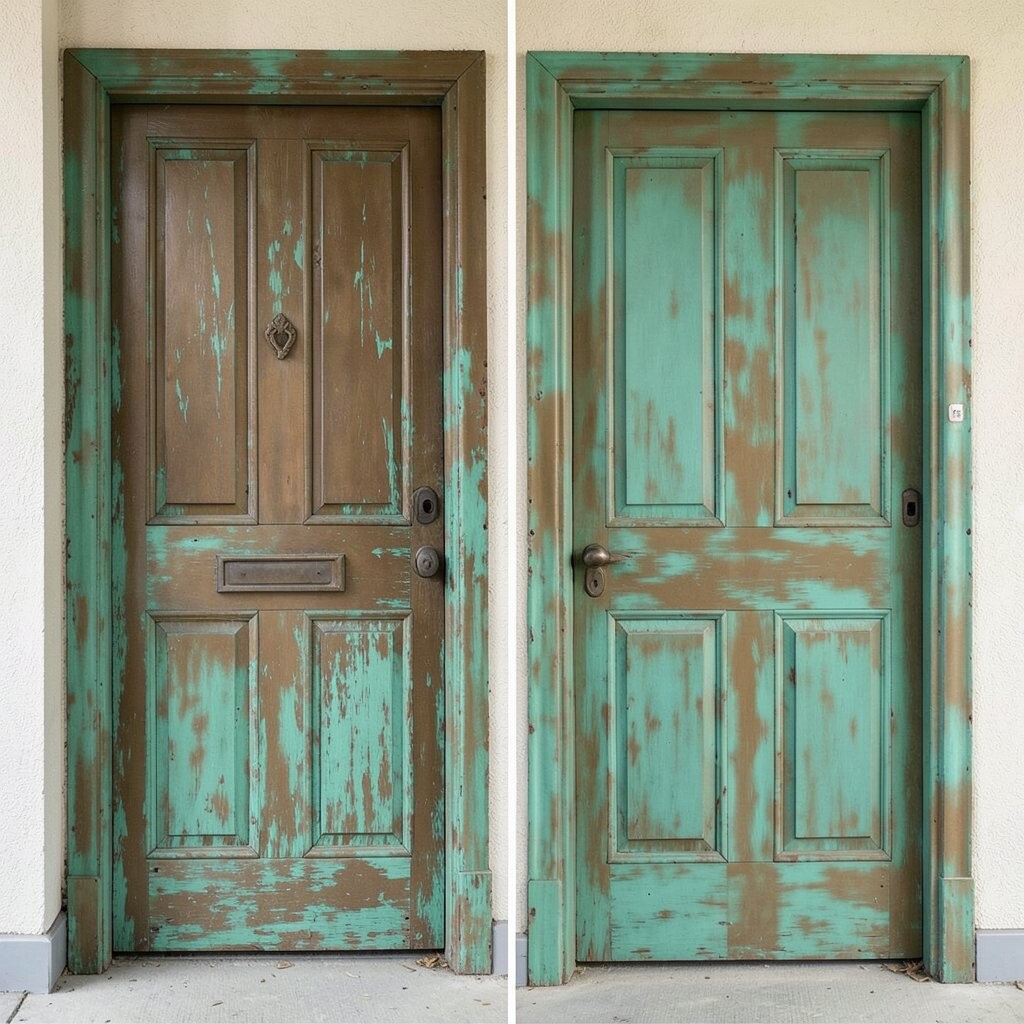
This idea mixes metallic bronze with cool green accents like verdigris. The door looks like it’s gained natural character, with green appearing in corners and panel creases.
It’s unique, but also friendly if you use restrained color placement. The benefit is that green accents add depth while bronze anchors the look so it never feels random.
For tips, start with a bronze metallic base, then sponge on green glaze lightly, focusing where shadows naturally fall. Seal properly so the green doesn’t dull over time. Personalize by matching the green intensity to your room—soft for calm spaces, bolder for artsy rooms.
Cost can stay manageable because verdigris effects can be done using glaze products rather than expensive specialty top coats. Current trends favor nature-inspired finishes, especially in kitchens and entryways where warm metals meet leafy tones.
12. Pewter Metallic With Subtle Texture
Pewter Metallic With Subtle Texture
Pewter metallic gives a soft gray shine that feels balanced and timeless. When you add subtle texture, it looks like brushed metal panels or handcrafted stone.
This finish benefits older doors by giving a forgiving surface that hides small chips and pinholes. It’s also a great choice if you want metal but don’t want the bright sparkle that can feel too shiny at night.
To personalize texture, mix a small amount of fine texture additive with your metallic paint, or use a sponge technique to create gentle stipple. Keep coats light so the texture stays refined, then use a protective clear top coat to keep the metallic looking rich. Cost considerations are usually fair because texture additives are often affordable, and pewter metallic paints are commonly mid-priced.
13. Copper-To-Gold Ombre Fade
Copper-To-Gold Ombre Fade
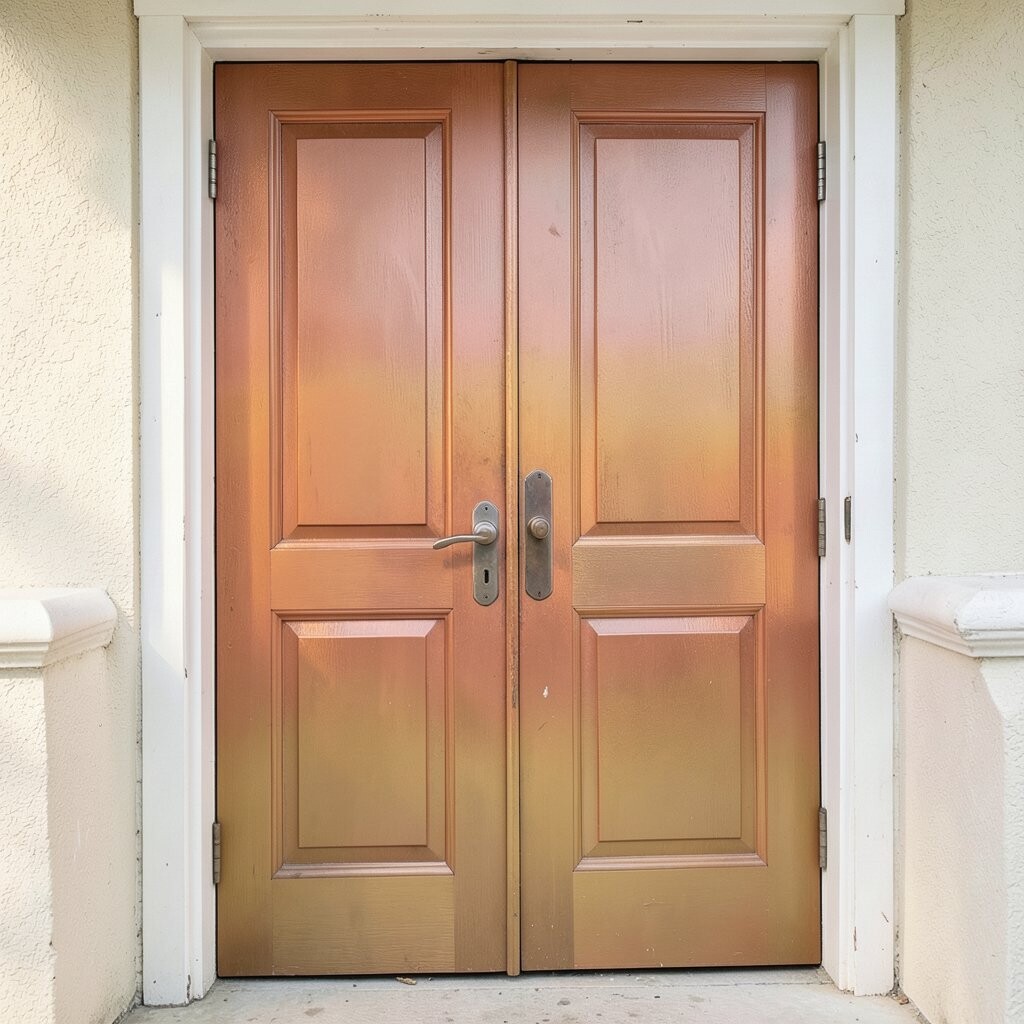
Picture a door that shifts from deep copper at the bottom to glowing gold near the top. The ombre fade makes the whole door feel tall and dramatic, even if it’s a simple shape.
This finish is unique and highly personal, because you control how fast the colors change. It also benefits older doors by drawing attention upward, so readers notice the style instead of small surface history.
For tips, paint in horizontal sections, then blend while slightly wet using a clean brush or soft roller. Use painter’s tape to keep lines neat, then remove the tape carefully. Personalize by deciding whether the fade is subtle and classy or bold and modern.
Cost-wise, you’ll need two metallic colors plus primer and clear coat, but the result looks like a custom job. Current trends include gradient finishes in interior decor, especially on doors, cabinets, and accent furniture.