Picture your gear lining up like it belongs in a neat sci‑fi cockpit. The right shelves can make every session feel calmer and more focused.
When your setup has smart storage, your games look better and your desk feels bigger. Let’s plan shelves that fit your style, your space, and your daily habits.
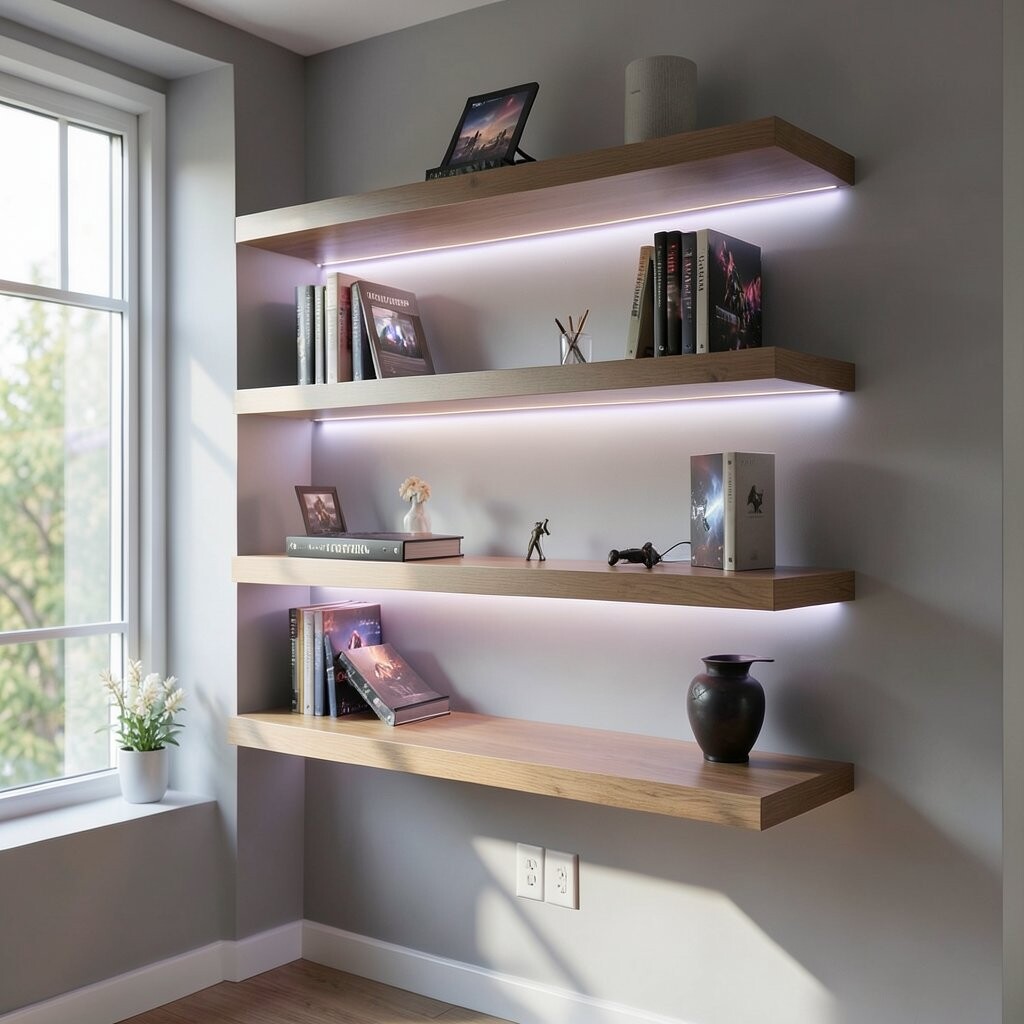
These shelves sit close to the wall, with thin gaps that make everything look light. A soft LED strip behind the back panel gives your controllers and game cases a warm halo.
Pick color temps that match your monitors so the room feels balanced. Keep lighter items on top and heavier items on lower shelves for safer weight.
For personalization, label each shelf with small icons like “PC,” “Co-op,” or “Streaming.” Want a quick trend win? Many setups now mix LED lighting with clean cable paths and minimal clutter.
2. Built-in corner shelves for dead-space gaming walls
Built-in corner shelves for dead-space gaming walls
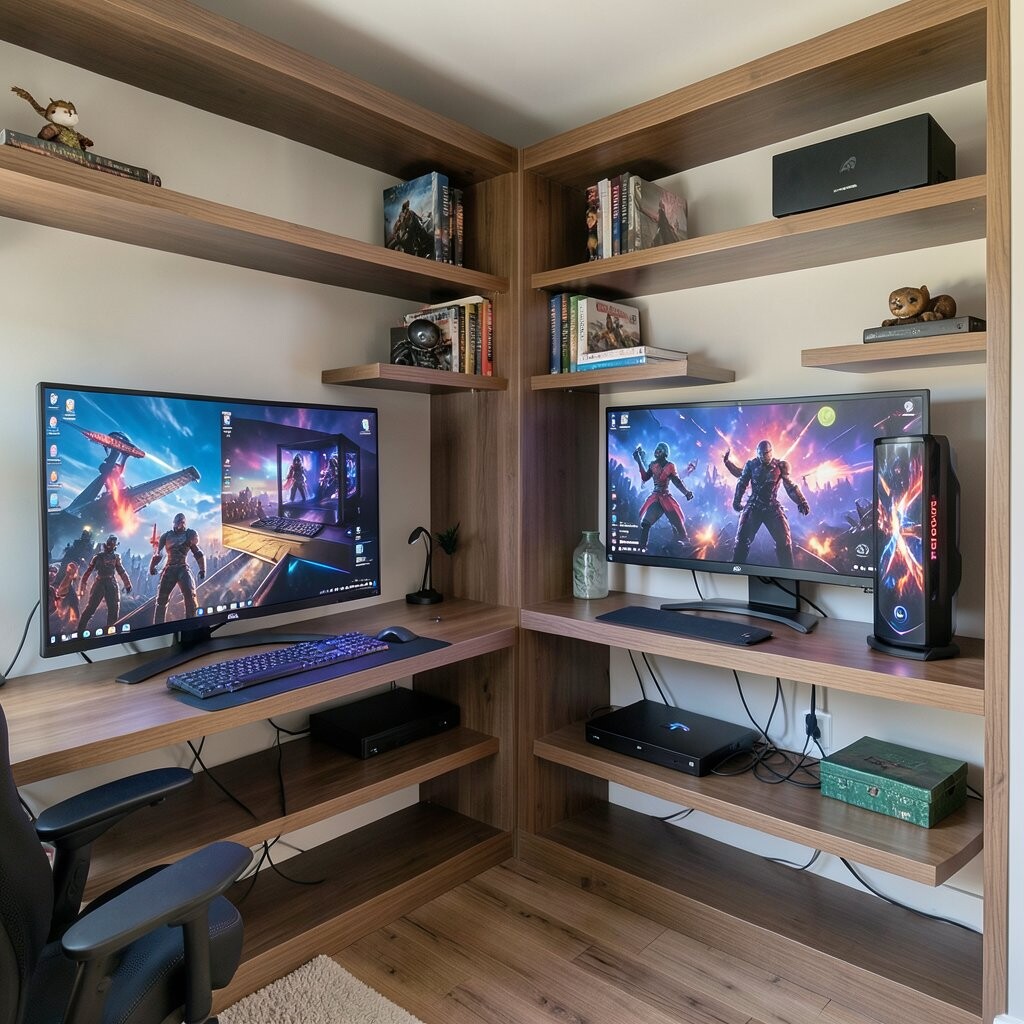
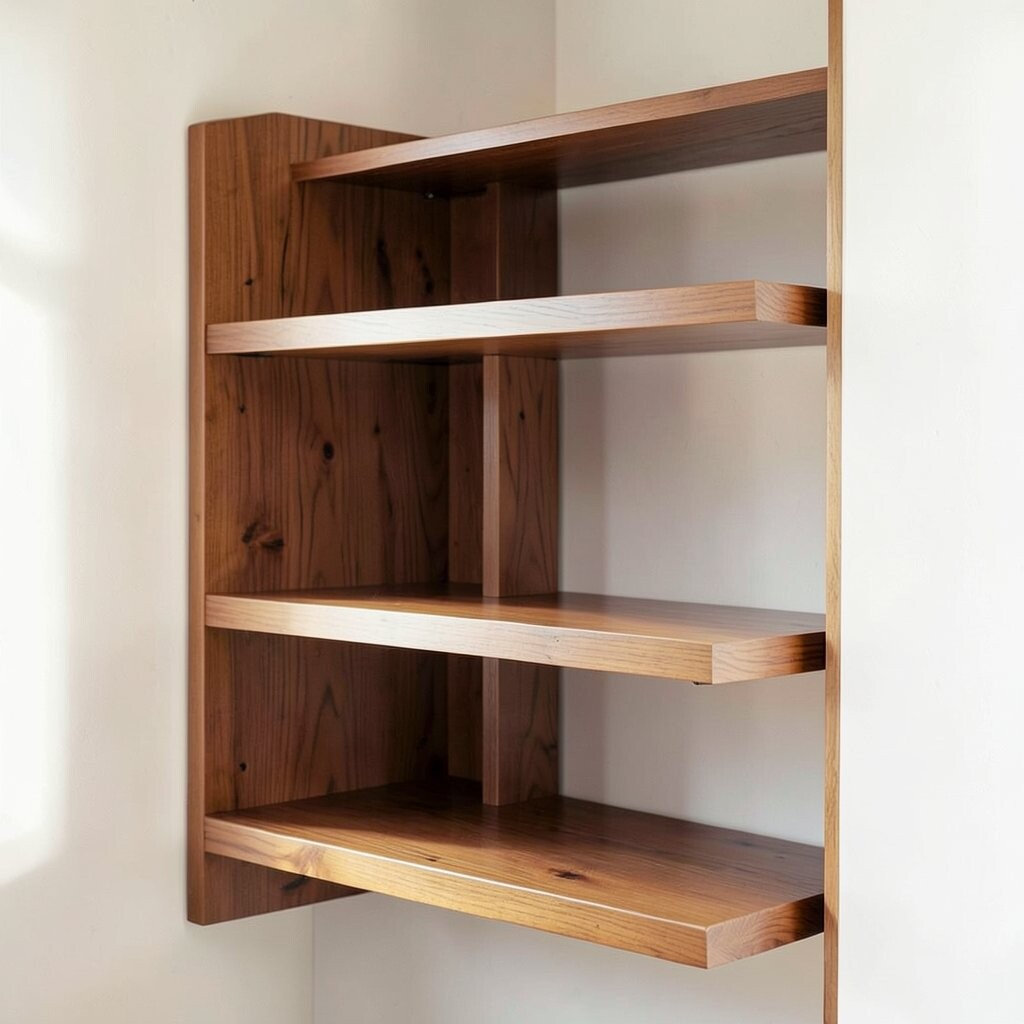
A corner unit can turn an awkward nook into a tidy storage hub. Imagine your keyboard stand tucked away while your favorite game collection lines the angled shelves.
You’ll gain extra surface area without pushing furniture into your walking path. Corner shelves also help you keep cables short because your wall route can stay close to the desk.
Try adding one narrow shelf just for headsets, so the mic sits ready when you need it. If cost matters, use a simple frame material and focus spending on the top shelves where your hands reach often.
3. Side-by-side vertical cubbies for console display
Side-by-side vertical cubbies for console display
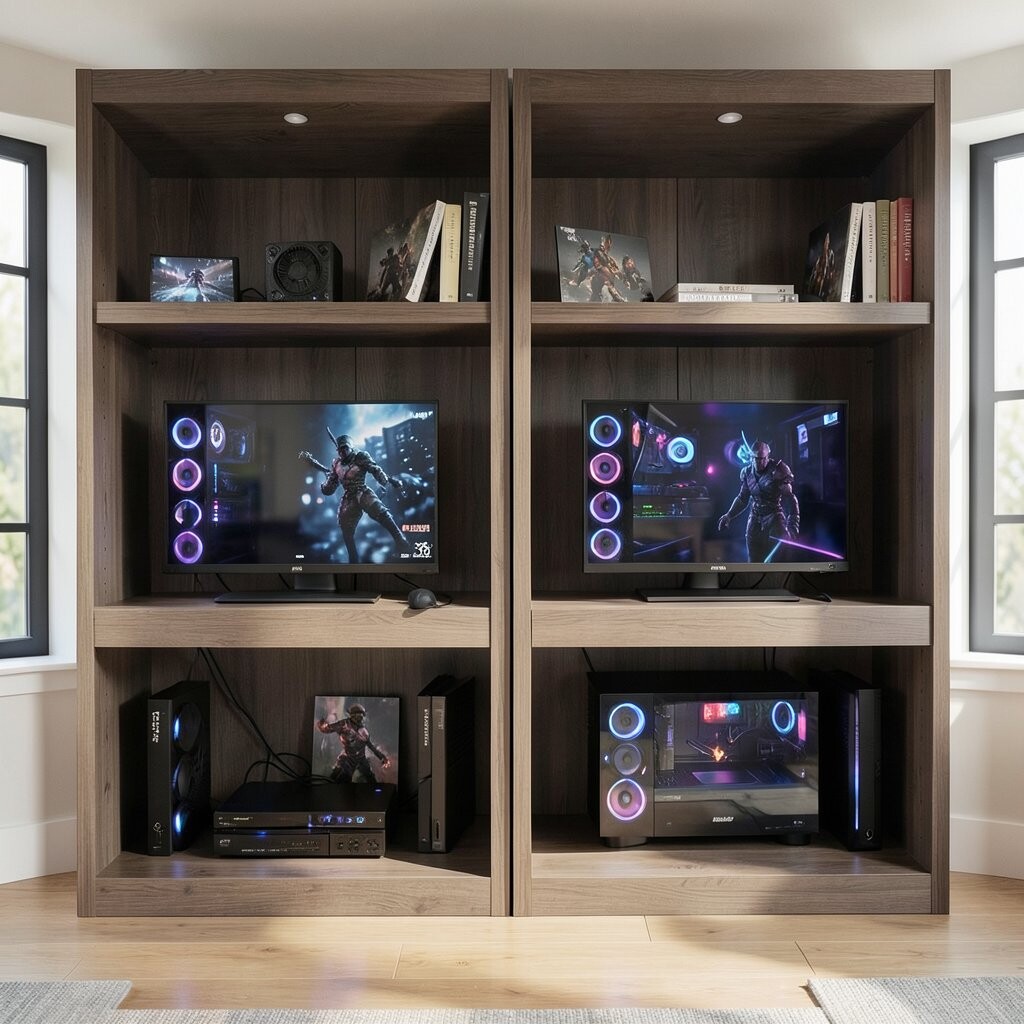
Vertical cubbies look bold and organized, like a gallery for your gaming gear. You can stack consoles on sturdy platforms while leaving space for discs, cases, and charging docks.
This setup makes it easy to grab the right controller fast. It also protects your devices from dust because doors or cloth covers can be added later.
Personalize with removable inserts so each slot matches your system sizes. A current trend is “modular nesting,” where you can swap the insert shapes as your collection changes.
To stay practical, measure vent clearance first, then plan a small airflow gap behind each console shelf. Built-in carpentry may cost more, so consider a hybrid: built-in base with modular shelf inserts.
4. Under-monitor shelving for low-dust keyboard zones
Under-monitor shelving for low-dust keyboard zones
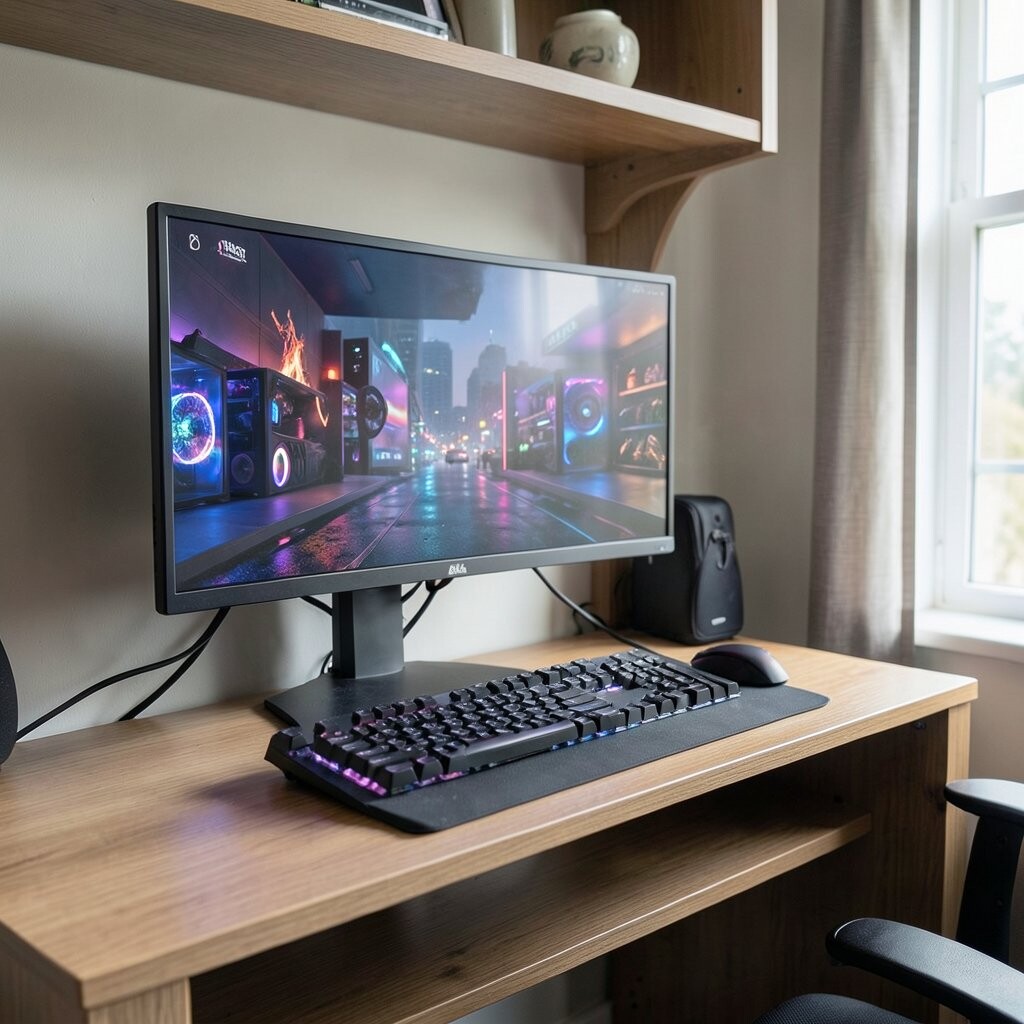
Under-monitor shelves give you a calm “landing area” for your keyboard, mouse, and small tools. The visual result is sleek, because the desk top stays clear and your screen becomes the center.
This helps you keep dust away from items that get moved often. It also makes cleaning easier since your main surfaces don’t get packed with random stuff.
For personalization, choose a finish that matches your monitor stand, like matte black or light oak. If budget is tight, use a simple bracket system and invest in quality shelves so they won’t sag over time.
5. Bookshelf-style shelves with adjustable rails
Bookshelf-style shelves with adjustable rails
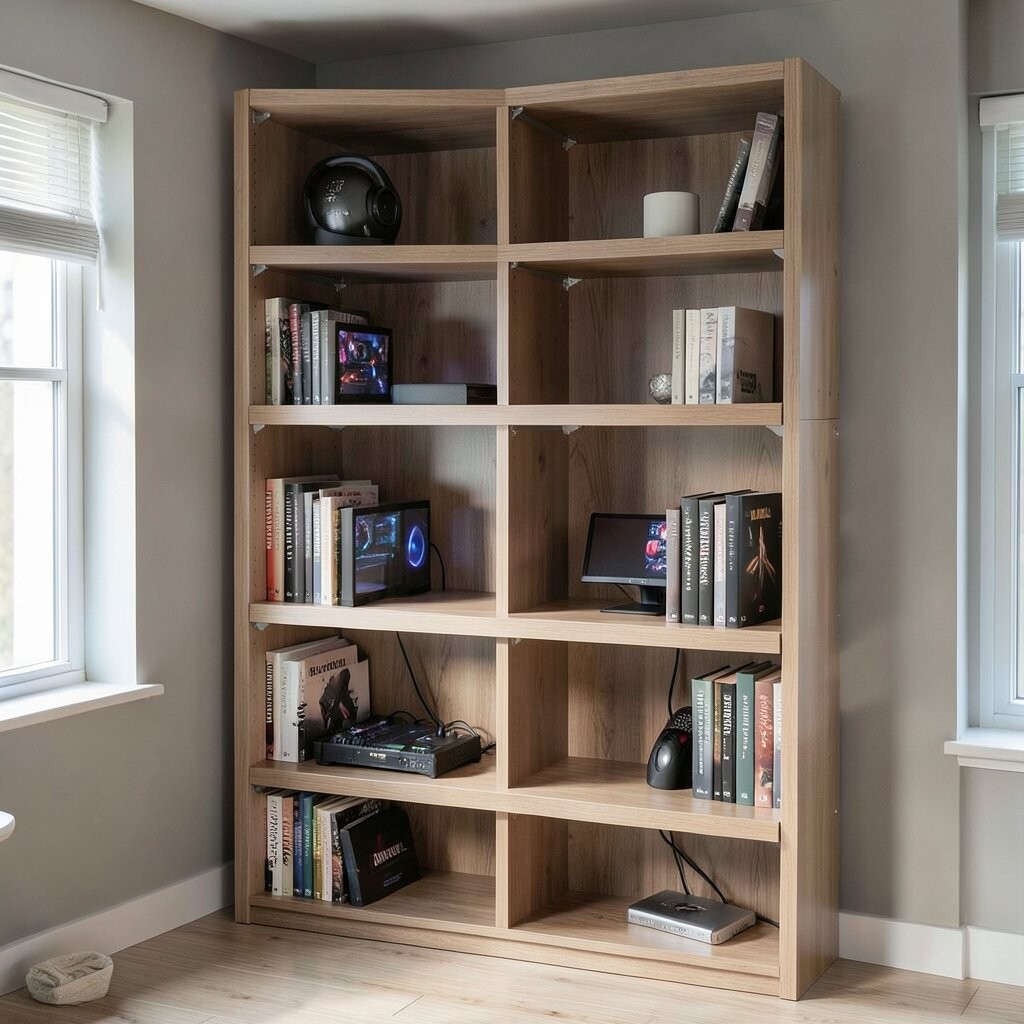
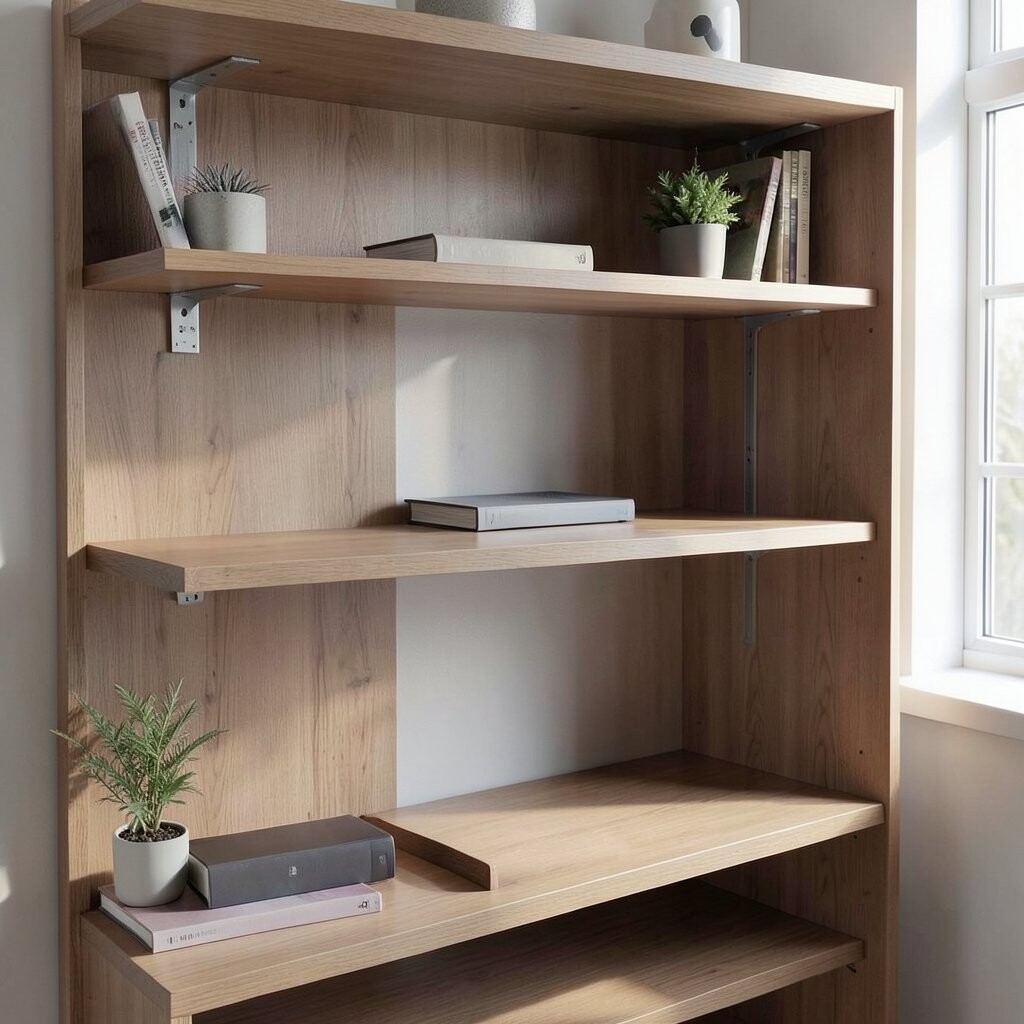
Imagine shelves that look like classic bookcases, but with rails that let you change spacing anytime. Your game boxes can sit snugly now, then fit differently later when you upgrade.
Adjustable rails keep the system flexible, which is a big deal when your collection grows. You’ll also prevent shelf clutter because you can always set a spot that fits what you own.
Try using pegboard-style accessories inside, like small hooks for cables and small organizers for earbuds. Current trends favor “reconfigurable storage,” and this is a perfect match.
6. Built-in media wall with cable tunnel channels
Built-in media wall with cable tunnel channels
A media wall makes your setup feel like part of a designed room, not just a desk corner. Think smooth panels, neat shelf tiers, and hidden cable tunnels that route everything behind the scenes.
When cables run through channels, your gaming space stays cleaner and safer. It also reduces snagging when you move the chair in and out.
For personalization, add a small viewing window on one side so you can see the cable route without exposing it. If cost is a concern, keep the wall simple and add the “wow” elements only around the most visible shelves.
7. Ladder-style shelves for fast controller storage
Ladder-style shelves for fast controller storage
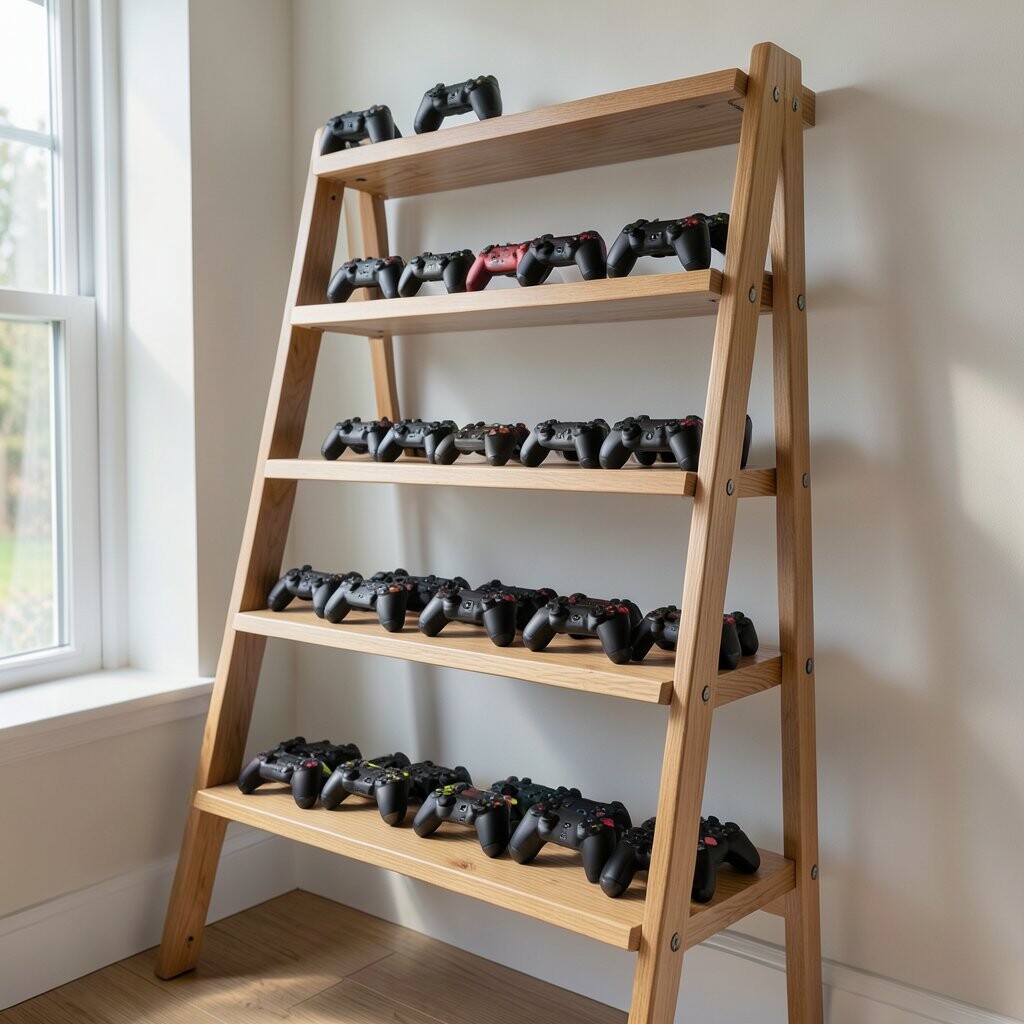
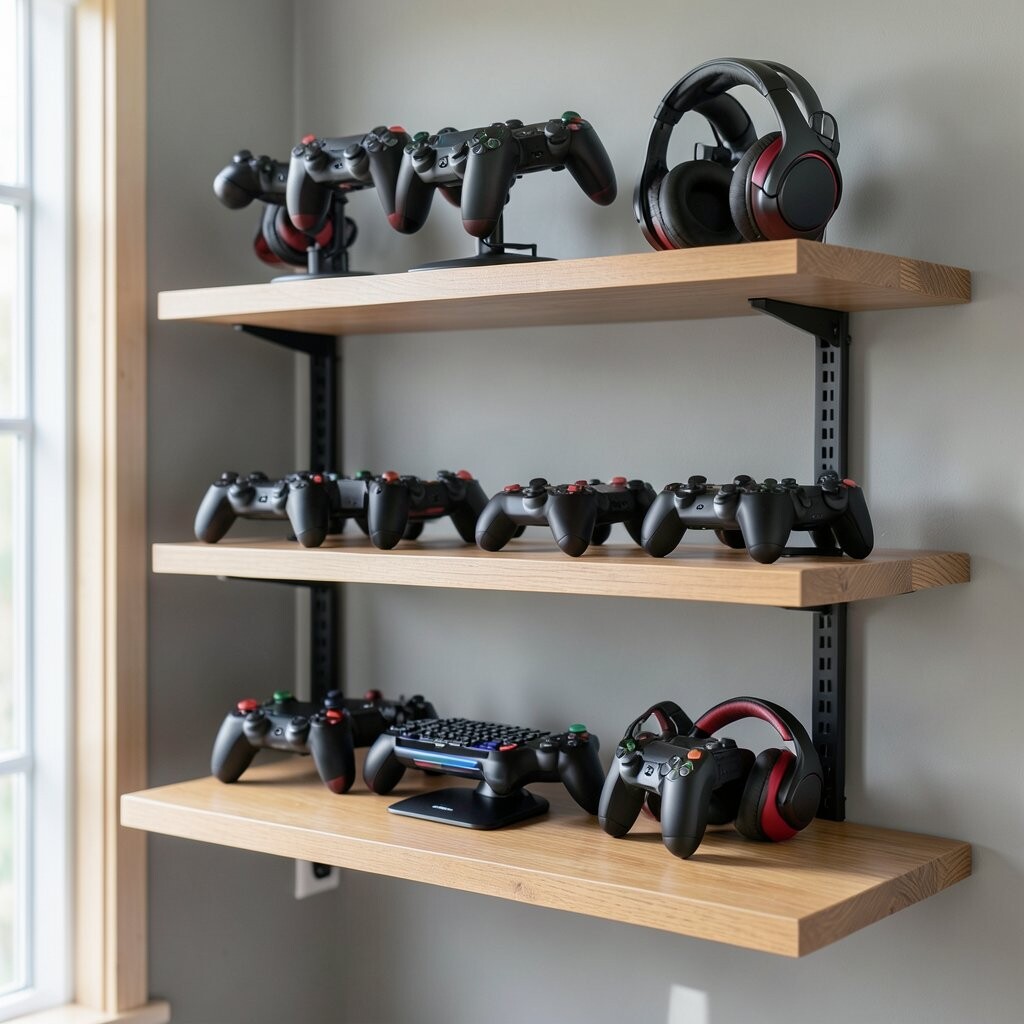
Ladder shelves give a sporty, open look while keeping items easy to reach. You’ll see controllers lined up like trophies, and the open frame helps the space breathe.
This style is great for quick access during busy nights because nothing feels buried. You also get natural airflow, which helps keep electronics happier.
To personalize, paint the frame a color that matches your chair or your monitor bezel. A modern trend is mixing warm wood with darker metal, so you can build a cozy gaming vibe without going too flashy.
Tip: use bins for loose items like charging cables so the open look stays clean. Budget-wise, ladder shelves often cost less than fully enclosed built-ins, yet they still look custom.
8. Recessed shelves with matte acoustic backing
Recessed shelves with matte acoustic backing
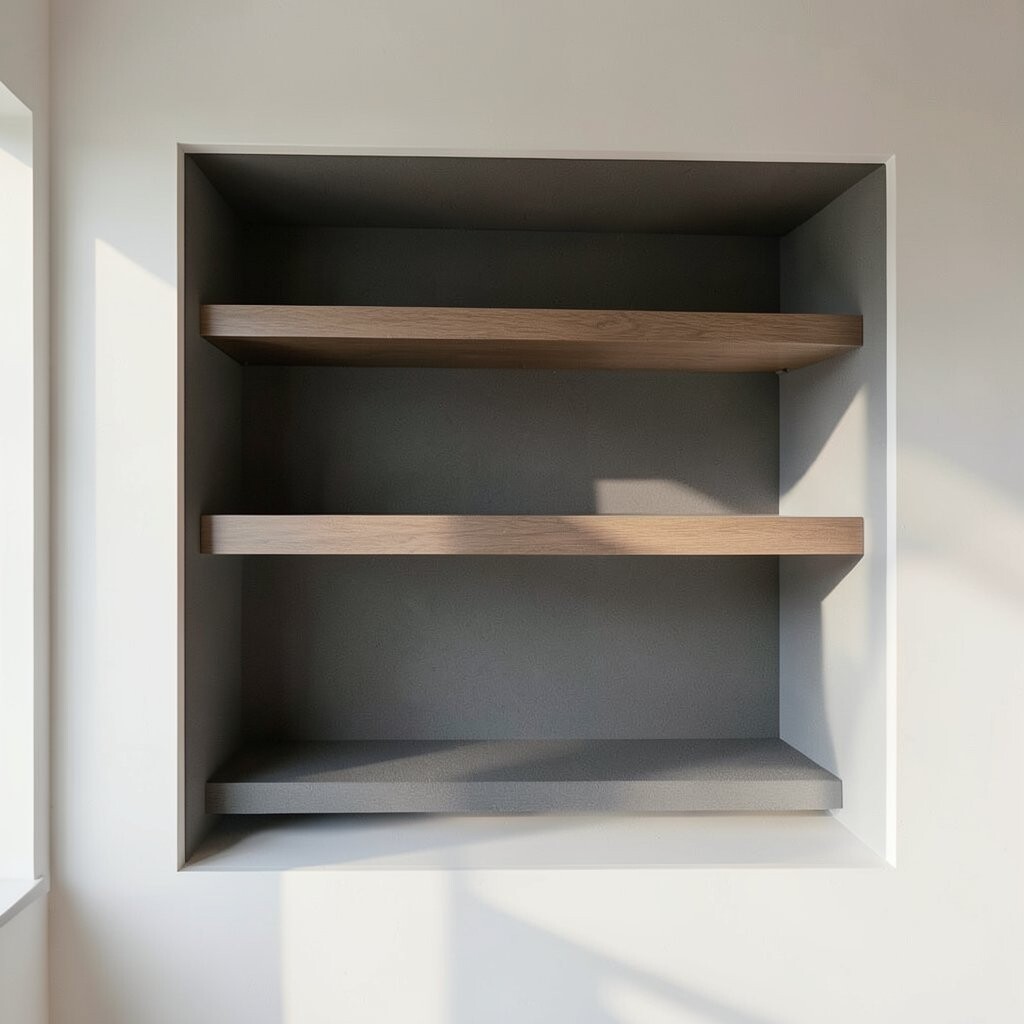
Recessed shelves sit inside the wall, creating a smooth, picture-frame feel. Add matte acoustic backing behind them, and the room can feel less echo-y during long play sessions.
The visual bonus is huge because you get straight lines and a tidy layout that looks intentional. You also get a surface that hides small scuffs better than shiny finishes.
For personalization, choose the backing color based on your keyboard lighting palette. If you’re watching costs, use acoustic material only behind the most used shelves, like the ones that hold headsets and game cases.
9. Shelf rails for stacked controllers and headset stands
Shelf rails for stacked controllers and headset stands
Some shelves look better with rails, like mini track systems for your gear. Picture a row of shallow rails holding controllers, while the next level supports a headset stand.
This keeps your most-used items visible and always in the same spot. You’ll waste less time searching, which makes your setup feel fast and ready.
Personalize by matching rail colors to your desk accents, like silver, white, or deep blue. A trending move is “display with function,” where storage doubles as decoration, and rails do that perfectly.
10. Built-in storage benches with hidden shelf sections
Built-in storage benches with hidden shelf sections
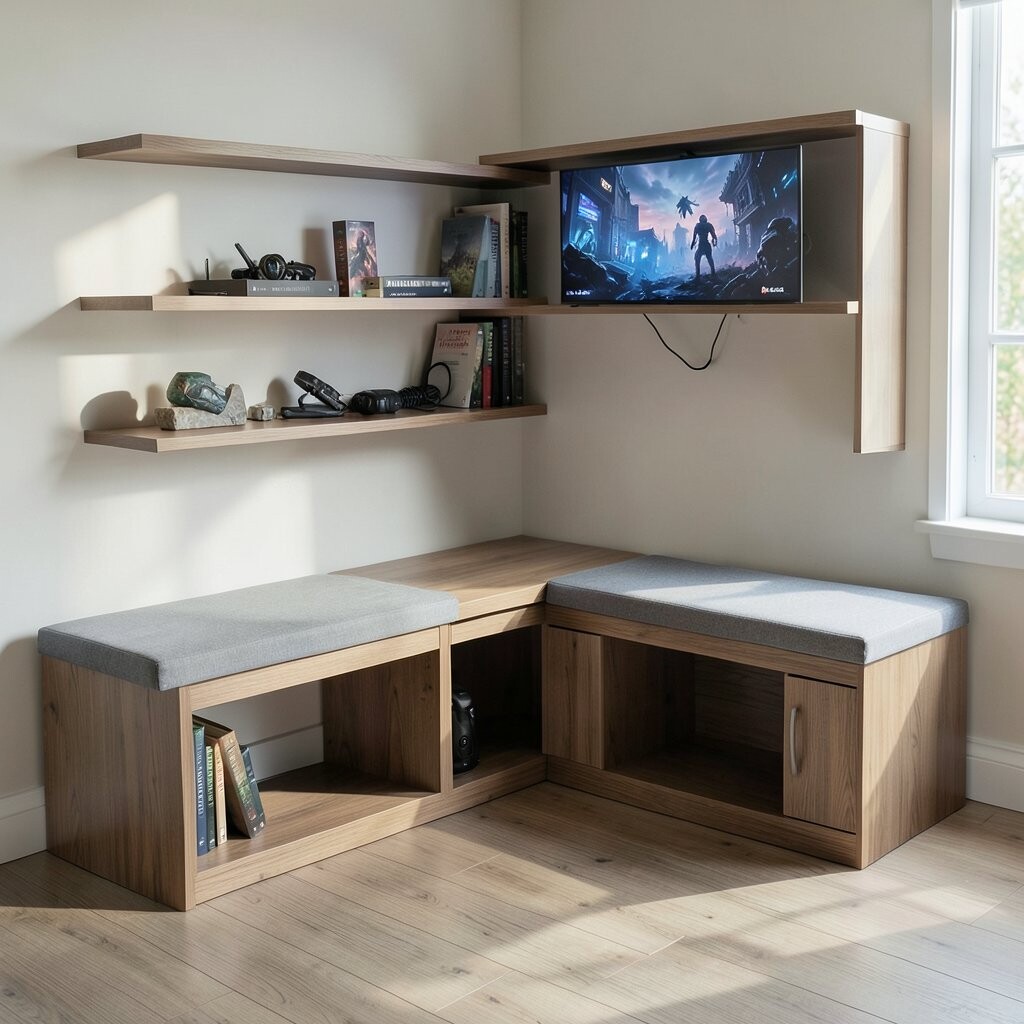
A storage bench can add comfort and storage at the same time. You might have shelves under the seat for extra games, while the top stays as a comfy rest for your feet.
This helps keep your floor clear, which makes the whole room feel bigger. It’s also great for storing bulky items like spare controllers or console accessories.
To personalize, upholster the top in a fabric that matches your chair, then use a shelf label system for quick finds. If you want a budget option, choose simple finishes and focus on strong hinges so the lids open smoothly.
11. Peg-style built-in shelves for cable and accessory kits
Peg-style built-in shelves for cable and accessory kits
Peg-style built-in shelves let you hang accessories exactly where you like them. You can place cable organizers, small pouches for batteries, and hooks for headphones in a neat grid.
The benefit is huge for streamers and tinkerers, because your tools stay grouped by job. You’ll also reduce cable chaos, since each wire can follow its own path.
Personalize with themed zones, like a “hand tools” section for cleaning, and a “charging” section for power bricks. Current trends show more people using pegboards and modular hook systems inside built-in storage.
12. Glass-front shelf sections for display and protection
Glass-front shelf sections for display and protection
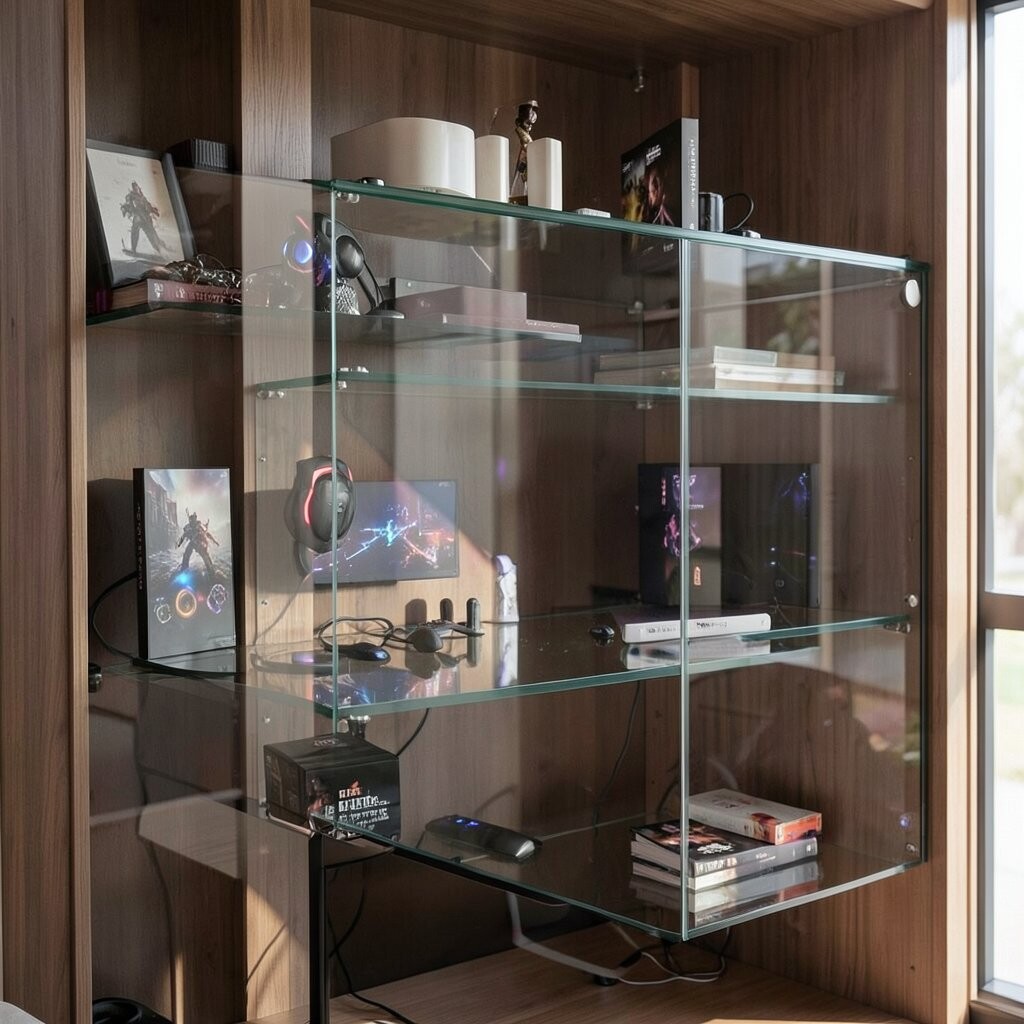
Glass-front shelves add a clean, premium look without hiding your collection. Imagine your limited-edition items behind clear panels while everything stays protected from dust.
This helps your setup look polished during show-and-tell moments. It also reduces the chance of your most delicate gear collecting grime.
Tip: choose a smudge-resistant finish so fingerprints don’t ruin the look. For cost, start with glass only on one or two “hero” shelves and keep the rest open for practicality.
13. Built-in shelves around a wall-mounted TV or monitor corner
Built-in shelves around a wall-mounted TV or monitor corner
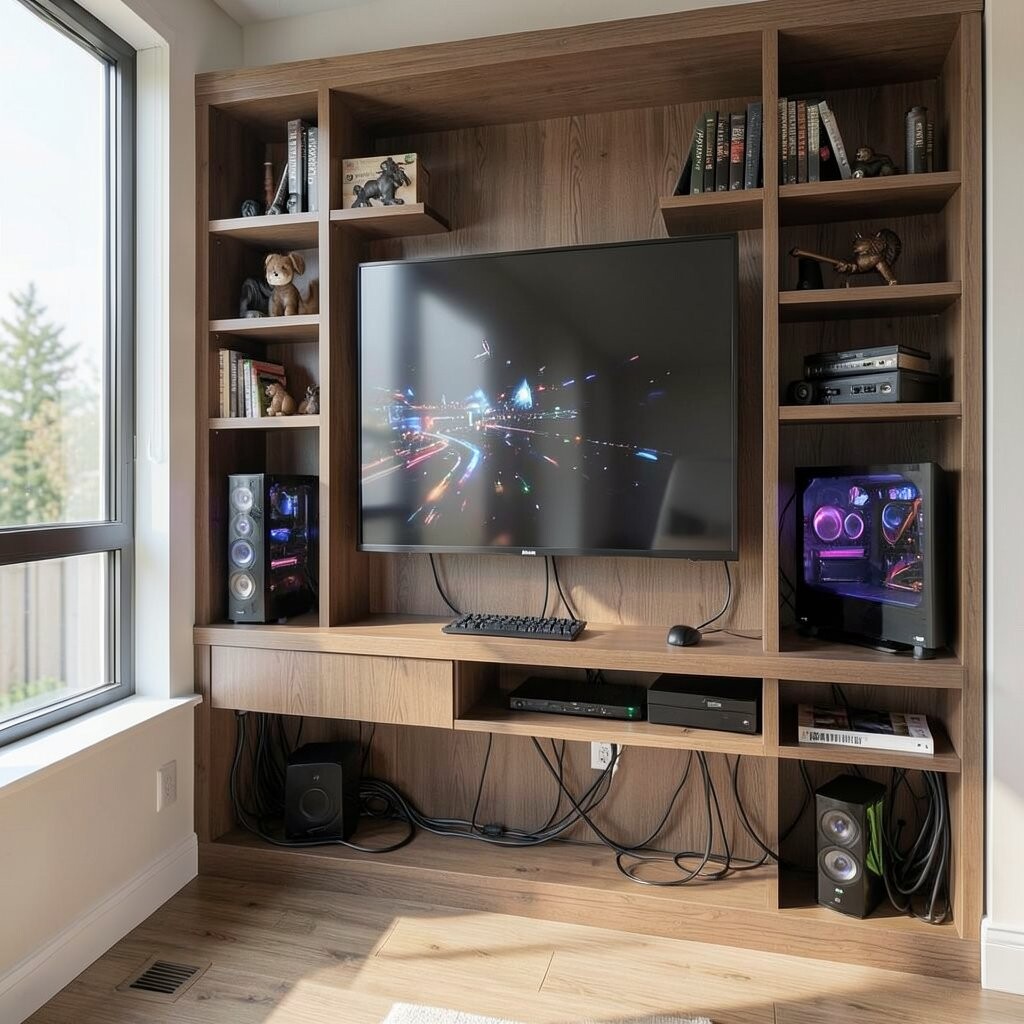
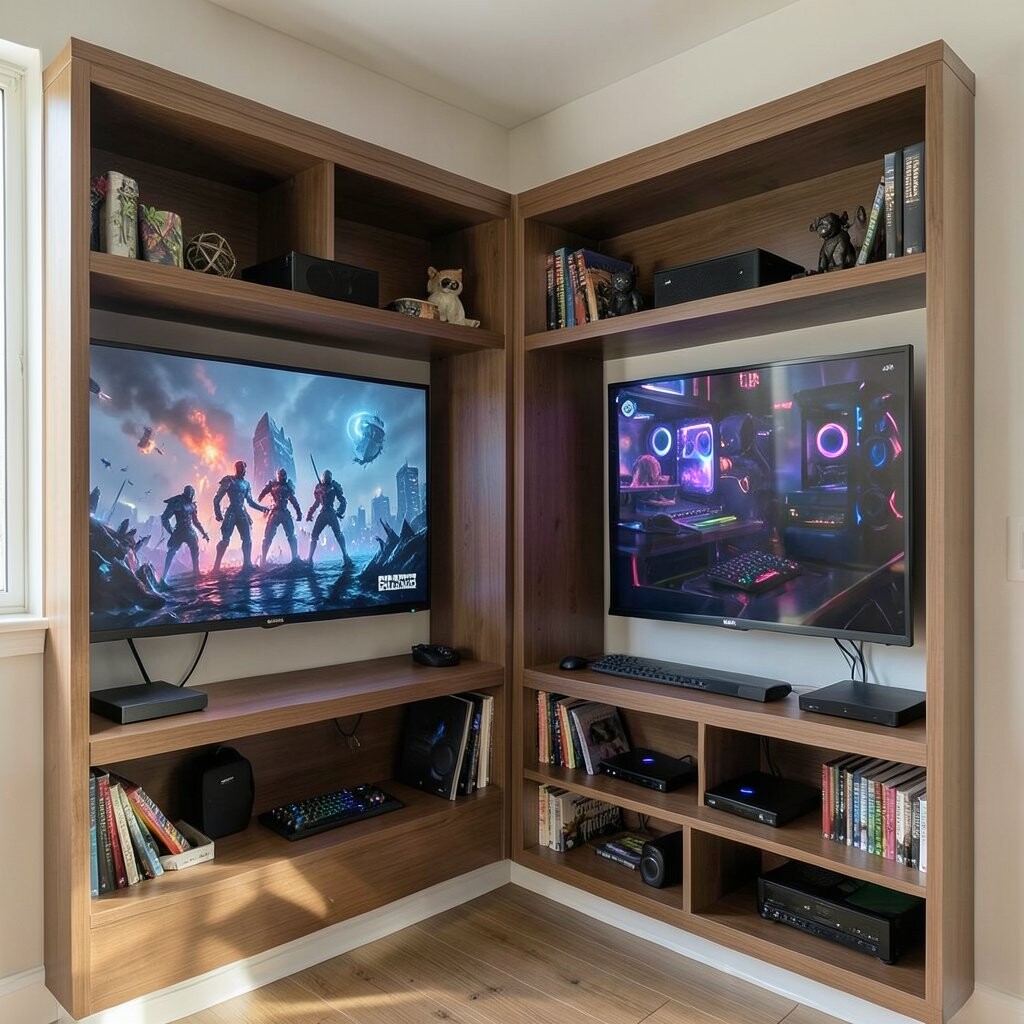
Placing shelves around a wall-mounted screen turns the area into a gaming command center. You might see three tiers of game cases on each side, with a small lower shelf for streaming gear.
The main benefit is visual balance, because your eye naturally lands on the screen first, then the storage frames it. It also helps keep the desk less crowded, especially if you use the lower shelves for consoles.
For personalization, add a small tray on the bottom shelf for remotes, thumb grips, or spare HDMI cables. Current trends lean toward “themed symmetry,” where both sides match for a showroom vibe.
Cost considerations matter, so measure wall studs and plan mounting carefully. If you’re hiring help, ask for a clear cable plan so the installation avoids messy rewiring later.
14. Warm wood shelves with built-in ventilation gaps
Warm wood shelves with built-in ventilation gaps
Warm wood shelves feel cozy and friendly, even in a room full of bright lighting. You can add ventilation gaps or slatted sections to help electronics stay cool.
This kind of shelf keeps your consoles and streaming devices happier over time. It also makes the setup look intentional because the design shows airflow instead of hiding it.
Personalize with a stain that matches your floor, and add small metal corner braces for a stronger look. For budget, consider using wood-look panels for the lower shelves and spend on the top tier where your items are more visible.
15. Minimal shadow-gap shelves with hidden brackets
Minimal shadow-gap shelves with hidden brackets
Shadow-gap shelves look like floating slabs, with a thin dark line that makes them feel light. Hidden brackets keep the front view clean, so your setup looks tidy even when it’s busy.
This style is perfect for modern rooms where you want everything to feel sleek. You also get great sight lines for LED lighting behind the desk.
For personalization, pair shadow-gap shelves with a small row of under-shelf cable guides. A trend right now is “clean geometry,” and this design nails it without being loud.
Cost-wise, expect to pay more for precise installation, because alignment matters. If you can’t do full built-ins, you can still mimic the look using fewer shelves and careful spacing.
16. Custom game-collection grid with themed shelf “zones”
Custom game-collection grid with themed shelf “zones”
A custom grid shelf turns your collection into a map of your gaming life. You can split the wall into themed zones like “RPG,” “Shooter,” and “Indie,” each with a matching shelf depth.
This helps you find games fast and keeps the whole setup from becoming random piles. It also makes your room feel personal, because your storage matches your taste.
Try adding small nameplates or sticker labels that match your keyboard keycaps. For personalization, include one “borrowed” or “try next” section so new games always have a temporary home.
Cost considerations are simpler when you plan zones first, because you can build only what you need. You can also start with a smaller grid and expand later, keeping the project within a comfortable budget.
As a final tip, keep a little empty space in one zone for future purchases. That small gap helps your system feel flexible and stops the shelves from getting stuffed too quickly.