20 Elegant Built Shelves Housing Antique Books In A Study Ideas
Antique books deserve a home that feels special and steady. The right built shelves can turn a study into a calm, beautiful reading corner.
When shelves are planned with care, your books stay safer, look richer, and invite you to spend time inside the room. Even small choices, like spacing and materials, can make a big difference.
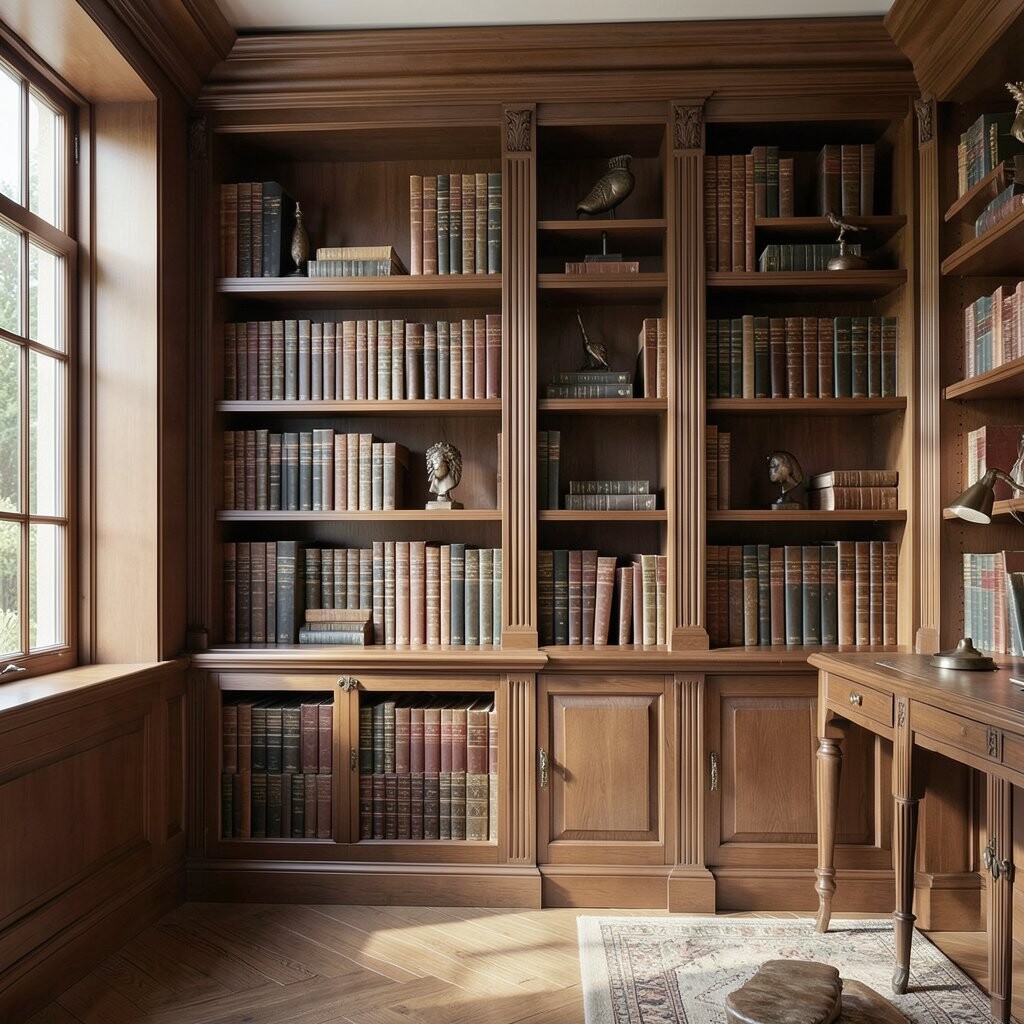
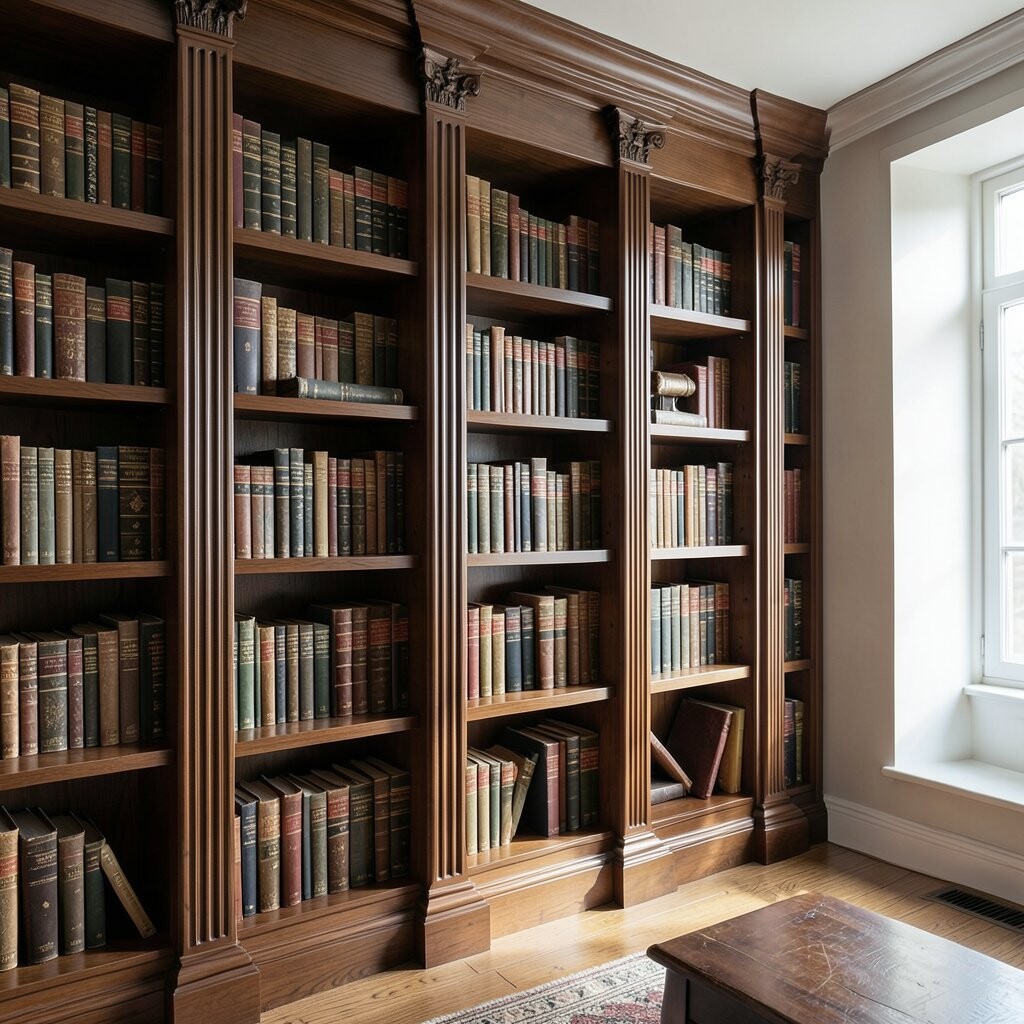
Think of a long, elegant wall of shelves that makes your study feel like it has always belonged to books. Tall bays and clean lines can frame spines in a neat, inspiring rhythm.
A wall-to-wall design gives you lots of display space without clutter. It also helps protect older volumes by keeping them supported, not stacked in piles. Add adjustable inner shelves so you can fit larger hardcover sets and thinner paperbacks over time.
Choose solid wood with a satin finish to keep glare low when afternoon light hits the room. If you want a budget-friendly approach, consider building a sturdy frame first and using quality paneling for the visible face. Personalize it by placing a few framed labels or small brass number plates on the lower rows.
2. Ladder-Style Corner Shelving Built In
Ladder-Style Corner Shelving Built In
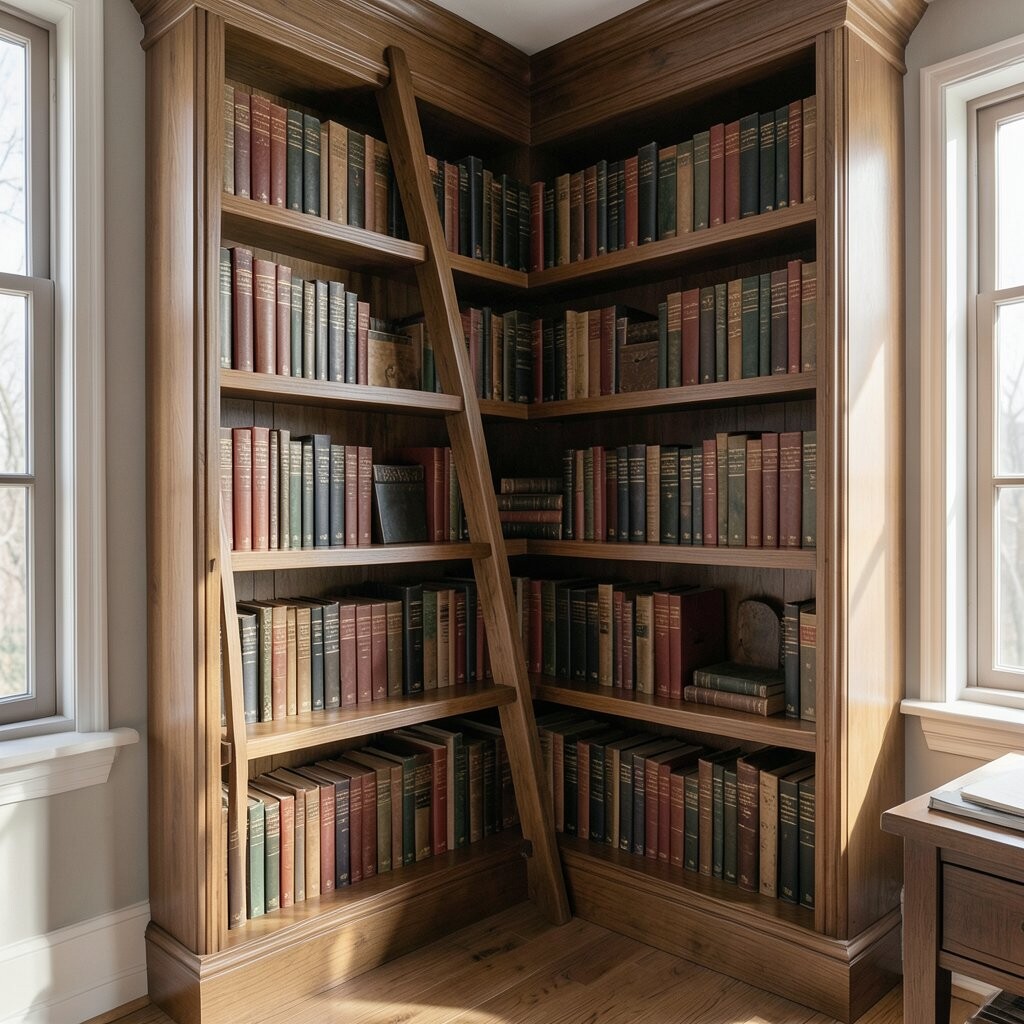
A corner can become a charm point when the shelves are built into the walls with a ladder-like layout. You get vertical height while still keeping the room open and airy.
This style makes reaching easier and turns everyday organizing into a satisfying habit. Strong corner shelving also improves safety because heavy books have firm backing. For best results, plan for a slightly deeper corner bay where larger antiques like atlases can sit securely.
For uniqueness, mix open shelves with a narrow closed cabinet section for items you want tucked away. Trends right now favor mixed display—show the beautiful spines, hide the extra boxes. Cost-wise, the corner cutout may need extra carpentry, so compare estimates for framing and trim before you commit.
3. Dark Wood Shelves With Light Trim Contrast
Dark Wood Shelves With Light Trim Contrast
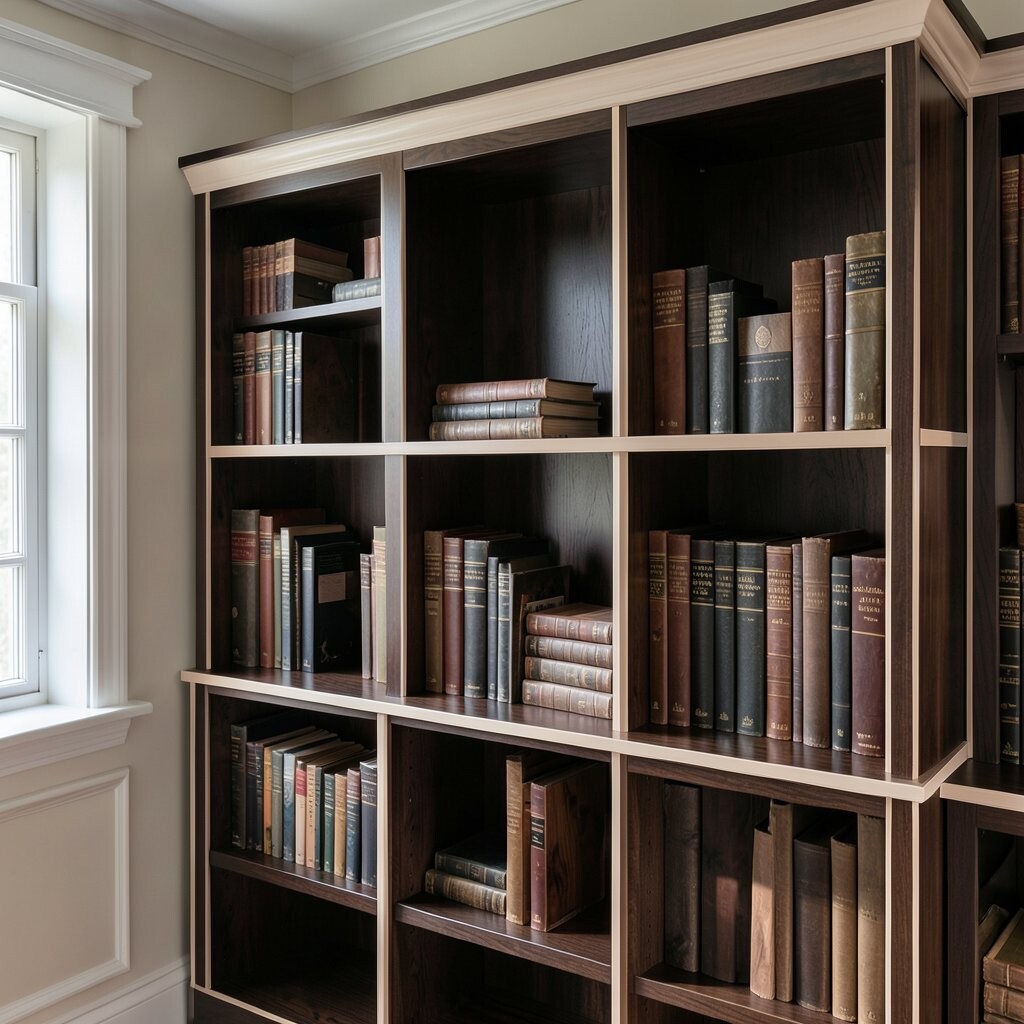
Picture deep walnut or espresso shelving with lighter trim along the edges. The contrast makes every title pop like a gallery exhibit.
Dark shelves can also hide small wear marks better than very bright finishes, which is great for long-term use. Your antique books will look warmer, and the study will feel more grounded. Add thin lighter crown molding so the top line looks crisp and intentional.
To keep gaps consistent, measure spine depth and leave a little breathing room for airflow. Use museum-style bookends or slender supports to stop books from leaning. For personalization, stain the shelves one tone and paint the trim in a soft cream or pale gray.
If you want a cost check, you can keep the main structure in mid-range wood and invest in the trim and finish. Current home trends often use “two-tone” cabinetry, so this idea fits what many people love right now.
4. Hidden Lighting Behind Crown and Shelves
Hidden Lighting Behind Crown and Shelves
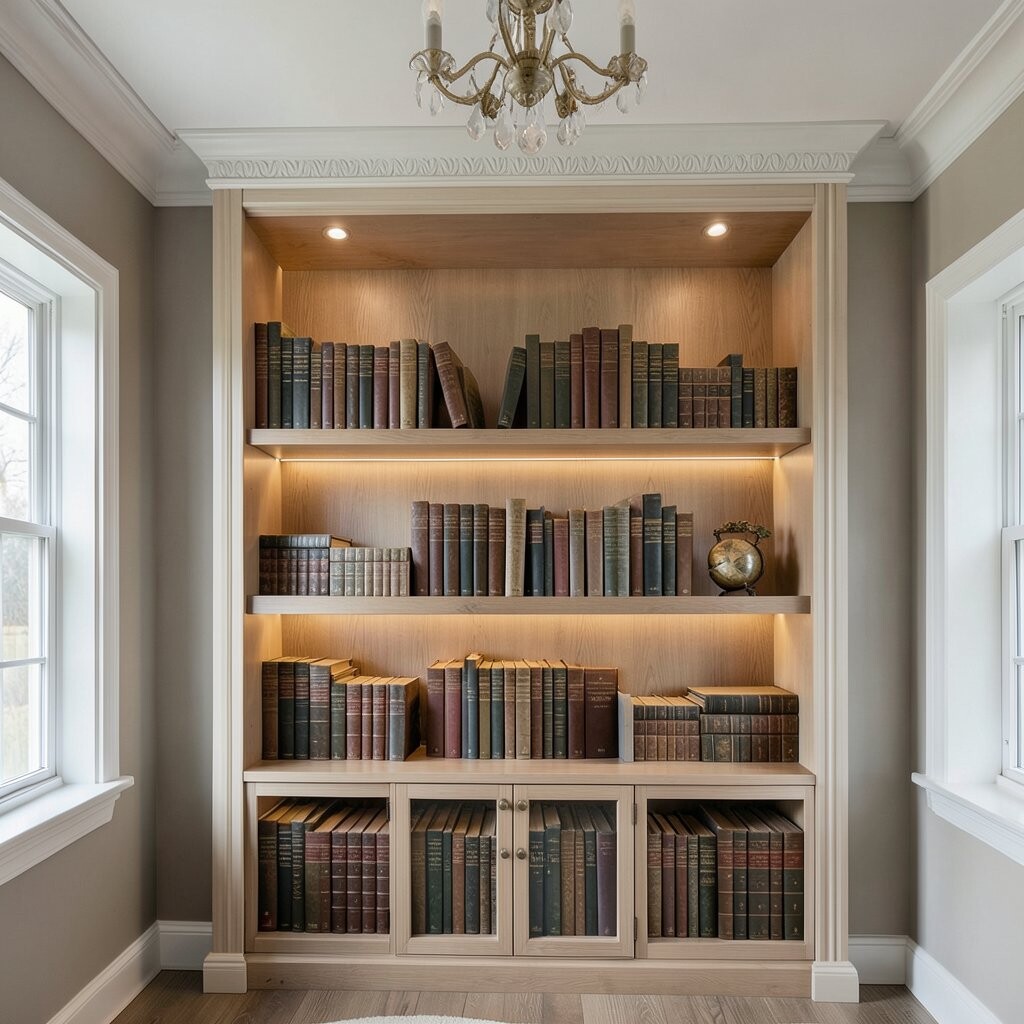
Soft light tucked under a crown or behind the shelf lip can make antique spines glow gently. It feels like your books are being welcomed, not just stored.
This kind of lighting helps you see labels clearly, so you can pick what you want without pulling everything down. It can also reduce how long you expose paper covers to harsh overhead glare. Choose warm LED strips and place them so they do not shine directly into your eyes.
For safety and long life, plan for a clean wiring route and a dimmer switch. Consider setting the dimmer for reading time so the room stays cozy. Personalize by highlighting one “featured” shelf with the light angled slightly toward the center.
Cost can vary depending on how much wiring and carpentry are needed. If you want to budget wisely, start with lighting in just one section, then expand later when you’re ready.
Right now, many studies use gentle under-shelf lighting because it feels calm and modern while still letting vintage items shine.
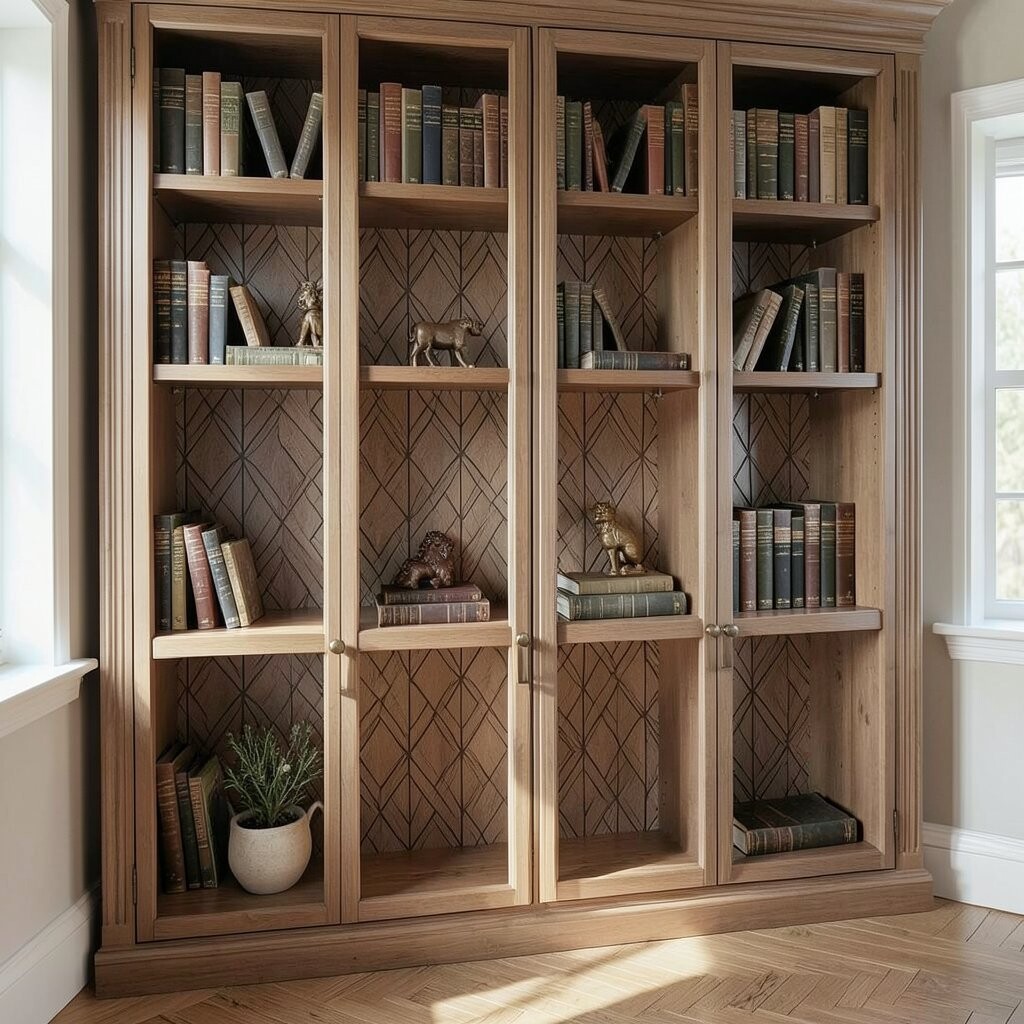
5. Geometric Paneling Inside Shelf Bays
Geometric Paneling Inside Shelf Bays
Imagine the back of each shelf showing subtle patterns, like soft geometric panels. Your books then sit against a background that feels stylish without stealing the show.
This can protect the wall behind the books by adding a wipeable layer. It also gives depth, so the study looks more layered and expensive. Use light-colored panels to keep older spines from looking washed out.
For uniqueness, choose small repeated shapes or angled lines that echo a desk’s design. Keep the pattern low contrast so text and titles remain easy to read. If you are building yourself, you can use thin plywood cutouts, then seal them well for durability.
Budget-wise, the panels add a bit of extra material time, but they often save money compared to custom carvings. Current trend notes: many interiors are using texture and pattern as a background, not just as a main feature.
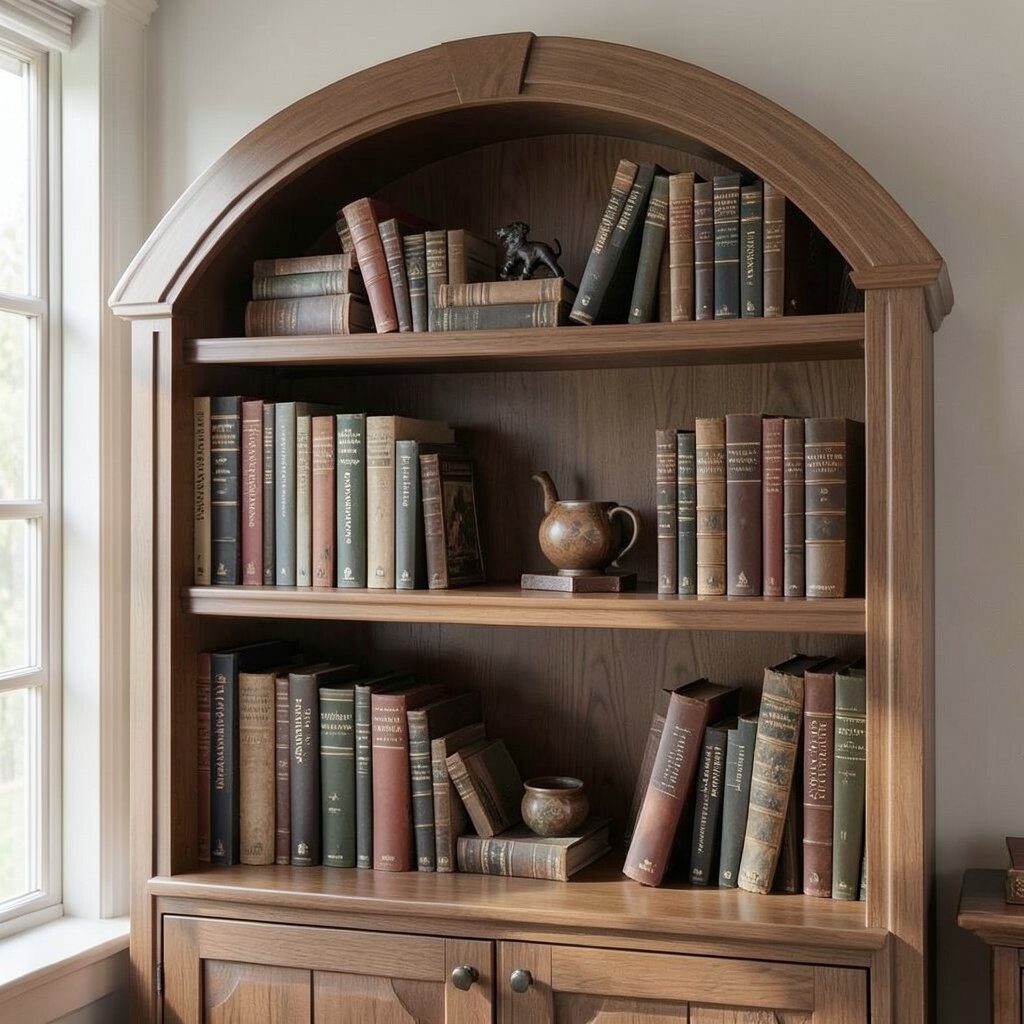
6. Soft-Arched Shelf Tops for a Gentle Look
Soft-Arched Shelf Tops for a Gentle Look
Soft arches along the top edges can make built shelves feel inviting and classic. Even a simple study can look like a comforting library corner.
Arched details add charm while still letting books take center stage. You also get a smooth visual line that looks good in photos and in real life. Consider making the arches align with the window or doorway rhythm for a balanced feel.
Personalize by choosing a crown shape that matches your room style: round arches for traditional rooms, flatter arches for modern ones. When building, keep the inner shelf supports sturdy so the arch stays decorative, not weak. Measure carefully around vents or baseboards so everything fits without forcing the design.
For cost considerations, arches can be labor-heavy if done with custom curves. A practical tip is to use pre-cut trim pieces or templates to reduce waste and speed up work.
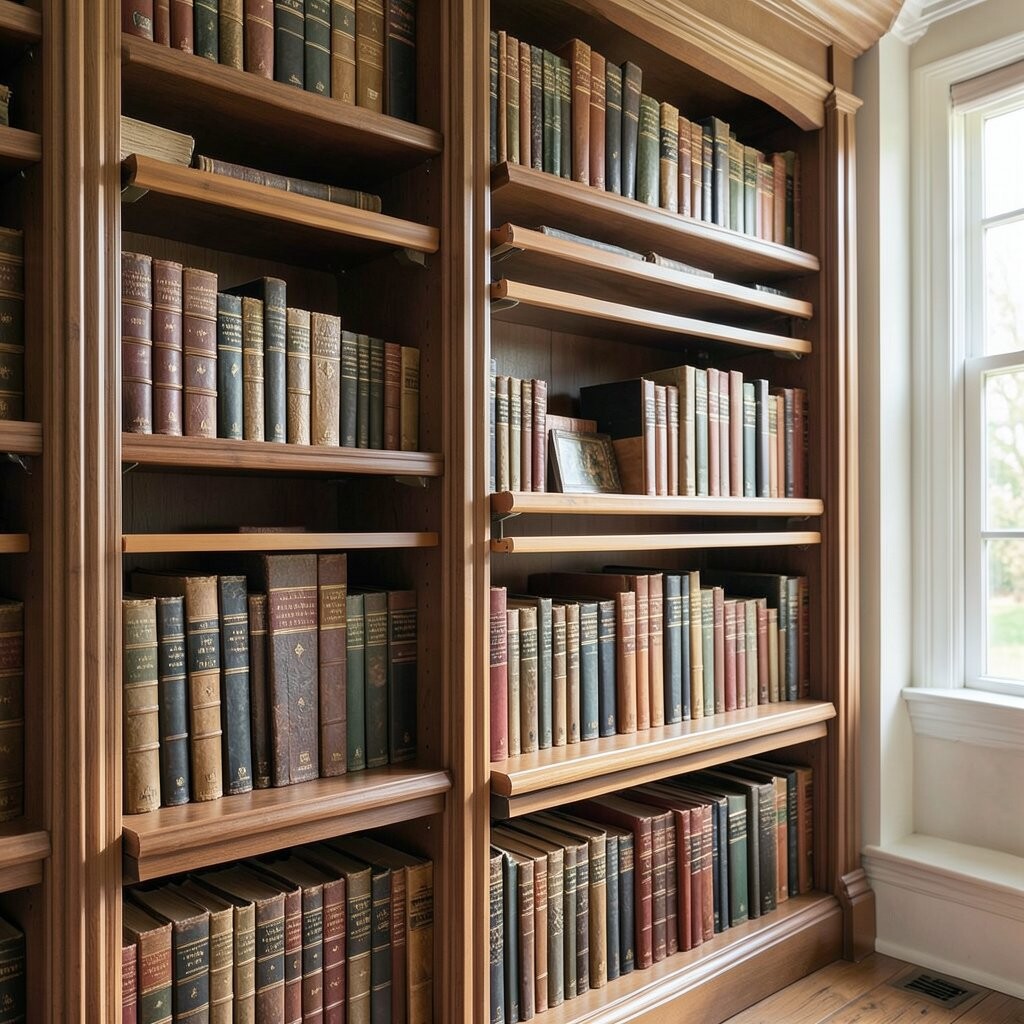
7. Adjustable Slats for Book Height Changes
Adjustable Slats for Book Height Changes
Adjustable slats let you change shelf height as your collection grows. It feels smart and flexible, like your shelves are adapting with you.
This is a big benefit for antique books because sizes vary a lot. You can set spacing to prevent books from rubbing each other and to keep heavier volumes supported. Add a consistent grid so every bay looks tidy, even after you move shelves.
Uniqueness comes from hidden adjustment hardware, like neat holes and concealed pins. For personalization, label the adjustment points with small engraved marks so you can reset levels quickly.
Cost-wise, adjustable systems can cost more upfront, but they save time and money later. A current trend is “future-proof” storage, and adjustable shelving fits that style very well.
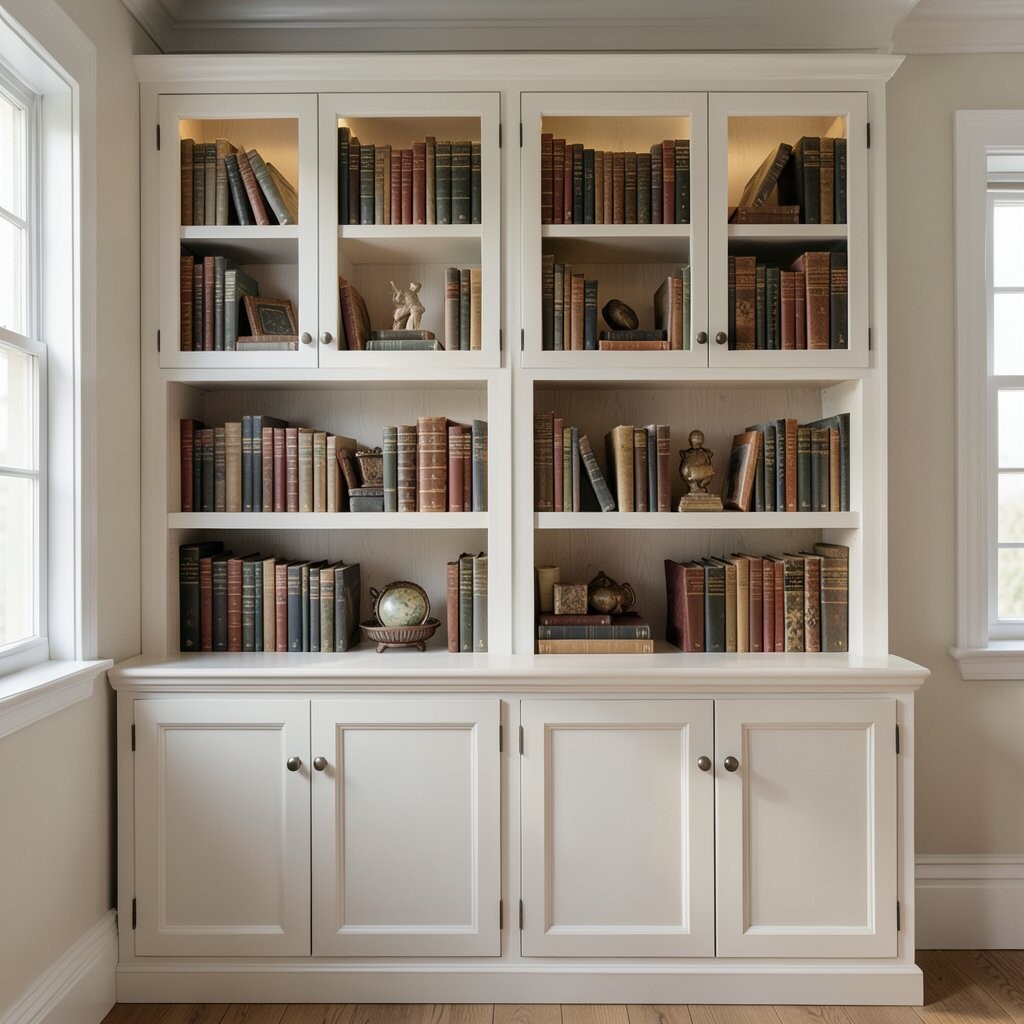
8. Built-In Cabinet Doors for Dust Control
Built-In Cabinet Doors for Dust Control
If dust is your main worry, built-in cabinet doors can be a calm solution. Clear glass doors let you enjoy the spines while still protecting covers.
This helps antique books stay cleaner and reduces the need for frequent wiping. It also keeps sunlight off pages when you close the doors during bright afternoons. Add slim vents if needed so air circulation is not blocked.
For a stylish twist, mix glass doors on upper bays with solid doors below. That gives variety and can hide book-related items like gloves, bookmarks, or repair supplies. Personalize the doors with brass knobs or simple ring pulls that match your desk hardware.
On cost, glass doors and quality hinges may raise the budget. To keep costs under control, focus doors on the most valuable collection first, then expand only if you want more coverage later.
9. Floating-Feel Shelves With Hidden Brackets
Floating-Feel Shelves With Hidden Brackets
Floating shelves look light and modern, but built-in versions can still hold heavy antique books. The result is a clean wall with a “hover” style that feels elegant.
The key benefit is the open look—your study feels less crowded, even with many books. Hidden brackets also help distribute weight evenly so shelves stay safe. Choose a thick shelf board and anchor it into wall studs or a solid frame.
Uniqueness shows up when you line up shelves in uneven, deliberate heights, like a rhythm. That can make certain titles feel like they’re “featured.” Personalize by painting bracket shadows to match the shelf color so nothing breaks the visual line.
10. Library Nook With Window-Led Shelving
Library Nook With Window-Led Shelving
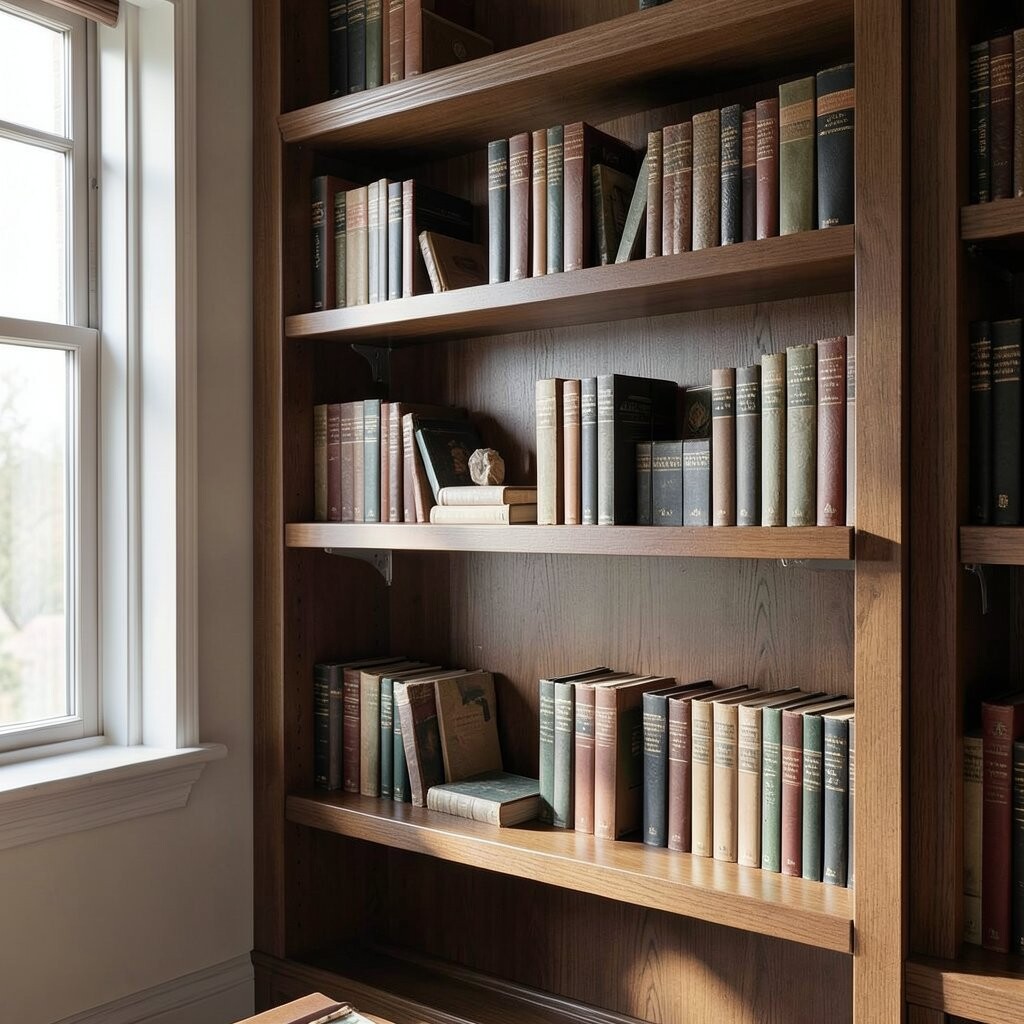
A window ledge can turn into a reading stage when shelves wrap around it. Warm light plus neatly placed books can make mornings feel extra special.
This design benefits you because it combines storage with a natural comfort point for reading. Use deep shelf ledges where books will not tilt, and keep the area shaded with curtains or blinds when needed. Choose materials that handle temperature changes near windows.
For uniqueness, align shelf heights so the window frames the top row like a picture. Add a small built-in seat bench or reading pad below if you have room. Personalize with a small inlaid wood strip near the window so the study feels like a custom hideaway.
Cost considerations depend on whether you need extra framing or work around window trim. Current trend vibes favor cozy nooks, so this idea often feels timeless and stylish at the same time.
11. Vertical “Tall Spine” Display Columns
Vertical “Tall Spine” Display Columns
Some collections are tall—rare folios, old maps, or oversized hymn books. Vertical columns built into the study can show them like museum pieces.
This approach is a benefit because tall items stay upright and stable, which reduces stress on covers. It also makes it easier to spot special editions when you want them. Use column depth that matches the heaviest item so nothing wobbles.
Uniqueness comes from designing columns with framed borders, like slim picture frames. That turns storage into decoration. Personalize by placing a small nameplate or date tag on each column for a story you can share later.
Cost-wise, extra framing and custom dimensions may raise the price. A tip: combine tall columns with simpler straight runs of shelves elsewhere to balance the overall budget.
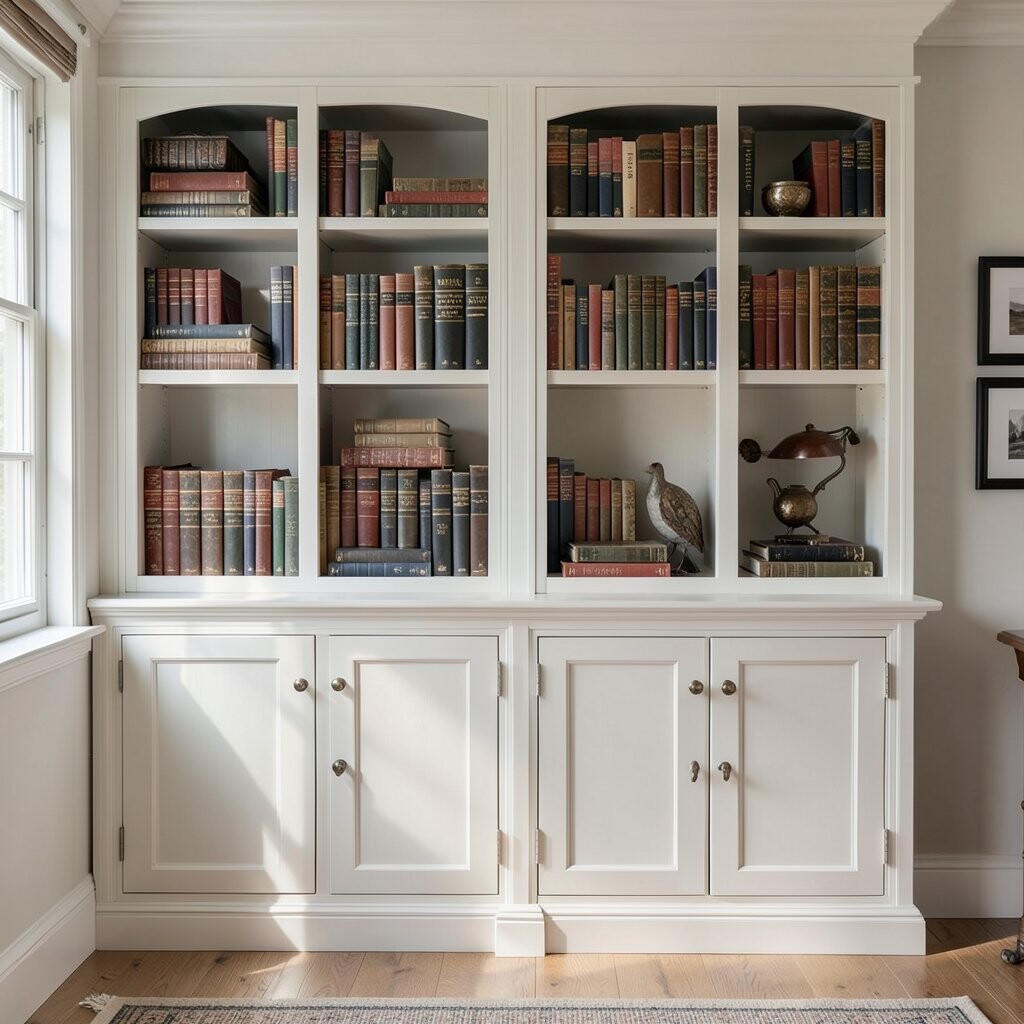
12. Two-Tier Bottom Storage With Upper Open Shelves
Two-Tier Bottom Storage With Upper Open Shelves
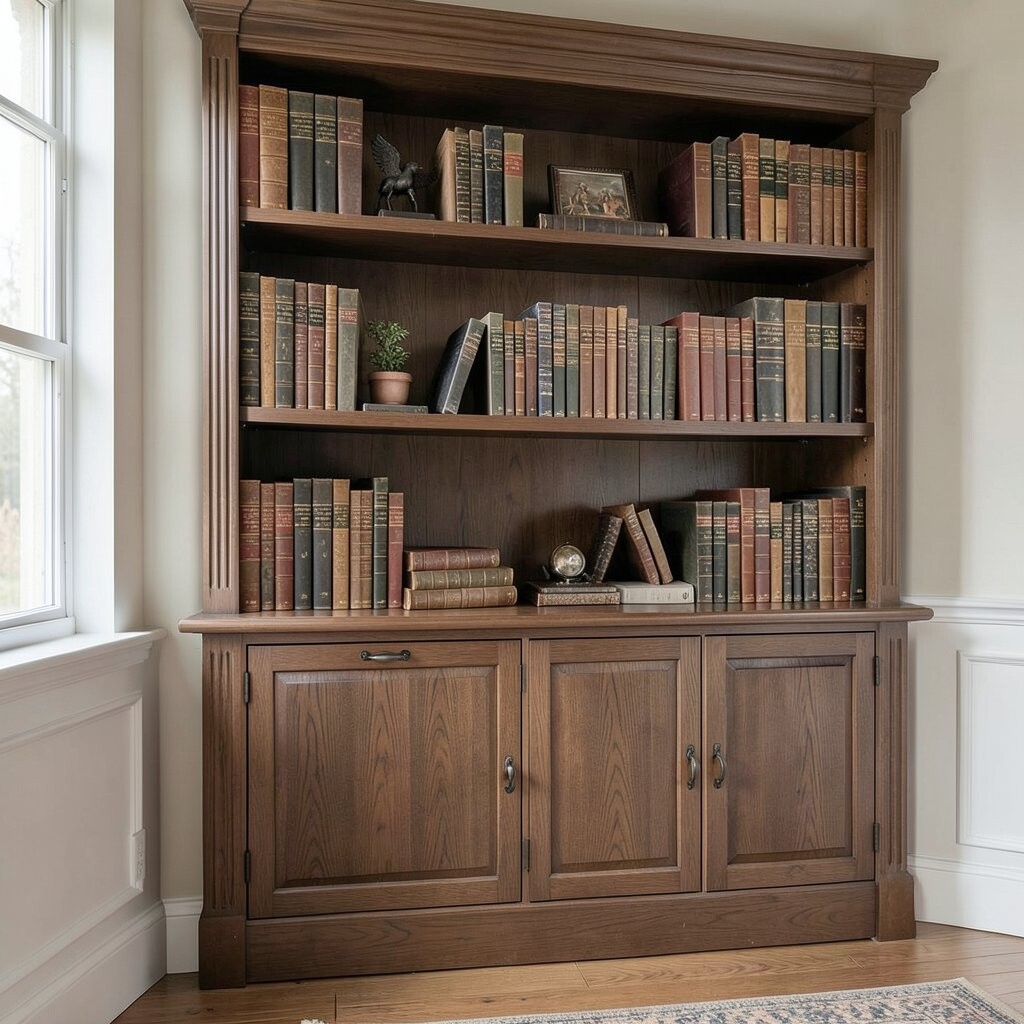
Upper open shelves show your antique books, while lower closed storage keeps the study calm. Two-tier layouts are tidy without looking boring.
The benefit is simple: you can display what you love and hide what you do not want to see daily. Closed lower cabinets also help protect older books from dust and light swings. Add pull-out organizers for documents, letter paper, or book repair supplies.
For uniqueness, choose different wood tones for upper and lower sections, like warm oak above and walnut below. That gives depth and a designer feel. Personalize by using decorative interior liners in a subtle pattern inside the closed cabinets.
Cost considerations: lower cabinets may be more expensive, but they create a “complete room” look. Right now, layered storage is popular because it keeps spaces neat while still letting collections breathe.
13. Decorative Crown Shelf Rail With Brass Detail
Decorative Crown Shelf Rail With Brass Detail
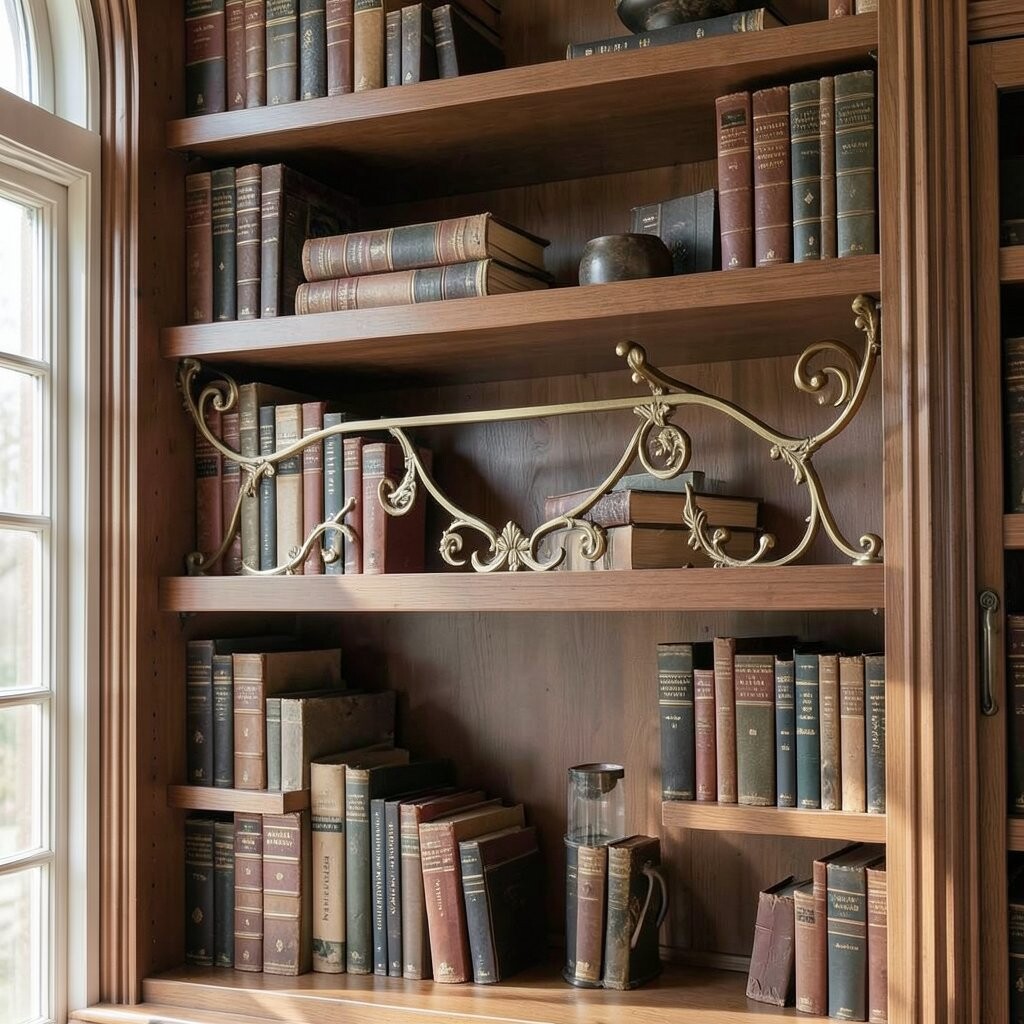
A crown shelf rail with brass accents can make built shelves feel like elegant furniture. When you see books behind a warm metal edge, the whole study looks more refined.
This offers a benefit by adding a stable finishing line that also hides small gaps along the top. Brass detail can also resist scuffing better than some soft metals. If you like a gentle vintage look, match the brass tone to your desk hardware.
To make it practical, keep the rail shallow so it does not block airflow or add dust traps. Personalize with small engraved dots or a thin scroll detail that echoes a vintage wallpaper style. You can also add tiny hooks on the inside for handling accessories.
Cost-wise, brass trim can add up, but you can use it as a highlight instead of covering every surface. This style is trending in “old-meets-new” interiors, especially where people love warm metals.
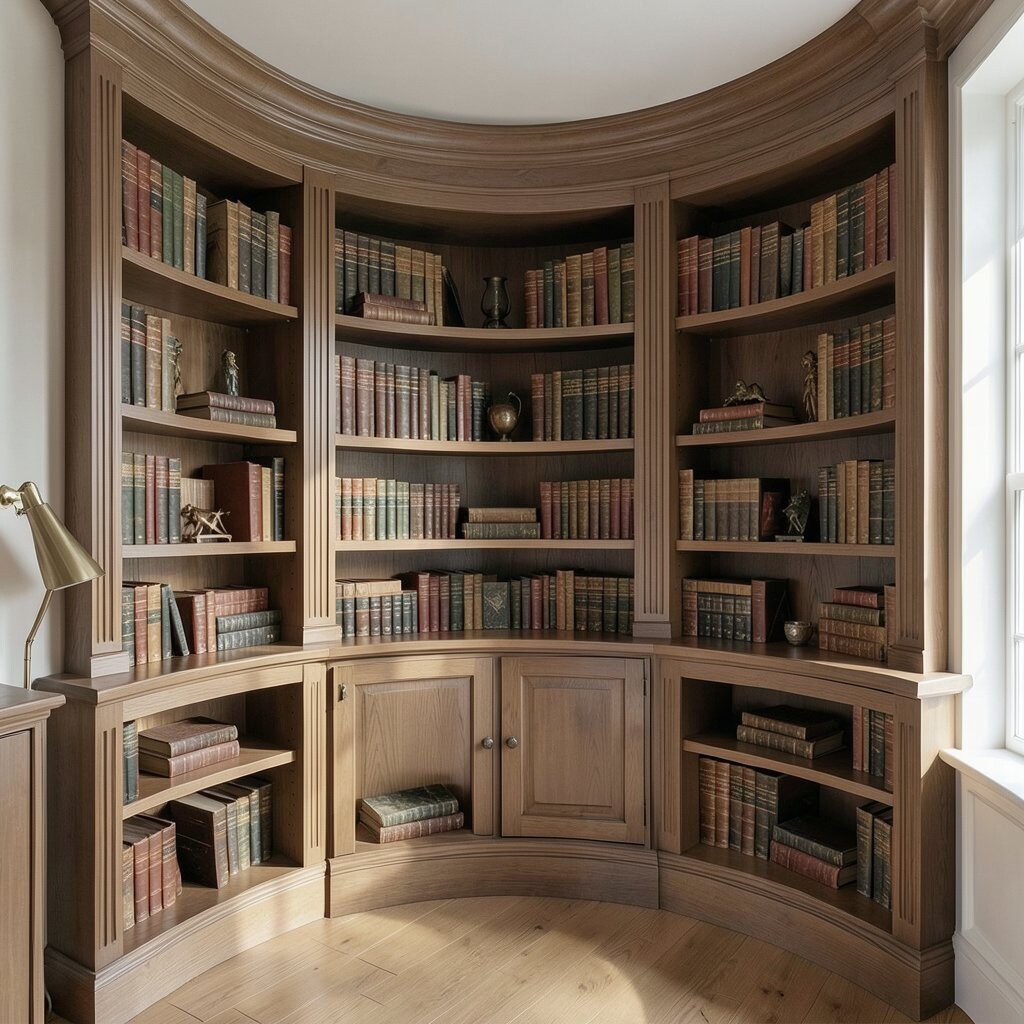
14. Curved Bay Shelves for a Soft Statement
Curved Bay Shelves for a Soft Statement
Curved bay shelves make a study feel like it has flowing lines instead of strict corners. The shapes look graceful, especially around a reading chair or desk area.
This design benefits book care because you can design the curve with consistent depth and strong supports. Rounded bays can also add visual comfort, making the room feel less harsh. Choose smooth, sealed finishes so dust wipes away easily.
For uniqueness, use curved side panels that mirror a rounded mirror or lamp base in the study. Personalize by placing a small plaque in the center curve, like a nameplate for your library wall. Add a small hidden cable path if you plan to use a lamp or charging station near the curved section.
Cost considerations: curves can require extra craftsmanship, so get a quote early and compare options for how complex the curves need to be. If budget is tight, start with one curved bay and keep other bays straight.
15. Back-Lined Shelves With Fabric Inserts
Back-Lined Shelves With Fabric Inserts
Fabric inserts behind selected shelves can create a rich, cozy backdrop. Imagine muted linen or subtle patterned cloth behind a row of antique covers.
This approach benefits you because it reduces visual noise and makes colorful spines look calmer. Fabric can also add a softer look that feels welcoming during long reading sessions. Pick a tightly woven, cleanable fabric and avoid anything that sheds fibers.
Uniqueness shines when you choose fabric tones that match your desk chair or curtains. Personalize by using a deeper shade for the middle shelves and a lighter shade for top rows. To keep care simple, consider removable inserts so you can refresh them without rebuilding.
Cost-wise, fabric inserts are often less expensive than complex wood carving. A practical tip: seal the surrounding wood well, so fabric never touches moisture directly.
Current trends in interiors include texture layers, and fabric-backed shelving is a cozy way to join that look.
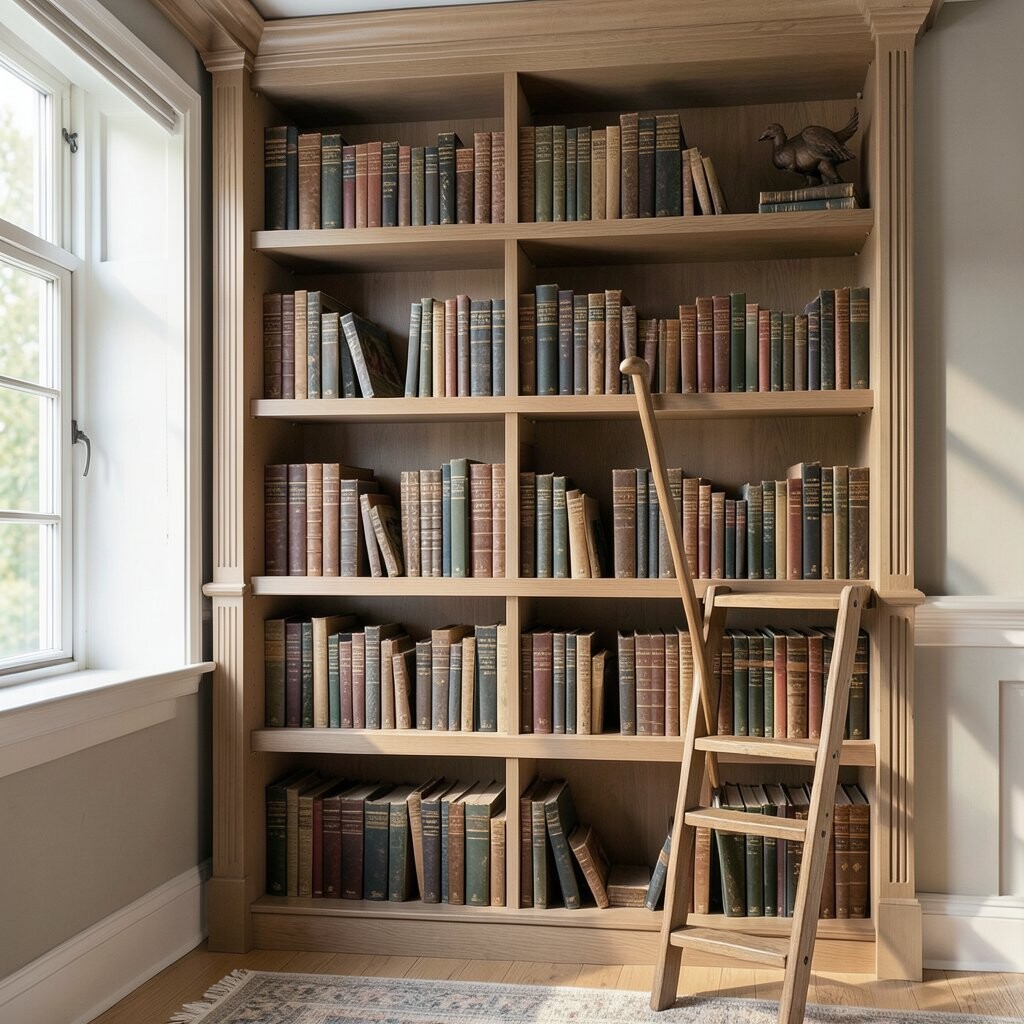
16. Built Shelves With a Study Ladder and Rail
Built Shelves With a Study Ladder and Rail
A built-in ladder with a smooth rail can turn your shelf wall into a real library moment. When it glides cleanly, it feels fun and useful at the same time.
The benefit is that you can reach higher sections without risking wobbling or stretching. The rail also makes the movement controlled, which is helpful if you have heavier antique sets. Choose sturdy wood or metal rails and make sure shelves are anchored well.
Uniqueness comes from styling the ladder as a design piece, like matching its finish to your desk legs. Personalize by adding a small basket on the ladder for bookmarks or reading glasses.
Cost considerations: a ladder rail system can be pricier, especially with custom measurements. If you want a budget route, use the ladder style only on one narrow shelf zone and keep the rest standard.
17. Recessed Shelf Niches for a Museum-Like Depth
Recessed Shelf Niches for a Museum-Like Depth
Recessed niches look like small display rooms built into your wall. Each book zone feels framed, with deeper shadow that makes titles stand out.
This design benefits antique books by keeping them from sitting too close to flat wall surfaces that can collect dust. It also gives you a more dramatic, gallery feel while still being functional. Plan shelf depth so thick covers have space and do not press against back panels.
For uniqueness, vary niche heights by grouping books into categories like travel, philosophy, or poetry. Personalize the edges with a thin trim, perhaps in a lighter tone that catches light gently.
Cost-wise, recessed work can add construction time, but it can reduce the need for lots of extra decor since the niches do the styling. Current trends favor “negative space” and framed displays, and this idea matches that mood.
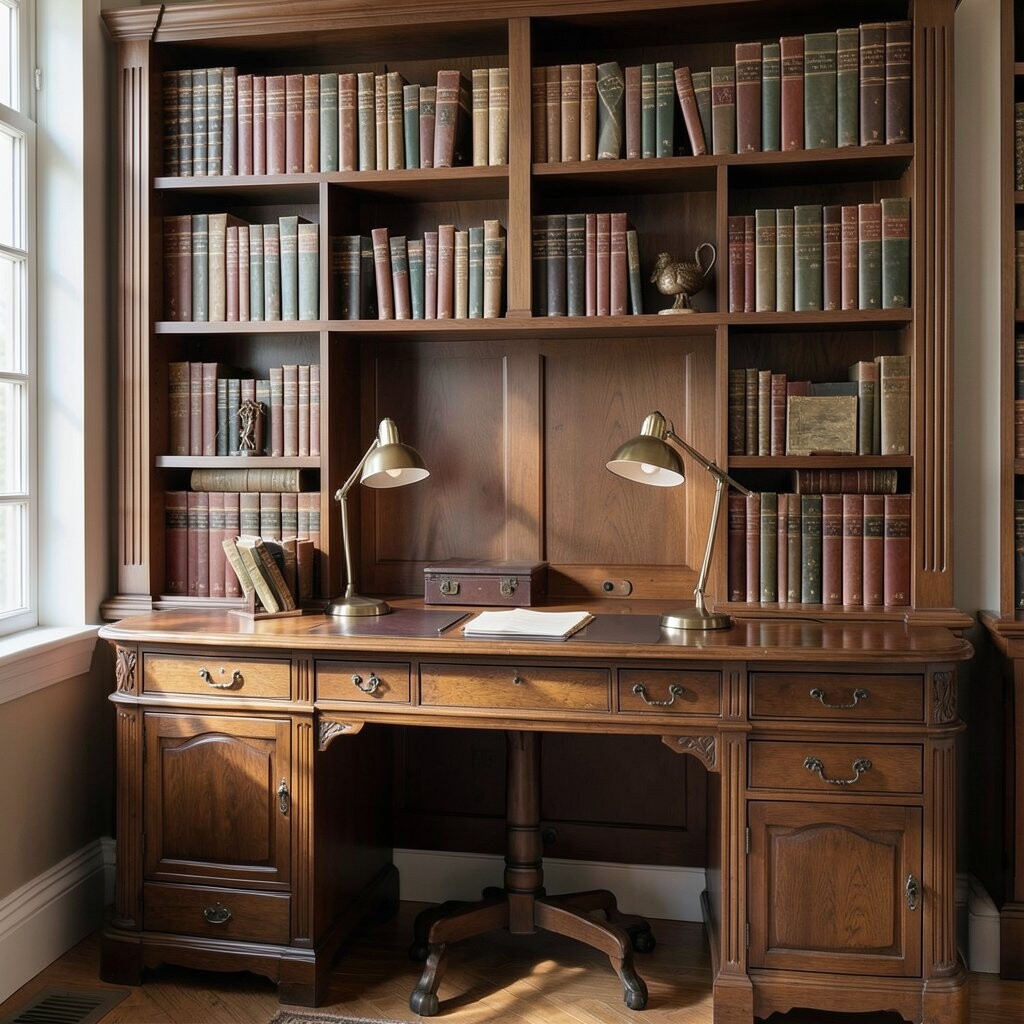
18. Vintage-Style Writing Desk Backdrop With Shelves
Vintage-Style Writing Desk Backdrop With Shelves
When shelves grow out of the back wall behind your desk, the whole study feels designed as one piece. It looks like your workspace and your library were made together.
This helps you stay organized because reference books are close at hand. The benefit for antique books is stable placement, since shelves become part of a solid built structure rather than separate units. Position frequently used volumes at eye level and keep delicate items higher up or inside cabinets.
Uniqueness shows up when the shelves echo your desk style, like matching panel shapes or hardware. Personalize with small built-in trays for letters, quills, or old reading tools. A thoughtful touch is to build a hidden niche for a lamp cord or a charger.
Cost considerations: integrating shelves with a desk can be efficient, but it takes careful layout. Ask a builder to confirm measurements before starting so you avoid rework, which can raise costs.
19. Light-Safe Upper Compartments With Solid Doors
Light-Safe Upper Compartments With Solid Doors
Solid-door upper compartments can protect fragile covers while keeping your study looking neat. You still get a clean wall, but the books inside get calmer conditions.
This is helpful if your study gets strong sunlight at certain times of day. Solid doors also reduce dust and prevent frequent light exposure, which is good for aging paper. Add felt lining or breathable padding inside so covers do not scrape and edges stay cushioned.
For uniqueness, vary door styles, like pairing panel doors with a couple of smaller glass windows. Personalize by choosing door knobs that match your overall metal tones. You can also add a small label system on the inside so finding a specific antique volume is quick.
Cost considerations: solid doors can be less expensive than full glass, but still require quality hinges. A smart tip is to prioritize the most valuable items for these protected compartments first.
Right now, many people are thinking more about conservation-friendly storage, and this option fits that trend in a practical way.
20. Custom Color-Blocked Shelf Zones for Each Section
Custom Color-Blocked Shelf Zones for Each Section
Color-blocked shelf zones can give your antique library a modern spark without losing elegance. Imagine bands of soft painted panels separating groups of books by theme or era.
The benefit is organization you can see, which helps you enjoy your collection more often. A gentle painted backdrop can also make vintage spines look richer by adding controlled contrast. Keep colors muted so the room stays calm and nothing feels too loud beside old paper.
Uniqueness comes from choosing a palette that matches your study style, like warm sage, dusty blue, or cream with light brown trim. Personalize by using one signature color for your most treasured section, such as a small “favorites” zone near the desk.
Cost considerations: painting is usually more budget-friendly than adding heavy woodwork, especially if you can keep the design simple. A tip is to test paint samples on scrap wood first, because wood tone can change how color looks under warm lighting.
Current trends show more personal color accents in libraries and studies, and this idea lets you bring that energy to antique storage in a tasteful way.