Start by taking everything out and laying it on your floor like a moving day. You’ll quickly spot duplicates, odd items, and things you never wear.
As you sort, make small piles for “keep,” “donate,” “fix,” and “maybe later.” A visual scan shows what your closet actually holds, not what you hope it holds. Then you can rebuild with intention and avoid rushing.
For personalization, use sticky notes to label each pile with your own rules, like “only for special events” or “wear weekly.” This challenge is budget-friendly because it mostly uses time and a few boxes. A common trend right now is “slow organizing,” where you do one clear round before you buy anything.
2) The Color-First Hanger Makeover
) The Color-First Hanger Makeover
Choose one color family for each section, and hang pieces in a rainbow order. Think soft neutrals on one side, brighter tones in the middle, and darker shades toward the back.
You’ll enjoy the visual payoff every time you open the door. Color sorting also helps you grab outfits faster because you can spot what you need at a glance.
To keep it from feeling too rigid, mix by shade instead of exact hues, and group “black plus dark denim” together. Cost considerations are simple: pick up matching hangers in one pass, or start with the most visible area first. Many people are trying “aesthetic organizing” lately, where your closet looks like a mini showroom.
3) The One-Drawer “Wear-Next” System
) The One-Drawer “Wear-Next” System
Pick one drawer and turn it into your “wear-next” zone. Put in the items you want to reach for soon, like work socks, everyday tees, or going-out accessories.
Keep only what fits your chosen window so the drawer stays neat. This gives your closet a clear path from “today” to “later,” which lowers decision stress.
For personalization, rotate seasonally and add a small note that says when you plan to swap items. If you want to save money, use shallow bins you already own. A current trend is “capsule routines,” where small selections make daily dressing easier.
Set a simple rule: when you take something out, replace it from the closet storage. That way, the drawer stays honest and current without extra work.
4) Shoes in a Line: Style + Space
) Shoes in a Line: Style + Space
Place shoes side-by-side so they form a clear line instead of a messy pile. You can picture the look instantly: toes facing forward, pairs matched, labels visible.
Use a shoe rack, a set of clear bins, or even a simple shelf divider. The benefit is big—pairs are easier to find, and your floors stay cleaner. If you share the closet, a tidy shoe zone also helps everyone use the space the same way.
Personalize by grouping shoes by use, like “work,” “weekend,” and “special.” Keep cost in mind by choosing one solution for your most-used shelf first, then build from there. You’ll also see more people using clear storage now, because it makes the closet feel brighter and more organized.
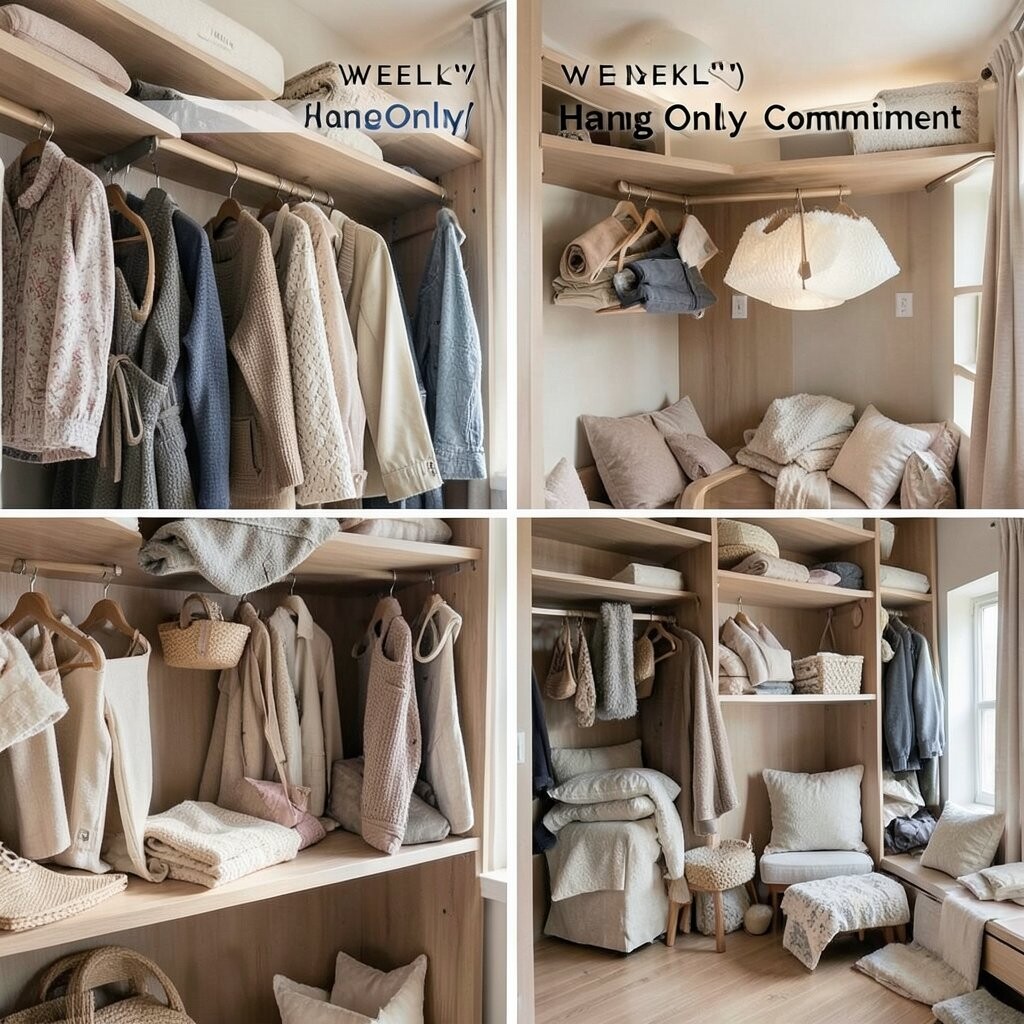
5) The Weekly “Hang Only” Commitment
) The Weekly “Hang Only” Commitment
During this challenge, commit to hanging items instead of stuffing them in drawers. When you open the closet, you’ll notice fewer wrinkles and less clutter.
Hanging keeps your clothes visible, so you’re less likely to forget what you own. It also helps you see what’s missing, which makes shopping decisions calmer.
To personalize, make a “quick-grab” section near the front for your most worn pieces. If you’re on a budget, start with adding hooks or a second rod rather than buying lots of new furniture. A trend you’ll hear about is “frictionless routines,” which means daily habits make your system work without constant effort.
6) The Label-Love Bin Wall for Small Stuff
) The Label-Love Bin Wall for Small Stuff
Gather items like belts, scarves, hats, and small bags into labeled bins. When you view the labels, your brain immediately knows where things go.
Use clear bins for quick spotting, or choose fabric bins for a softer look. The main benefit is that tiny messes don’t grow into big chaos.
Try personalization by labeling by style, like “dressy,” “cozy,” and “travel.” For cost, you can reuse containers and add simple label stickers. Many people are using this method now because it looks neat and it’s fast to maintain.
Set a “return rule” for each bin: after you grab something, put it back within one minute. That one habit keeps your closet from slowly drifting into disorder.
7) The Height Check: Double-Rod Strategy
) The Height Check: Double-Rod Strategy
Look at your closet rod height and ask, “Can more of this space work for me?” A double-rod layout can raise the ceiling value by adding a second level for shorter items.
Visualize it: long coats on one bar, and shirts or folded items on another. This gives you extra room without adding a bulky new piece.
For personalization, adjust the lower rod for your most worn shirt lengths. Cost matters here—double-rod kits are usually affordable, but measure carefully before buying. A current trend is “vertical storage,” where people use every inch instead of only the obvious hanging space.
To keep it easy, store seasonal items on the top shelf and everyday items at eye level. That way you spend less time searching and more time getting ready.
8) The “Capsule Week” Outfit Tray
) The “Capsule Week” Outfit Tray
Create a small tray, box, or hanging organizer that holds a week’s worth of outfit pieces. You’ll see a neat set of choices that feels like a plan, not a mystery.
This helps you make decisions quickly and prevents over-stuffing. When your closet knows your routine, it stays calmer all week.
Personalize by building your tray based on your real schedule, like classroom days, meetings, or errands. If you want to keep costs low, use an old shoebox and label the days. Many organizers now talk about “outfit planning,” because it turns dressing into a smoother habit.
When the week ends, move the used items back to the right storage zones and refresh the tray. This creates a cycle without needing complex rules.
9) The “Season Swap Sunday” Habit
) The “Season Swap Sunday” Habit
Pick one day to switch out seasonal clothing so your closet holds only what fits your current weather. The look is instantly cleaner when the bulky off-season clothes leave the front rows.
Better organization means fewer piles, less clutter, and easier morning choices. You also protect delicate fabrics because they’re stored with care instead of shoved in.
For personalization, create a simple system: winter items in sealed bins, summer items in breathable bags, and shoes in labeled stacks. Budget-wise, you can start with plastic bins for your hardest items and add more as you go. A current trend is using labeled, stackable storage so you can find things without rummaging.
Before you swap, check for stains or damage and handle it right away. That small step keeps your closet from getting overwhelming next time.
10) The “Top Shelf Only” Storage Rule
) The “Top Shelf Only” Storage Rule
Use the top shelf for items that you truly don’t need daily, like spare bedding, holiday decor, or extra bags. When you look up and see only one type of storage, the whole closet feels calmer.
This rule keeps everyday clutter from creeping upward. It also helps you keep your most-used areas at a comfortable height.
Personalize by adding a small checklist on the inside door that tells you what belongs up there. For cost, focus on baskets or bins you can stack, since stacking saves space. Right now, many people are favoring “zoned storage,” where each area has a job.
Make the top shelf feel neat by using uniform containers. Even when the shelf is full, matching bins make it look intentional.
When you finish, take a quick photo with your phone. It becomes a reference point, so you can keep the system as you add new items.
11) The Belt and Scarf “Spin Organizer”
) The Belt and Scarf “Spin Organizer”
Hang belts and scarves on a rotating organizer or tiered hooks so they don’t turn into tangles. You’ll instantly notice fewer knots because each piece gets its own space.
When items are visible, you choose faster and wear more of what you own. It also makes the closet feel stylish because you can see textures and patterns at a glance.
For personalization, separate by color or by outfit vibe, like “work,” “formal,” and “casual.” If the full organizer feels pricey, use a sturdy hook row and add small clips. A current trend is using accessory-focused storage, since people want their closets to feel curated, not just functional.
Try storing scarves by length, with longer ones at the top. That way you pull one piece without grabbing the whole bundle.
12) The Donation Deadline Challenge
) The Donation Deadline Challenge
Set a donation deadline and decide that anything not staying must leave by that date. The visual goal is clear: one trash bag turns into a pile ready to go out.
Benefits are huge because you stop “someday” storage from taking over. Your closet becomes easier to use because you reduce the number of decisions you face every day.
Personalize the rules by matching them to your real life, like “no wear in the last two months” or “only for an event I have planned.” Keep costs low by using whatever bags you already have, then schedule pickup or a drop-off. A current trend is “declutter with purpose,” where you remove items quickly to free mental energy.
To make it fun, invite a friend to help you decide on a few tricky pieces. Fresh eyes can spot fit and comfort issues faster than you can.
13) The “Check Twice” Maintenance Routine
) The “Check Twice” Maintenance Routine
Create a short routine for keeping your closet tidy, like a quick check once in the middle of the week and once on the weekend. When you do this, clutter has less time to build up.
Think of it like brushing your teeth for your space. The benefit is that your system stays working, not just perfect for one day.
For personalization, choose two categories to watch first, such as laundry piles and accessory bins. Cost considerations are minimal because you just need a timer and a basket for returns. A current trend is “tiny habits,” where people use small actions to prevent big messes later.
During your check, put back any items that moved, re-fold what got wrinkled, and wipe any dusty spots. If something feels out of place again, adjust the storage plan so it fits your routine better.