Pick a low shelf or clear bin near the fridge, and fill it with snack helpers kids can reach. You will see colorful containers and little labels that make the room feel friendly instead of stressful.
Kids love feeling trusted, and you benefit from fewer mid-cooking interruptions. Choose easy items like fruit cups, whole-grain crackers, yogurt pouches, and cheese sticks.
For personalization, let each child help write a label in their own way with a sticker marker. Keep one budget-friendly rule: buy one “special treat” per week and rotate it so the zone stays exciting.
2. A Family Calendar on the Fridge
A Family Calendar on the Fridge
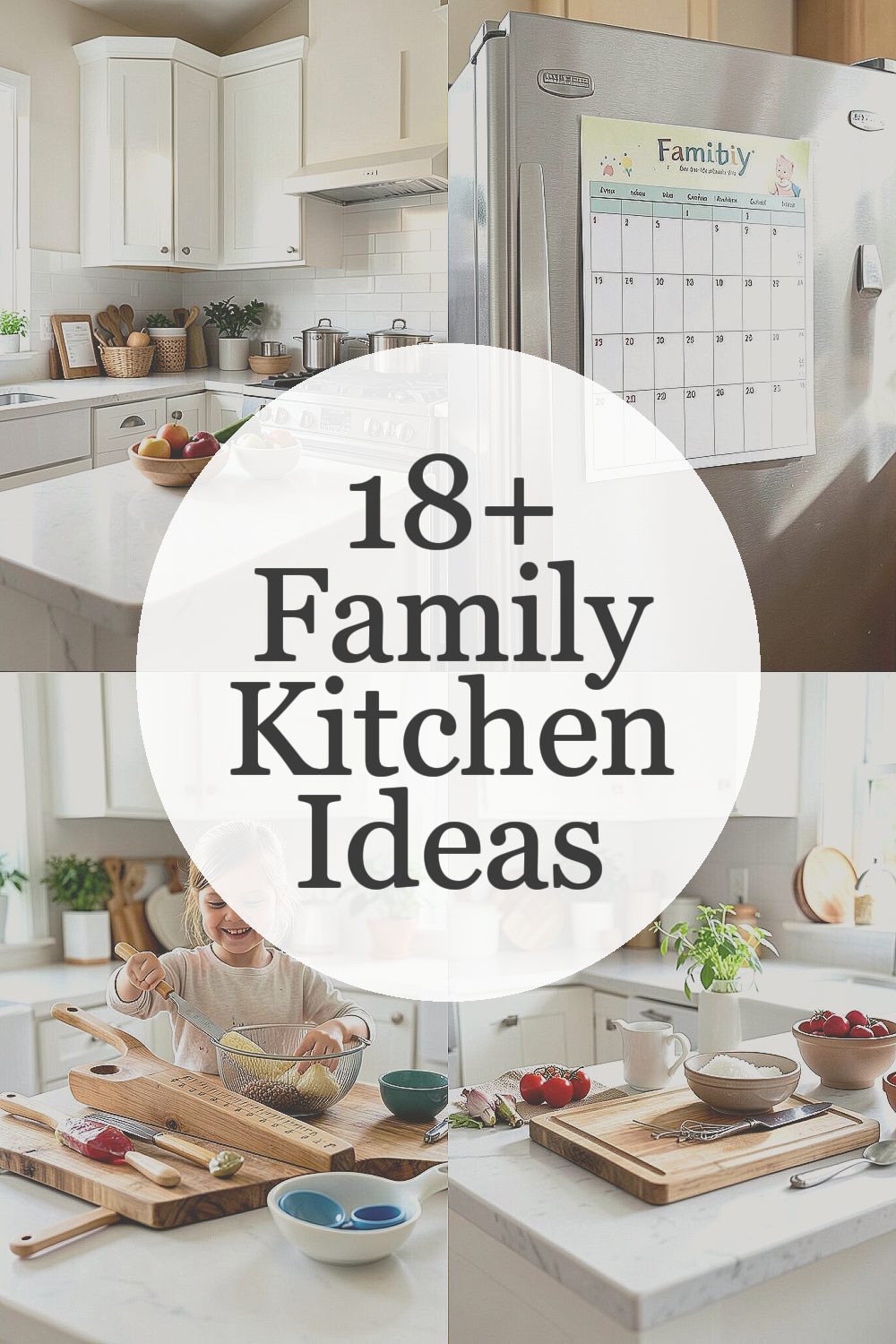
Put a wipeable board or a pocket calendar right where everyone walks by. You will notice magnets holding tomorrow’s plan and today’s reminders in bright blocks.
This helps families cook with less guesswork, so mealtimes run smoother. Add a “Who cooks?” spot for each day to spread the work fairly.
Try pairing meals with fun themes like “Taco Tuesday” or “Soup and Story Night.” For cost control, use the calendar to plan around what is on sale, not just what looks tempting.
3. Learning-to-Measure Utensils
Learning-to-Measure Utensils
Swap out random measuring cups for a set that matches and fits well in small hands. You will spot neat stacks of cups with clear markings that look calm and organized.
When kids can measure safely, they practice real skills and gain confidence in the kitchen. It also prevents the common chaos of “missing the right amount” because the tools are easy to read.
For uniqueness, let each person pick a favorite color measuring cup and reserve it for them. If you want a budget-friendly start, use any sturdy cups you have and add removable tape labels.
Try quick recipes that use simple ratios, like yogurt bowls or pancake mix, so everyone feels successful fast.
4. One Cutting Board Per Task
One Cutting Board Per Task
Use separate cutting boards for produce, meat, and ready-to-eat items. You will love how the kitchen looks tidy when boards are color-coded or clearly marked.
This reduces cross-contamination and makes cleanup easier, which saves time during busy days. You can also keep a “workhorse” board for chopping veggies and a “serving” board for finished food.
For personalization, add a name label to each board so kids know where their job starts and ends. When costs matter, buy one extra board now and add the rest later as you replace worn ones.
5. Kid-Safe Stool With a Backrest
Kid-Safe Stool With a Backrest
Place a stable stool near the counter so kids can stand safely at eye level. You will notice how much calmer cooking feels when little helpers can reach comfortably.
Good height support helps kids reach the sink, mix bowl, and stirring tasks without leaning. It also helps adults avoid lifting and bending, which keeps the kitchen safer.
Personalize the setup by tying a small kitchen apron to each child’s stool so it becomes “their station.” If you are watching your budget, look for used but sturdy stools and check that the surface is non-slip.
6. Family-Friendly Recipe Cards With Photos
Family-Friendly Recipe Cards With Photos
Create a folder of recipe cards where each step has a simple photo. You will see bright pictures of chopped onions, mixing bowls, and finished plates.
This makes cooking more approachable for kids and adults who learn best by seeing. It also reduces “What do we do next?” moments during busy evenings.
To make it unique, print your own photos from past meals, even if they are taken quickly on your phone. Keep a small “budget section” with recipes using beans, oats, and seasonal produce that are usually easier on the wallet.
7. A “Stir & Listen” Timer
A “Stir & Listen” Timer
Use a kitchen timer that plays a gentle sound when it is time to check. The kitchen will feel lively when the timer “talks,” but not scary.
Timers help families stay on track, and they teach patience without constant reminders. You will also avoid overcooking when everyone can hear the signal from different parts of the room.
Personalize it by letting a child choose the sound each day. For cost, many phones can work as timers too—just set a safe volume and keep it where kids can’t toss it.
Pair the timer with a “touch check” rule, like tasting only after a parent approves.
8. Spill-Ready Liners and Easy Cleanup Tools
Spill-Ready Liners and Easy Cleanup Tools
Line the counter with wipeable mats and keep paper towels and a small spray bottle close by. You will love seeing neat surfaces instead of sticky mess trails.
Cleanup feels easier when tools are in the right place, and kids learn to wipe as they go. This turns cooking into a shared routine, not a one-person cleanup job.
Try personalizing by letting each child pick a colored cleaning cloth for their station. For budget, start with one mat and one cloth per kid, then add more as you notice what you use most.
9. A “Build Your Own” Dinner Bar
A “Build Your Own” Dinner Bar
Set out toppings and bases so everyone can assemble their own plate. The table will look like a colorful craft project with bowls of toppings and small spoons ready to go.
This is a big win for picky eaters because they can choose what sounds good. You also get flexible leftovers, since everyone can mix and match.
Make it unique by rotating themes like burrito bowls, pasta add-ons, or taco nights with different sauces. Keep costs in check by using one main protein and several low-cost add-ons like shredded lettuce, beans, or roasted veggies.
10. A Clear Pantry With “Front-Facing” Storage
A Clear Pantry With “Front-Facing” Storage
Arrange shelves so the newest items are visible at a glance, with bags and boxes facing forward. You will see neat rows that help you plan faster and waste less.
Easy visibility helps families cook what they already own, which saves money. It also helps kids learn what ingredients look like and where they belong.
For personalization, add a small “Kid Picks” section where snacks or toppings live. Choose budget bins and start with the most-used shelf first.
11. Heat-Smart Cooking Zones
Heat-Smart Cooking Zones
Set up a boundary near the stove using a tray, a mat, or a simple station sign. You will feel the kitchen get calmer when hot tasks have a clear “stay here” area.
When kids know where they can stand, you reduce worry and keep everyone safer. This also helps parents focus because hands are not suddenly reaching for steam or hot pans.
Personalize it by letting kids “check in” with a grown-up before they move near the stove. For cost, use items you already own—just add clear separation so the zone is obvious.
Try assigning kid roles like washing veggies, adding cold ingredients, or stirring off-heat so they still feel included.
12. A “Kid Tools” Drawer
A “Kid Tools” Drawer
Dedicate one drawer to kid-sized tools like a safe peeler, silicone spatula, and mixing spoon. You will notice the joy when children open one drawer and see their own tools waiting.
This boosts independence and keeps you from constantly hunting for the right utensil. It also encourages children to take part in age-appropriate tasks.
For uniqueness, include one “mystery tool” that changes each month, such as a mini whisk or cookie cutter. Keep costs reasonable by starting with a few durable items rather than a big set.
13. Family-Style Dish Ware That’s Easy to Handle
Family-Style Dish Ware That’s Easy to Handle
Choose lightweight bowls or plates with stable rims and non-slip bottoms. You will see how the kitchen feels smoother when dishes do not slide or break easily.
This helps kids carry food safely and makes sharing feel normal. Parents benefit too, because fewer accidents mean less stress and less extra cleanup.
To personalize, let each person have a favorite color bowl that they use for their snacks or dinners. If you want a budget option, look for durable stoneware secondhand, or mix in simple plastic for daily use.
Consider current trends like stackable designs and matte finishes that look modern while staying practical.
14. “No-Frills” Favorite Meal List
“No-Frills” Favorite Meal List
Write down a short list of meals your family already likes and can make without stress. You will enjoy the calm feeling when dinner planning stops taking over your evening.
This supports happy cooking because you are not reinventing everything each time. Kids also gain comfort when familiar flavors show up again.
Personalize the list by adding “swap ideas,” like using different veggies or changing the sauce. For cost, include one meal that uses pantry staples like beans, pasta, and frozen vegetables to stretch your budget.
15. A Salad Bar With Crunchy Options
A Salad Bar With Crunchy Options
Make a simple salad setup with crunchy toppings and mild dressings. You will see bright greens and colorful add-ons arranged like a tiny garden.
This helps families eat more vegetables without making it feel like a chore. When kids build their own bowls, they feel ownership and are more likely to try new textures.
Try uniqueness with a “crunch card,” where each child chooses one crunchy topping, like cucumber coins, corn, or croutons. Keep costs under control by using seasonal produce and offering one homemade dressing instead of many store-bought options.
16. Snack Prep in One Bowl Sessions
Snack Prep in One Bowl Sessions
Choose a day when you can do quick prep and place ingredients into labeled bowls. The kitchen will look tidy with stacks of containers instead of random piles.
This reduces decision stress later and cuts down on last-minute junk food. Kids can help assemble “mix-and-match” snacks, which makes snack time feel special.
For personalization, use the bowls for themes like “movie night bowls” or “after-school bites.” Budget-wise, focus on items that keep well like carrots, apples, oats, and yogurt.
Current trend idea: batch bowls and grab-and-go containers, which make weekday meals feel easier and more organized.
17. Fun Plating With Party Picks
Fun Plating With Party Picks
Keep a small box of safe party picks, mini forks, and cute sprinkle toppings for finishing plates. You will notice how smiles appear when food looks like it has “extras.”
This builds positive memories around meals, which helps kids feel excited instead of resistant. You also get a fast way to make the same base dinner feel new.
Personalize by letting each child choose one “finisher” topping like cheese confetti, a drizzle, or a lemon zest option with supervision. For cost, make your own toppers when you can, like toasted breadcrumbs or homemade spice mixes.
18. Pantry Lock for Safety and Calm
Pantry Lock for Safety and Calm
If your kids are curious, use a simple latch or lock on high shelves and cabinets. You will feel relief when risky items stay out of reach.
This is a safety habit that protects kids from cleaning supplies, sharp tools, and breakable items. Adults also benefit because they do not need constant “stop!” interruptions.
For personalization, place the lock where it matters most and keep a kid-safe backup cabinet for safe snacks. When costs matter, choose a basic latch system that blends with your existing shelves.
Pair it with clear routines, like “Ask before opening,” so the rules feel consistent.
19. A Cozy Window Seat for Reading Cookbooks
A Cozy Window Seat for Reading Cookbooks
Create a small cozy spot near natural light with a basket of age-friendly cookbooks. You will see kids pulling out pictures and pointing at dishes like it is story time.
This nurtures curiosity and makes cooking feel like something creative, not just work. When kids see recipes as pictures first, they are more willing to join in later.
To personalize, rotate one “choice book” each week and let each child pick a recipe to try. Keep costs reasonable by borrowing cookbooks from libraries or swapping with friends.